I wove these two dishtowels nearly 20 years ago!

The above dishtowel was woven from gray and white plyed, stranded, weaving cotton. While I don’t remember the grist, I remember enjoying sampling the structures in this towel and 18 years later, it dries dishes like a champ.

Handwoven cotton dishtowel

This dishtowel was woven using washed, spooled crochet cotton. It’s a bit heavier than most, and is sturdy and strong. It absorbs water 100% better than any commercial terry cloth dishtowel I’ve ever owned. It dries super fast as well!

The key to finishing dishtowels is to pre-wash them at least once in a washing machine, preferably a top loader. This pulls everything together.
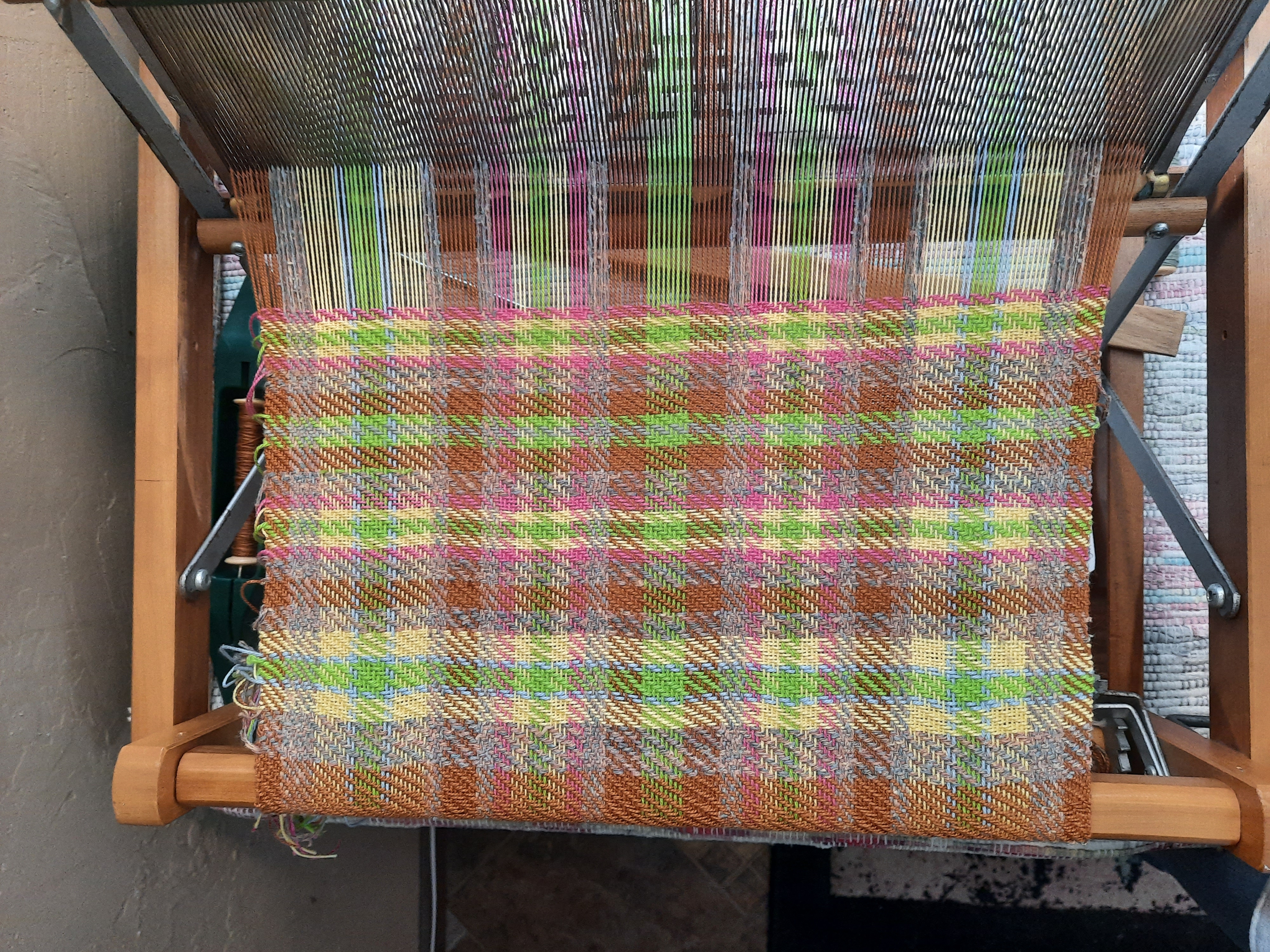
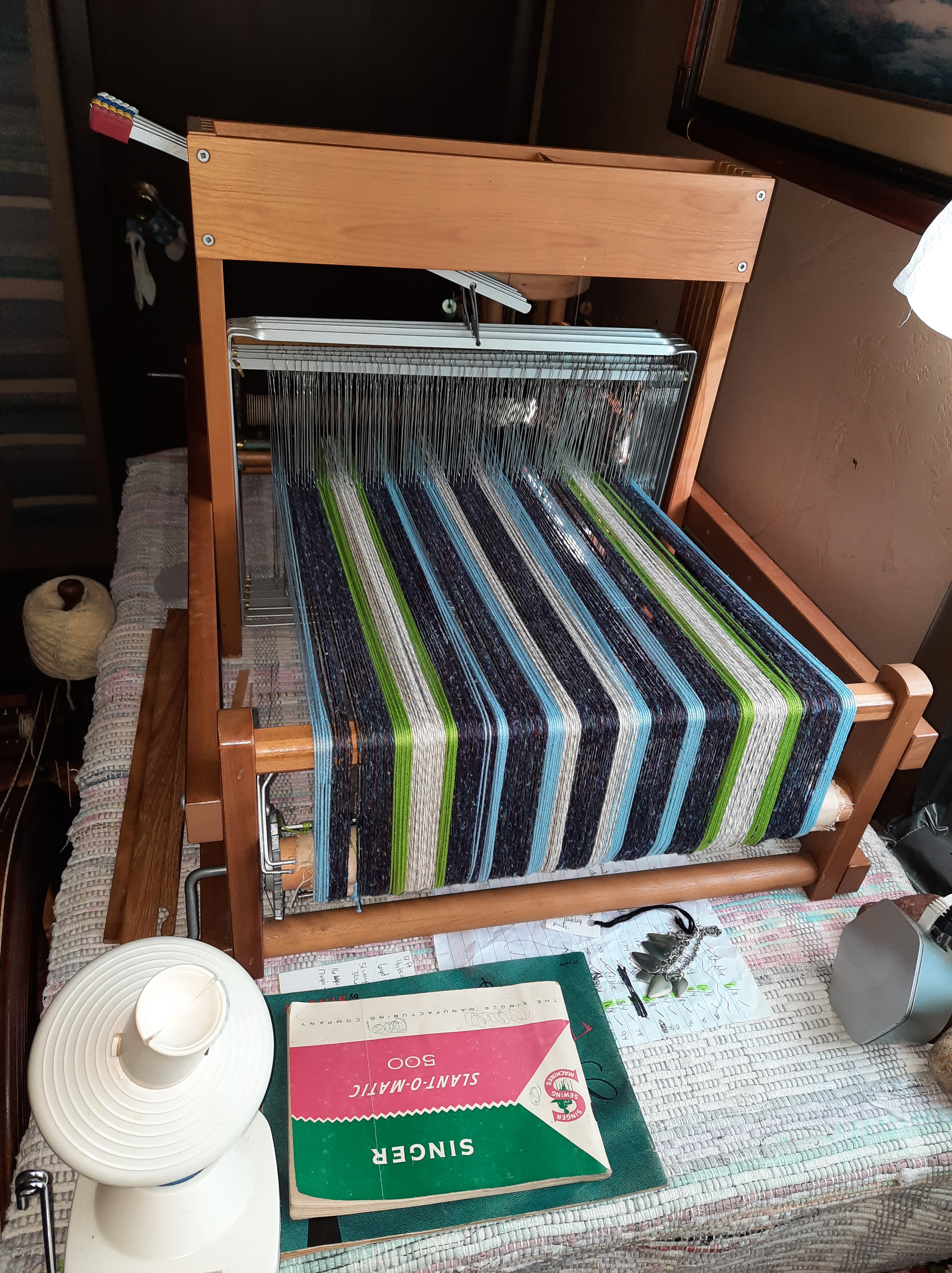
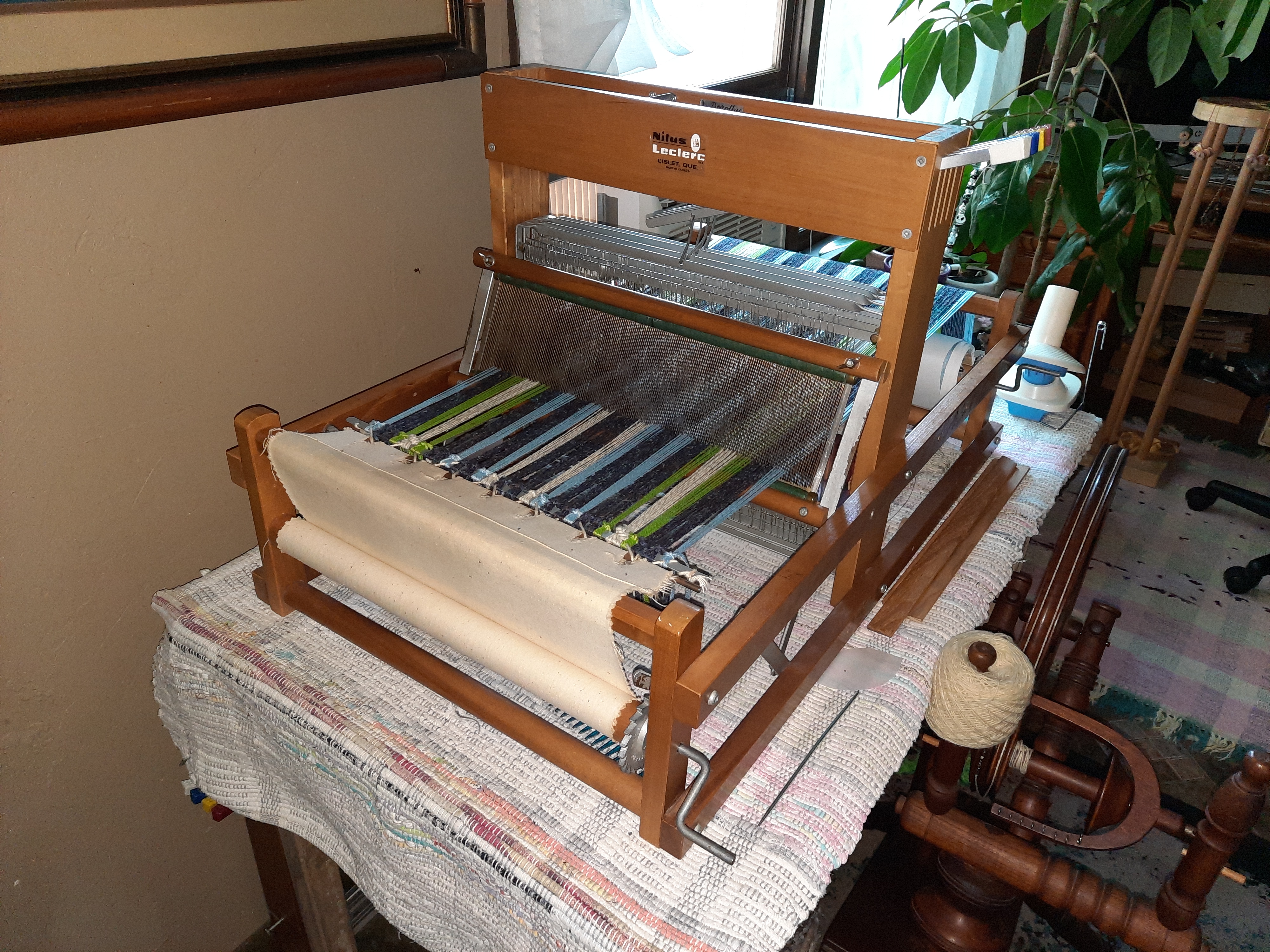
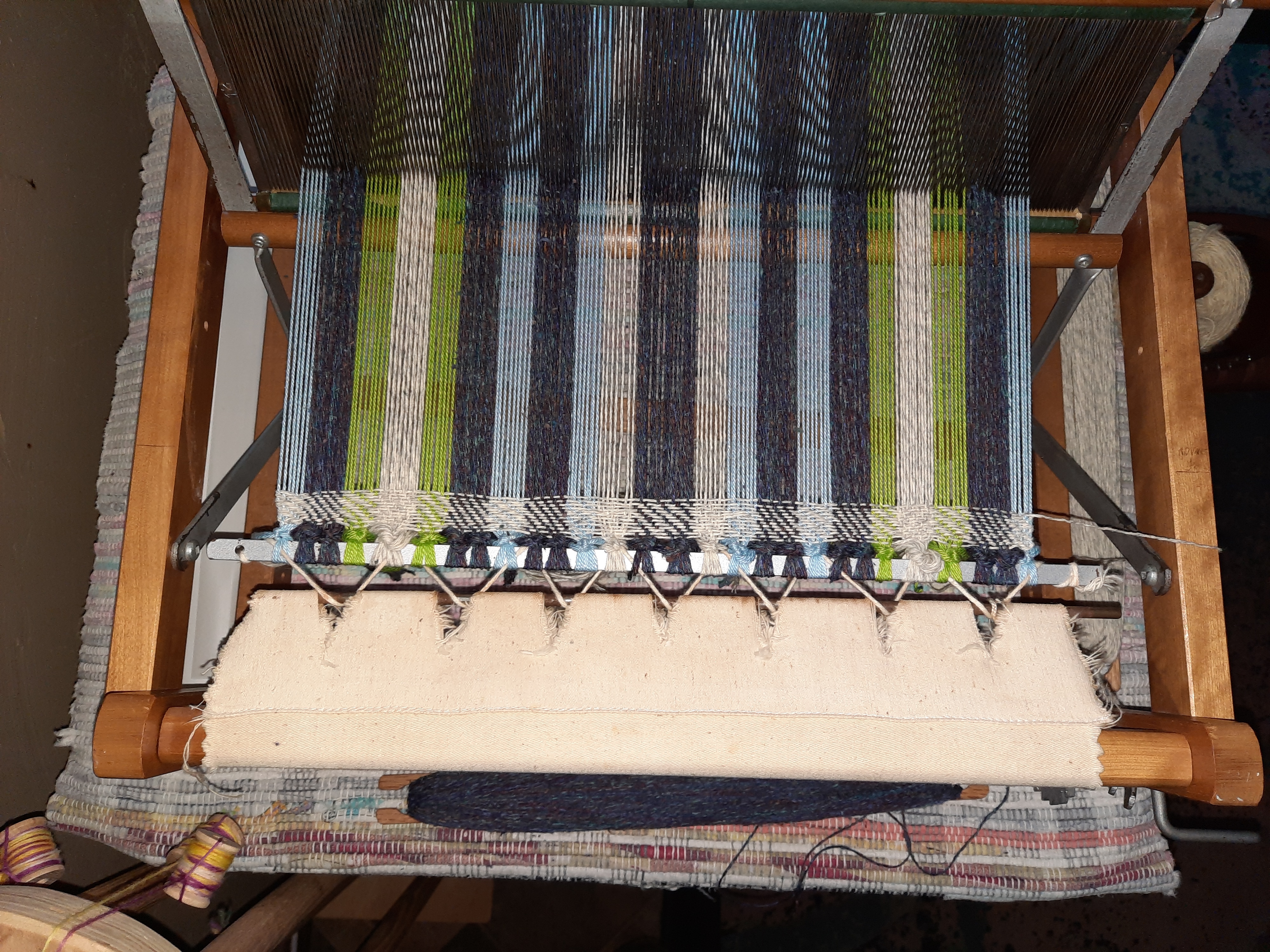
spring fling dishtowel  version number 2 being woven
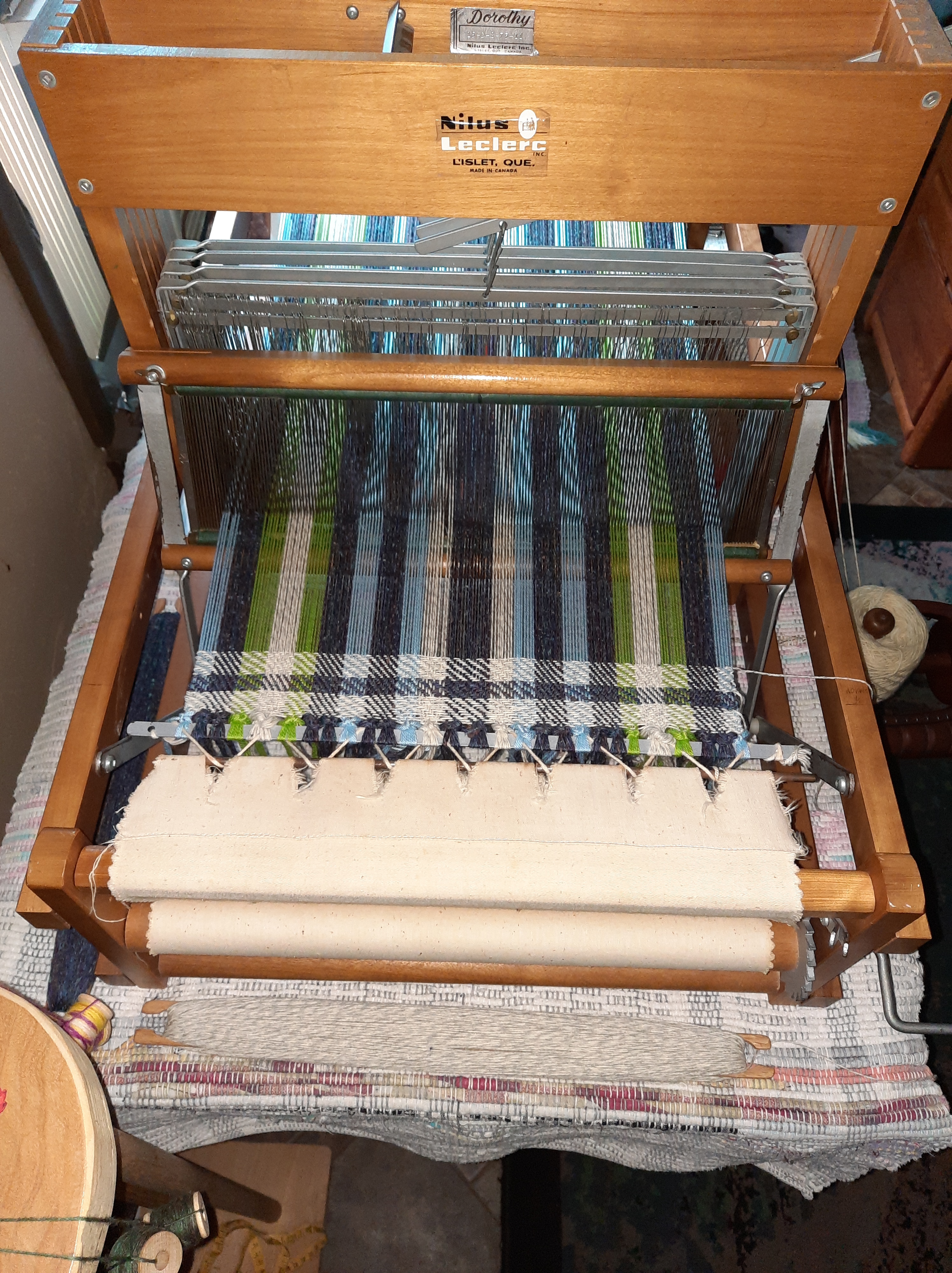
Spring Fling Dishtowel #3

This is the third set of Spring Fling dishtowels is currently on the LeClerc Dorothy loom and is being woven in a true plaid. I think it could’ve been more square, but I’ll need to acquire an appropriate reed to do that.

Spring is nearly here! Get busy and create something or sort your garden seeds and test them for viability.
I’ve nearly finished weaving the first two Spring Fling Dishtowels.

I found an excellent weaving draft software that’s actually Free and it can be used offline!! It’s called QuickDraw and you can get it at QuickDrawWeaving.com

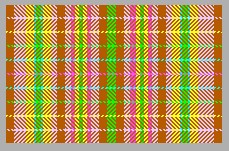
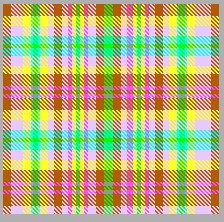
The above photo is what the the first 2 Spring Fling Dishtowels as depicted by the software.

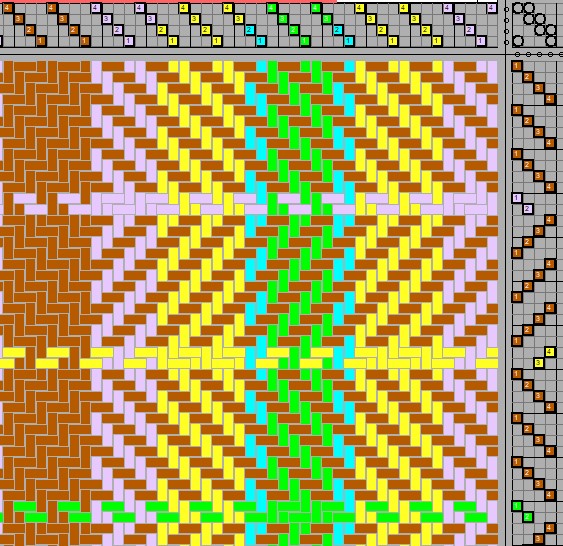
I drafted the next 2 dishtowels using the software and I can tell you that it’s pretty neat to see. I’ve always kept a notebook of everything I draft and weave. I still do because I’m a contingency planner.

The above photo is what the next 2 Spring Fling Dishtowels will look like when I continue weaving.

The rest of these towels are woven on the fly, while being notated in a notebook. I prefer creating on the fly because it doesn’t require a computer or electricity.
Get busy! Learn something new or make something you’ve never made before! It will keep your brain healthy!!

The first weaving of my own draft

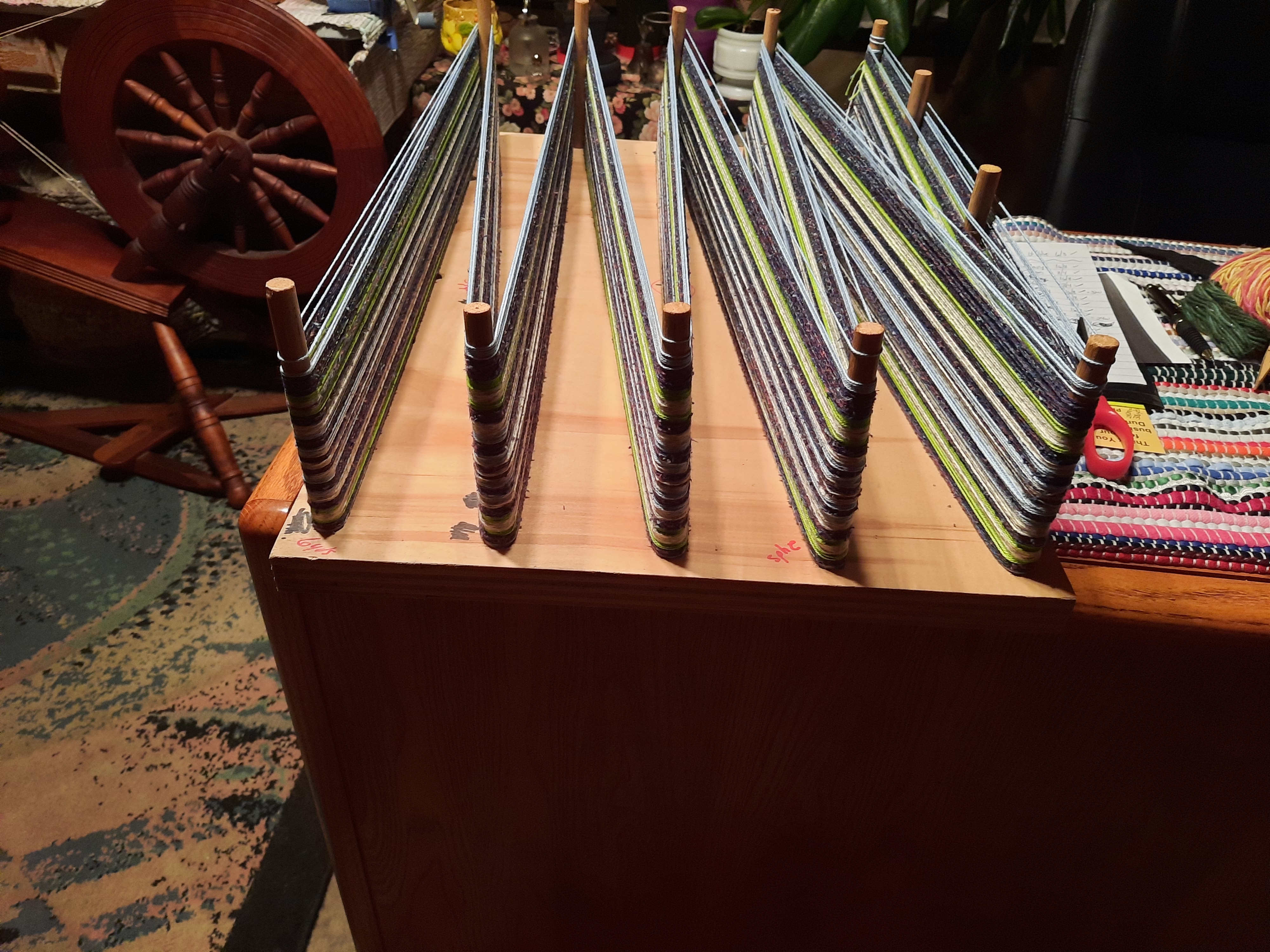
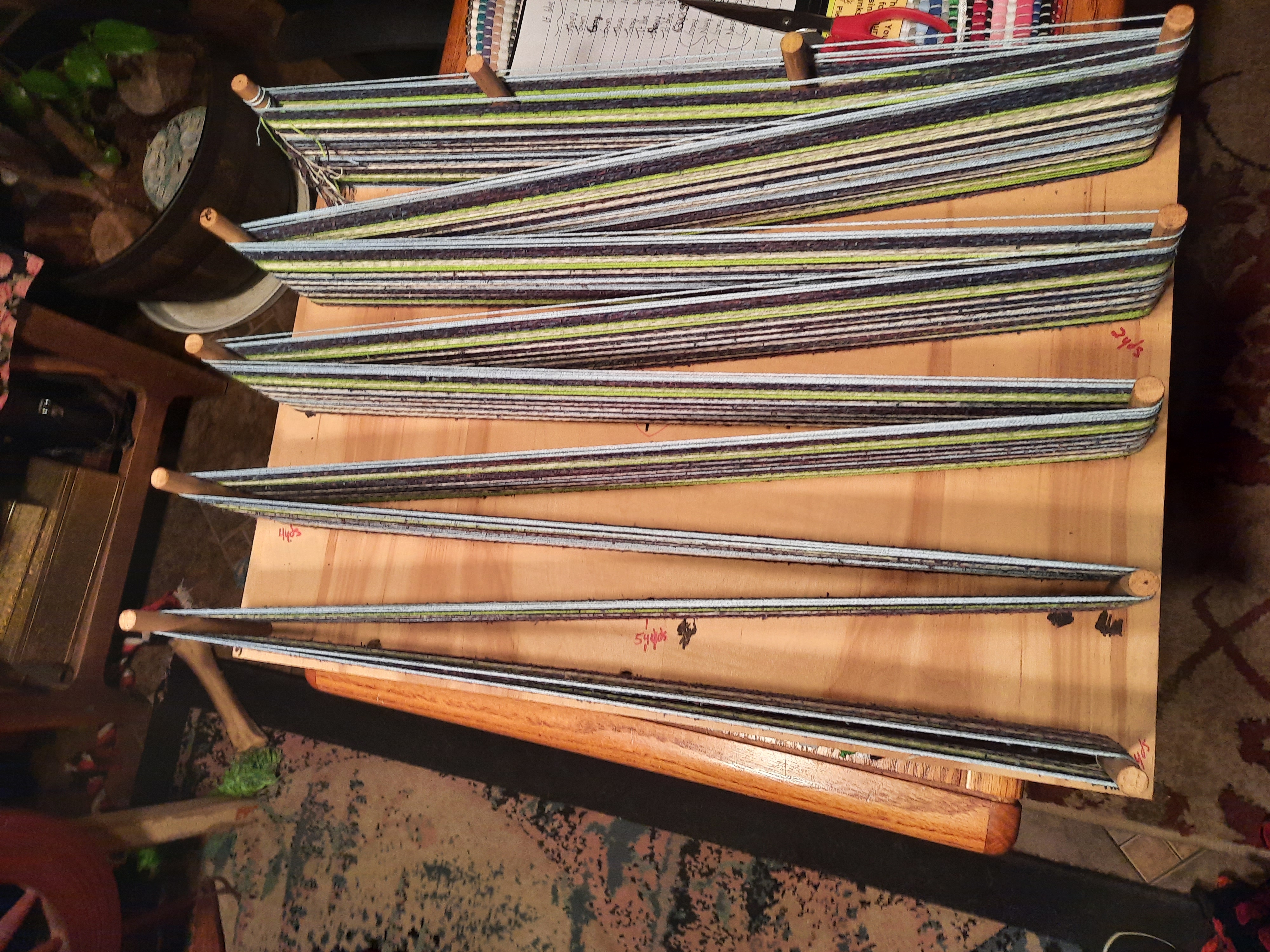
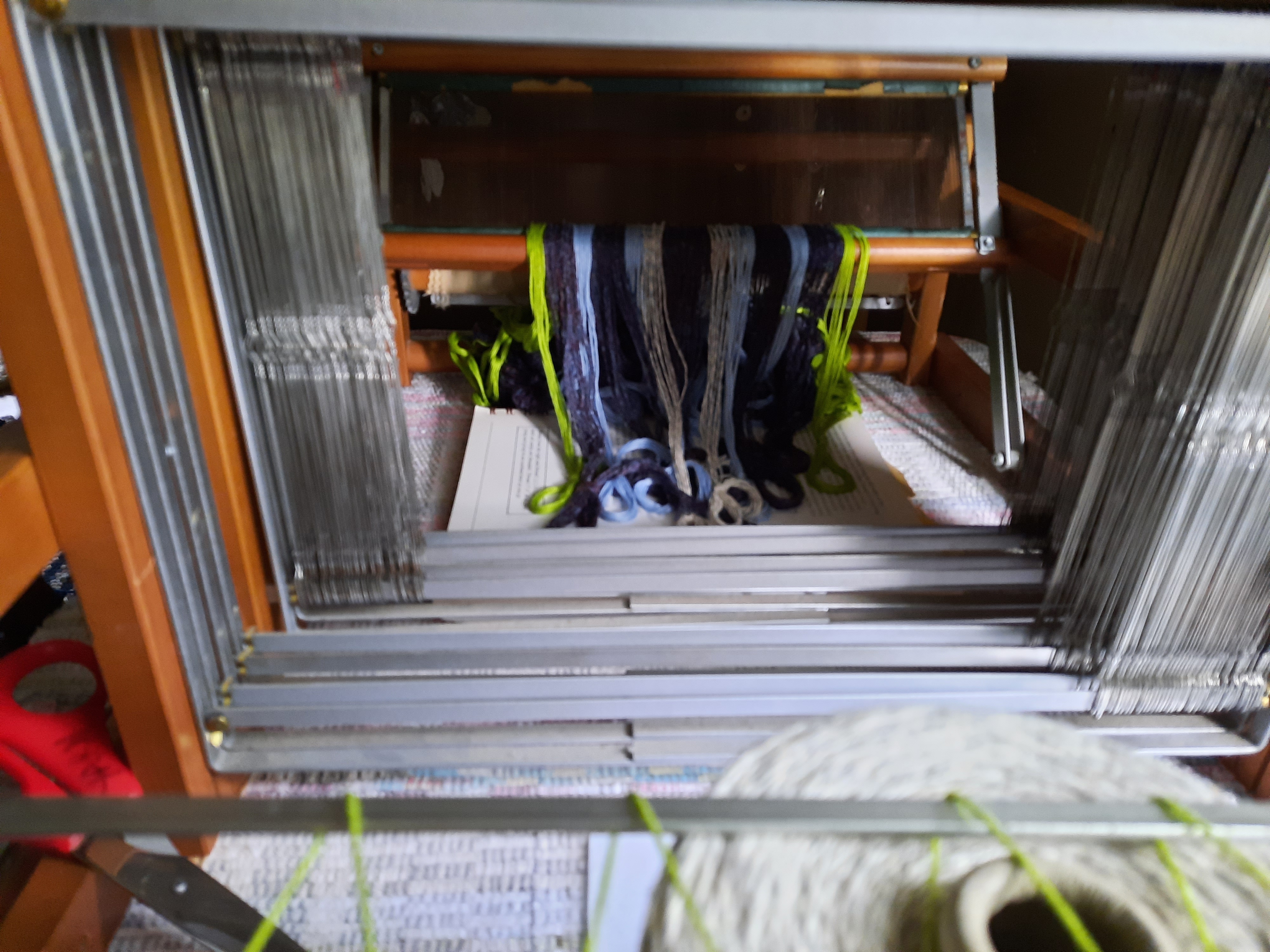
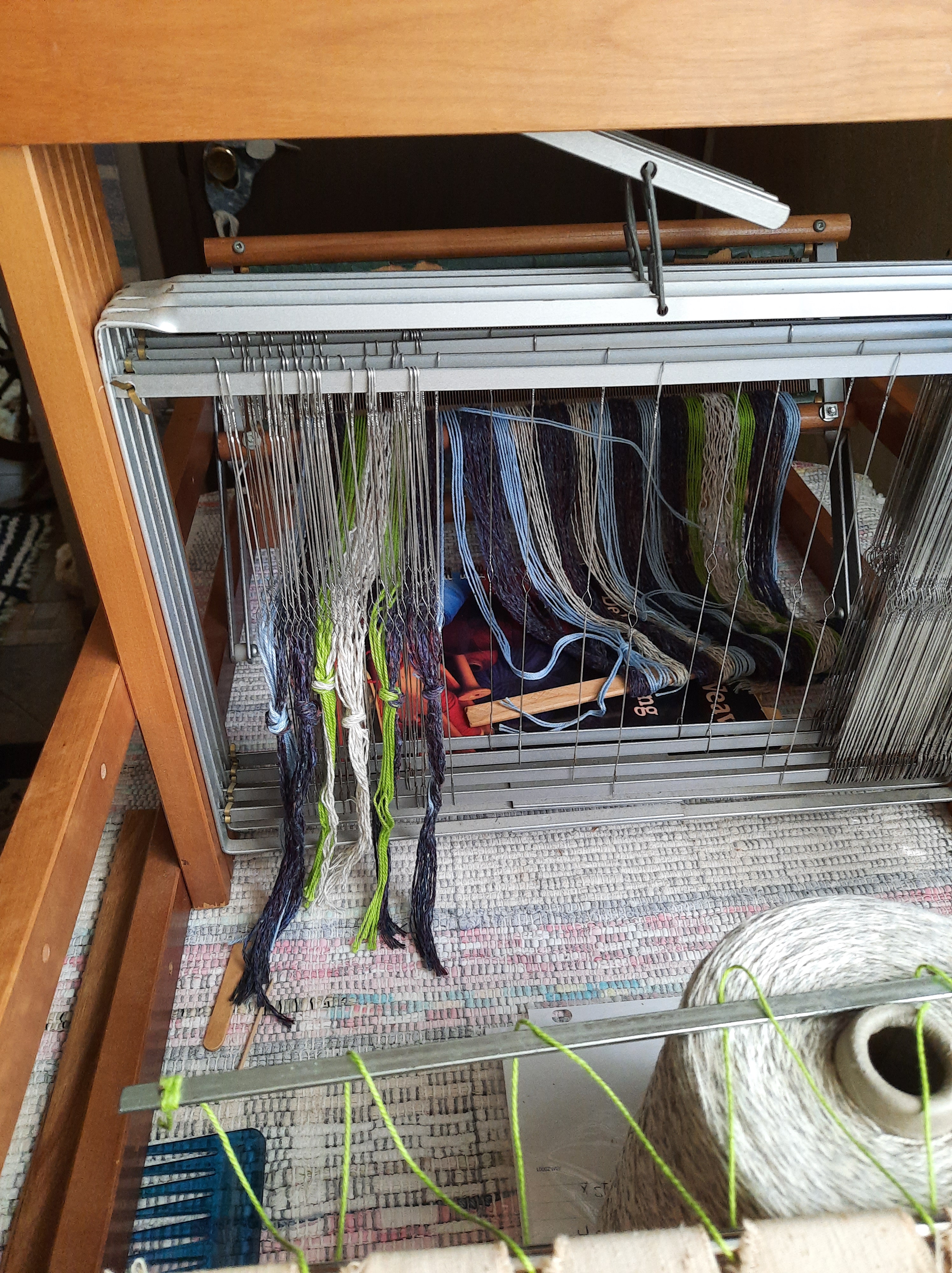
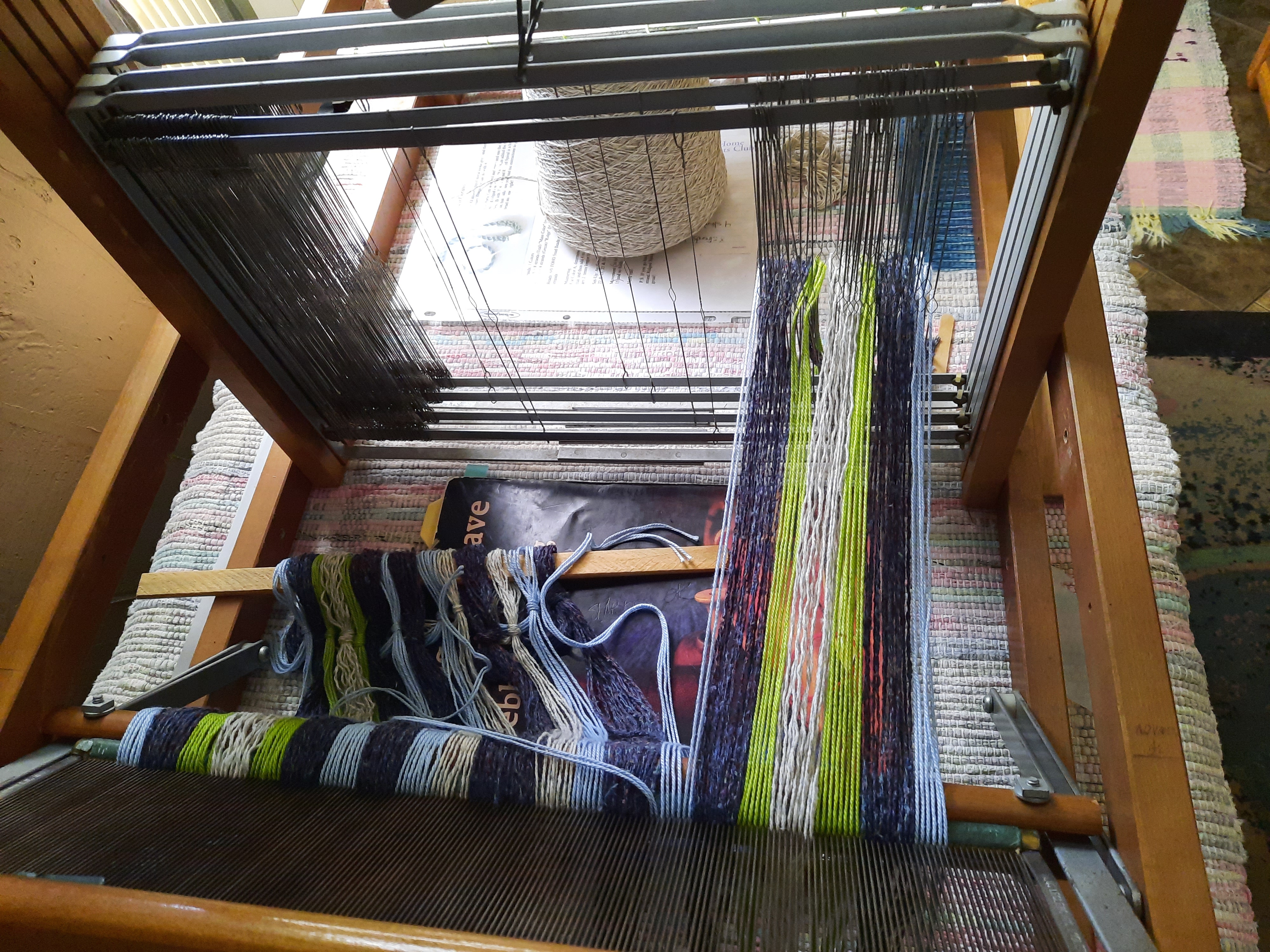
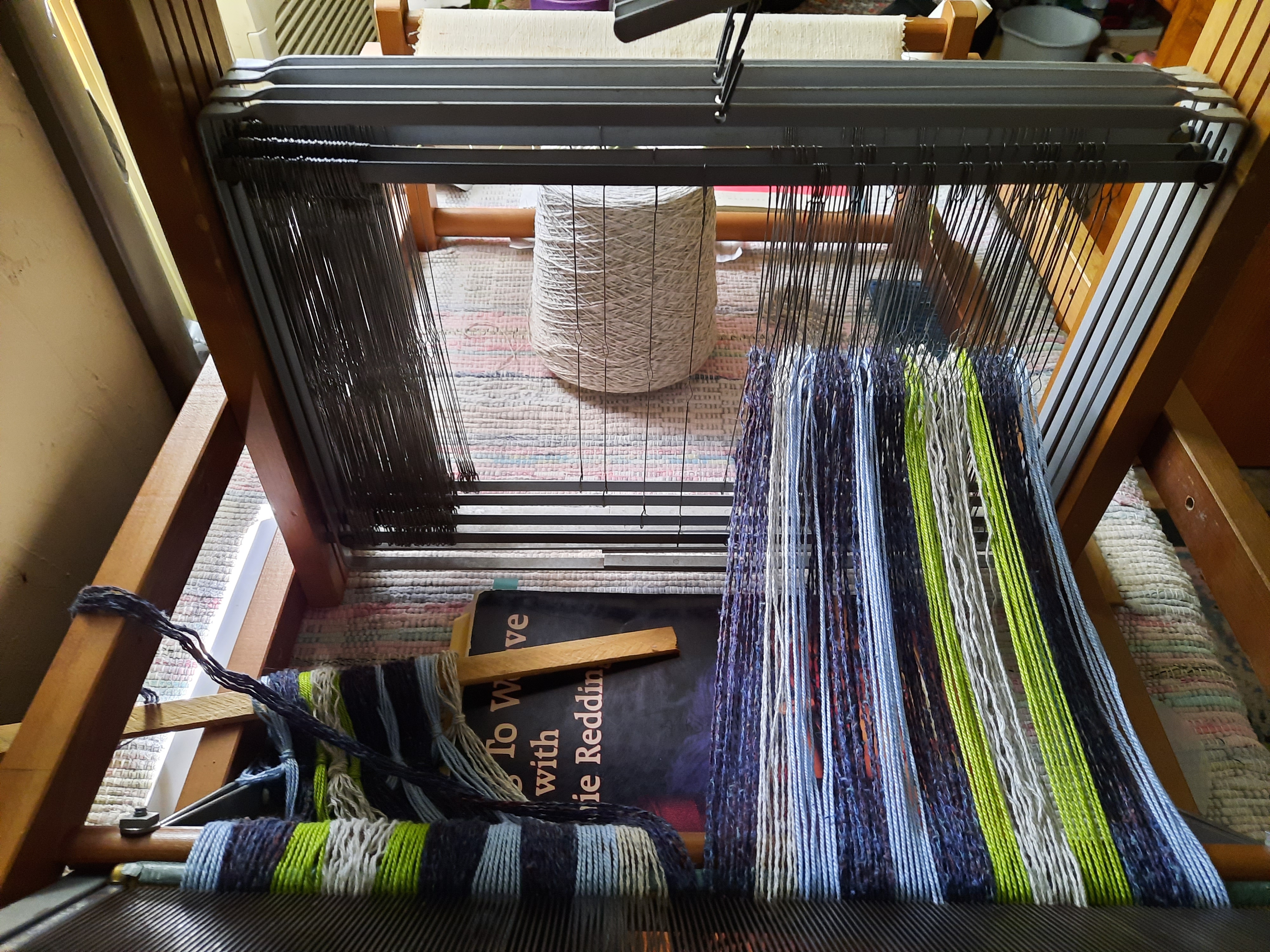
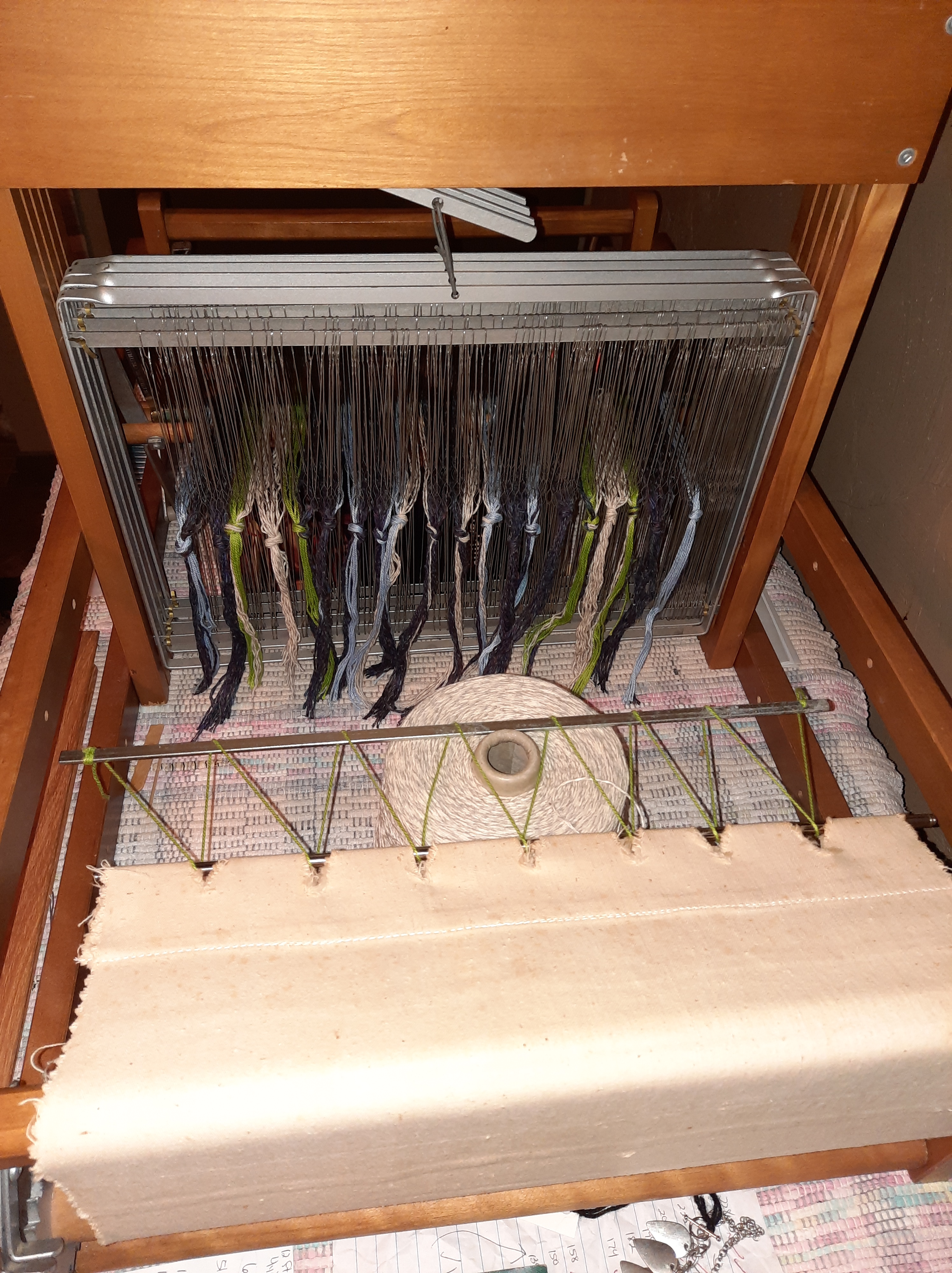
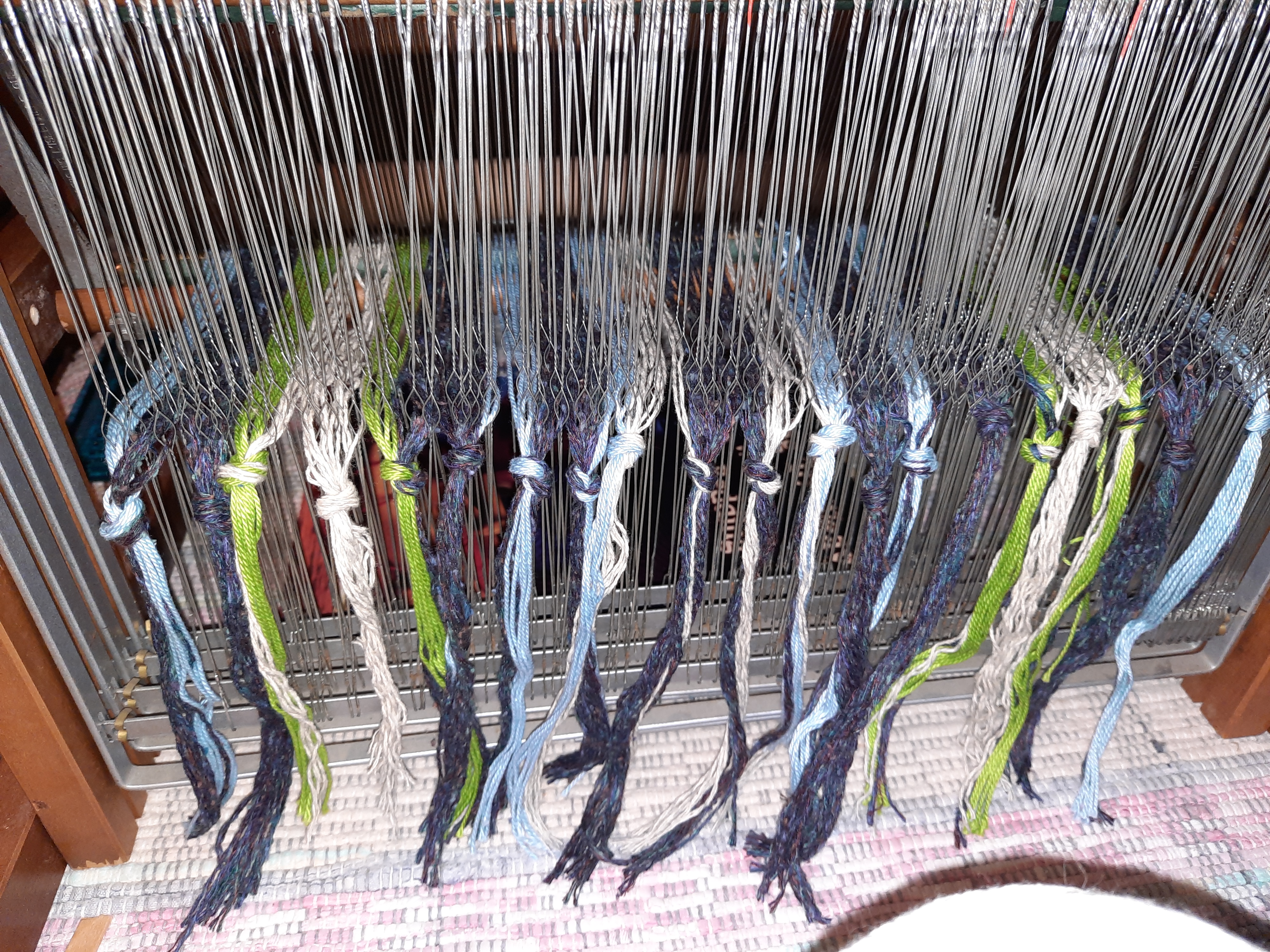
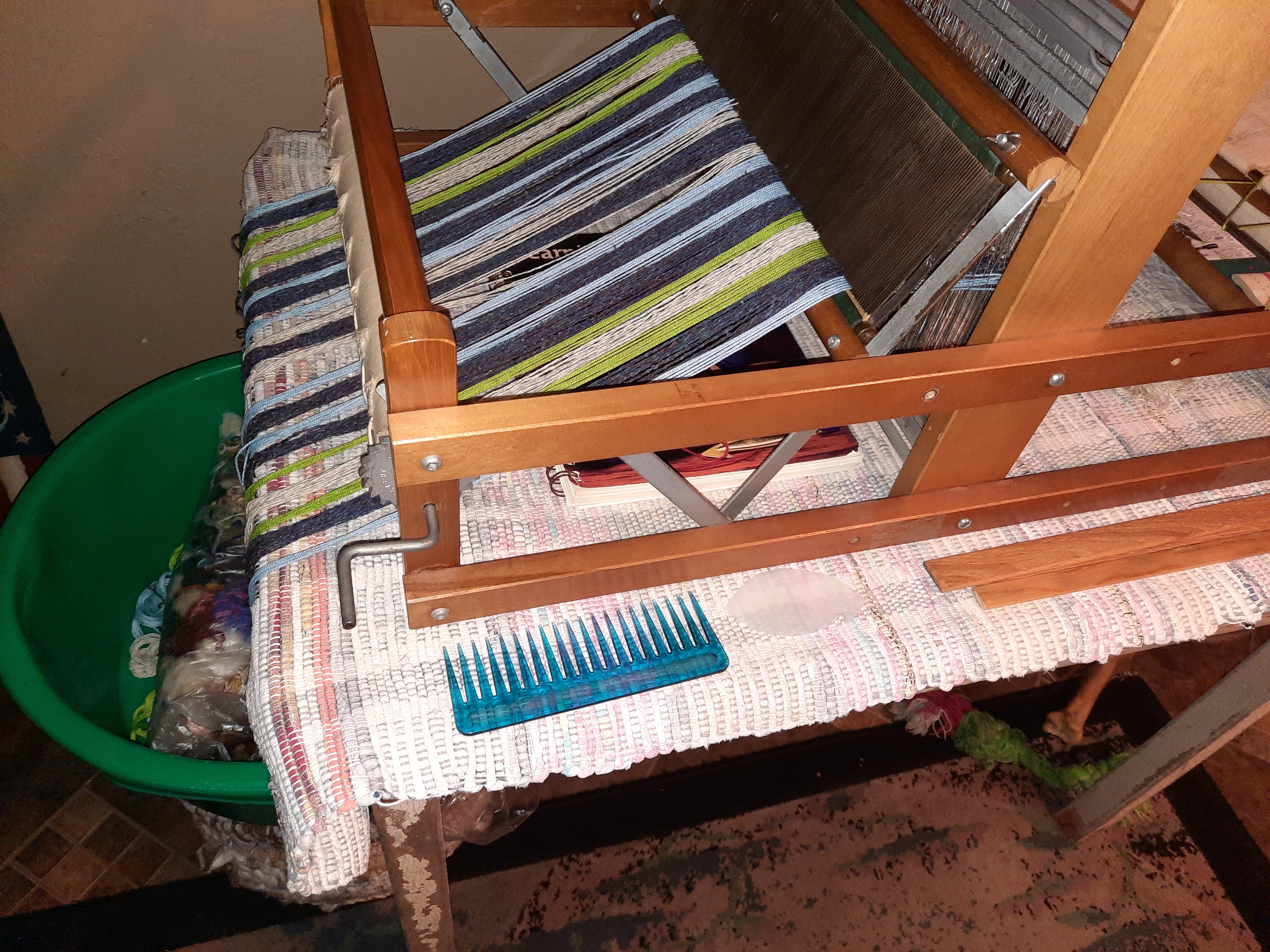
I cleaned up the loom after removing the first finished weaving. I removed one of the 4-harness blocks and used the warp board that our son and I built 15 years ago to start a new weaving. I decided on dishtowels using #5 and #3 cotton.
I chained the warp while trying to maintain the cross. This is of note because I’d not chained a warp in over 12 years, so it was a lot of virtual hair pulling. I ended up losing about 3 yards of the warp because the cotton didn’t want to play well.

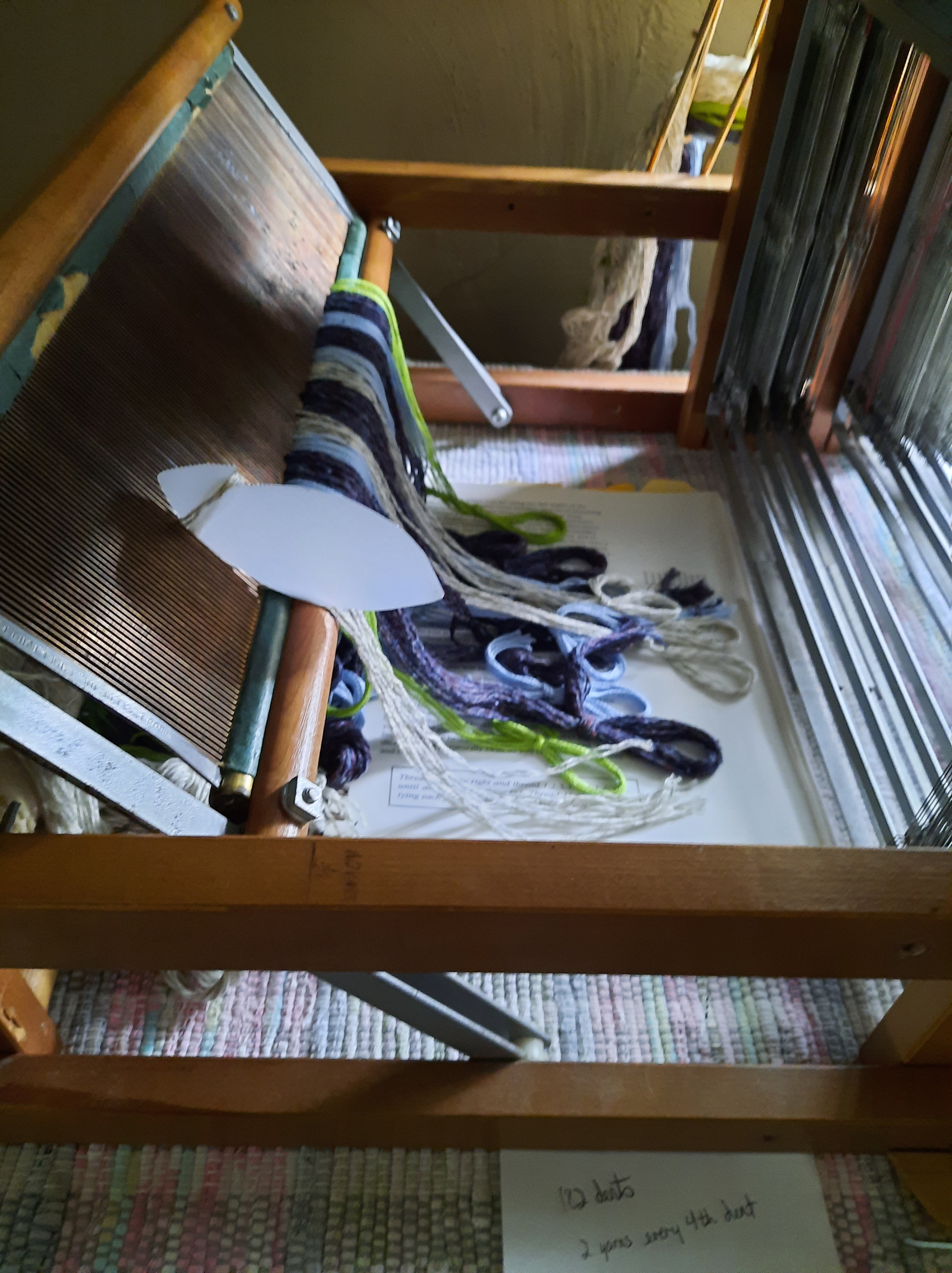
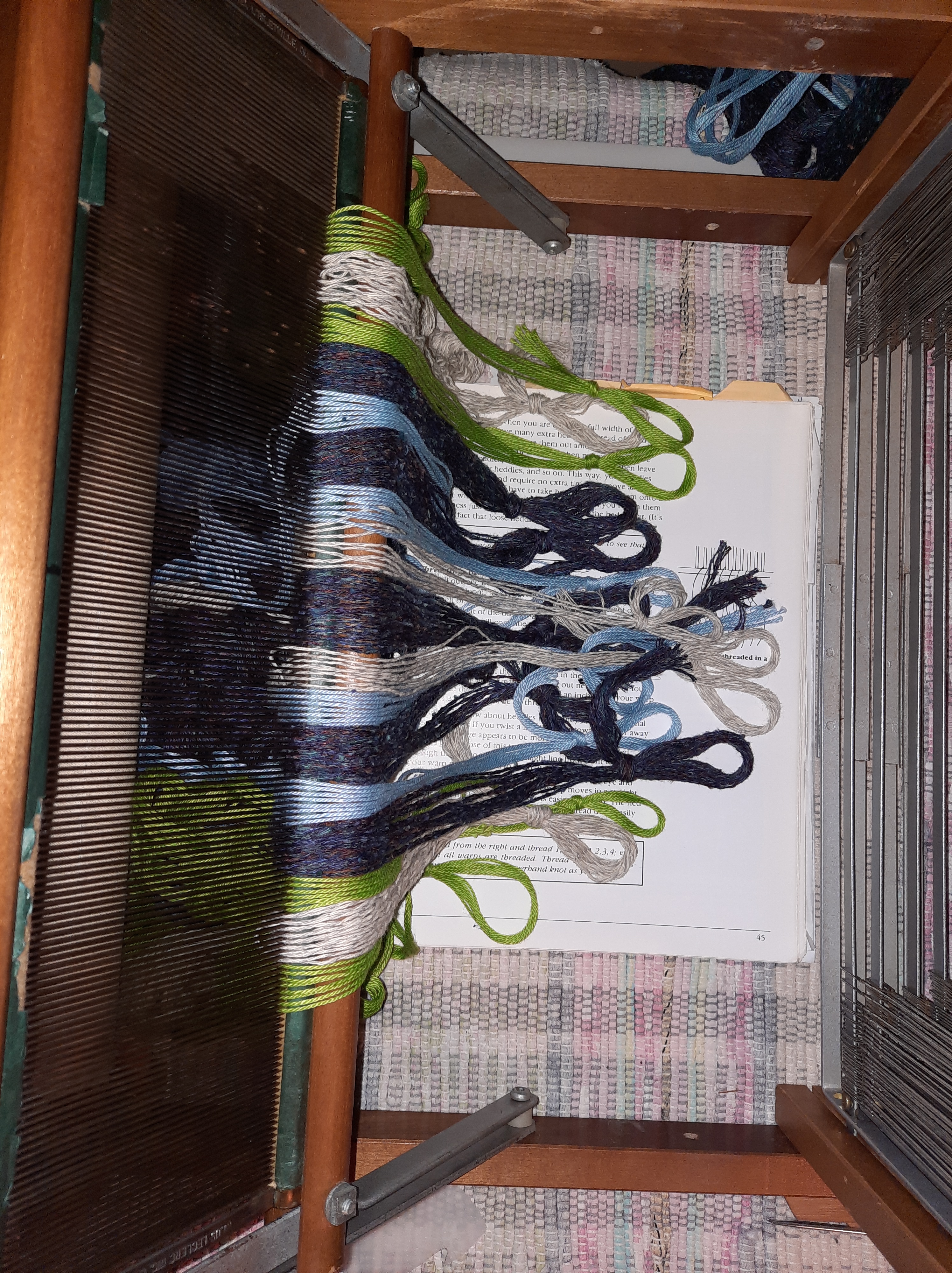
I slowly sleyed the reed and secured the warp onto a shed stick.

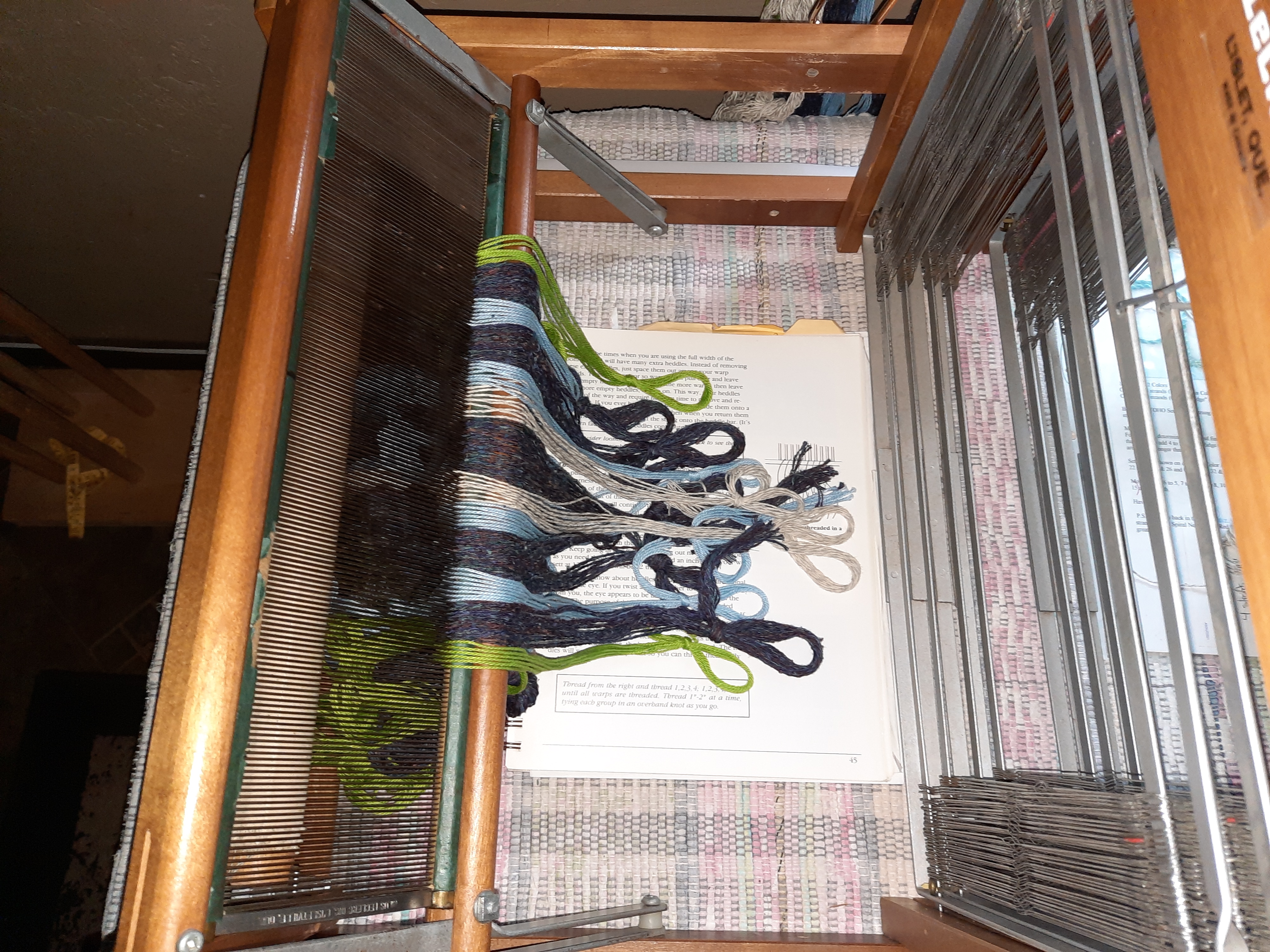
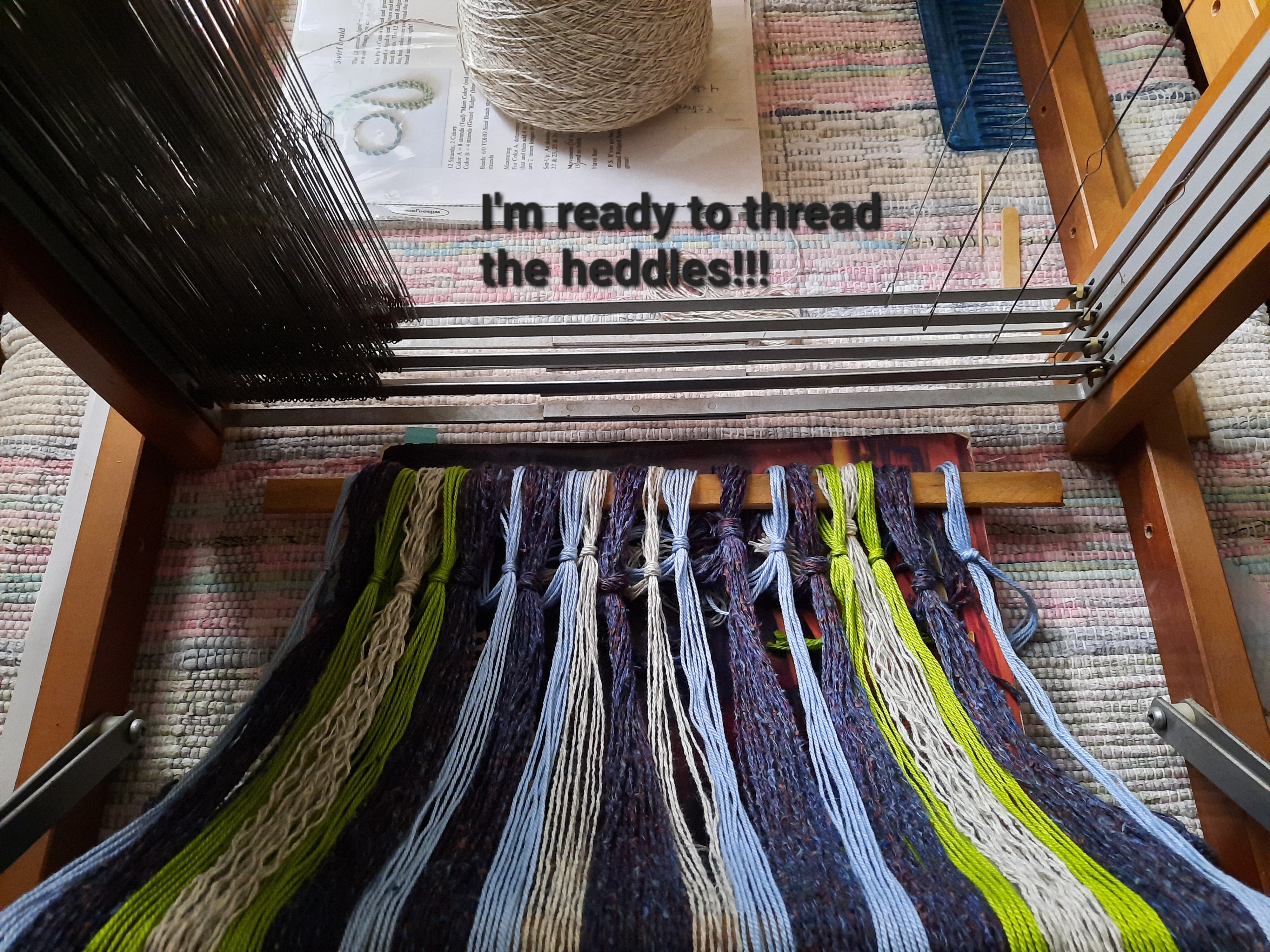
Threading the heddles went fairly smoothly and I enjoyed relearning the process. The biggest difference for me was that this was not my Nana’s antique rug loom, so it was easier.

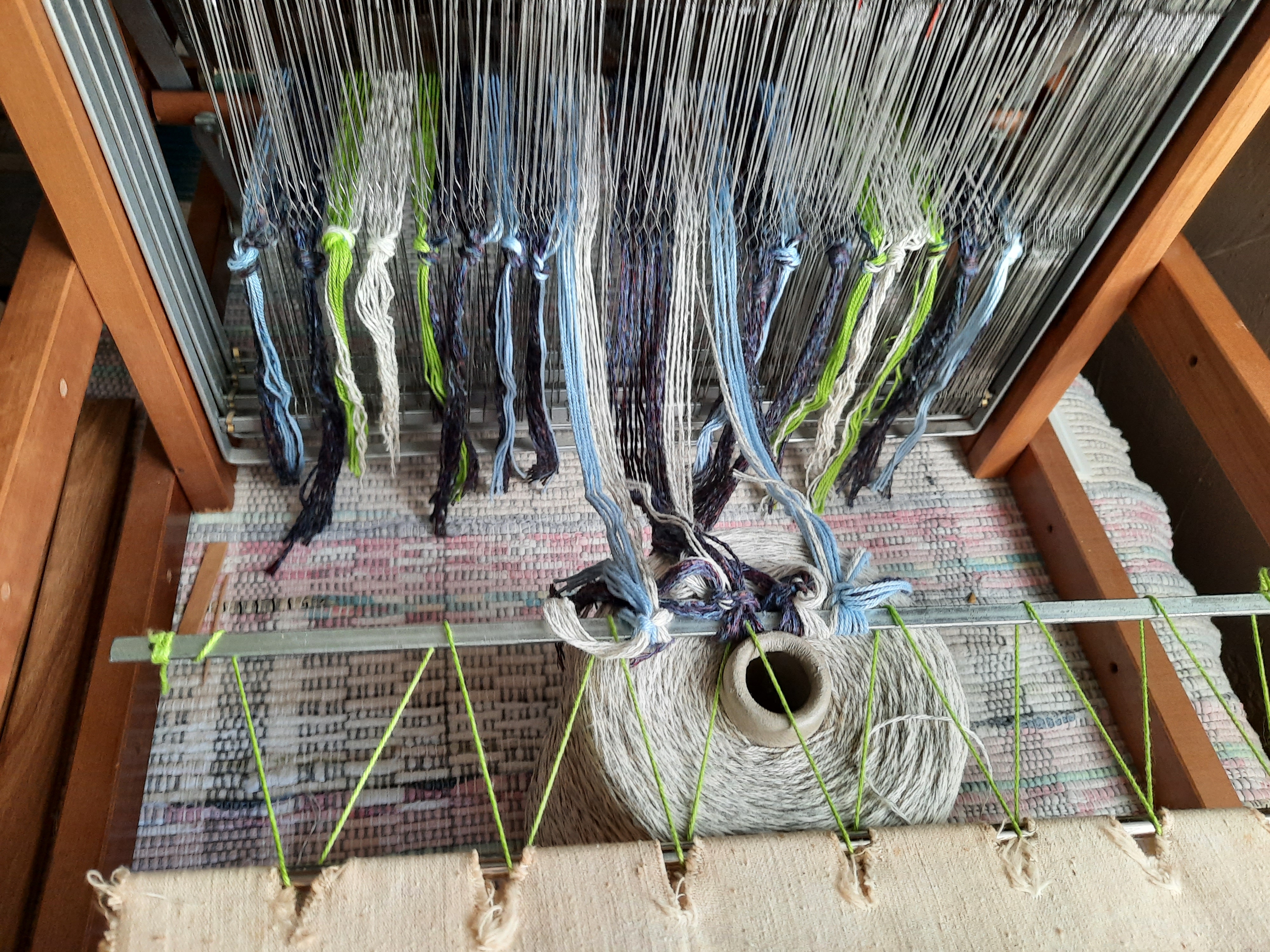
The warp is ready to tie onto the back apron! This is a very interesting process when there’s a warp puddle waiting in a feed tub.

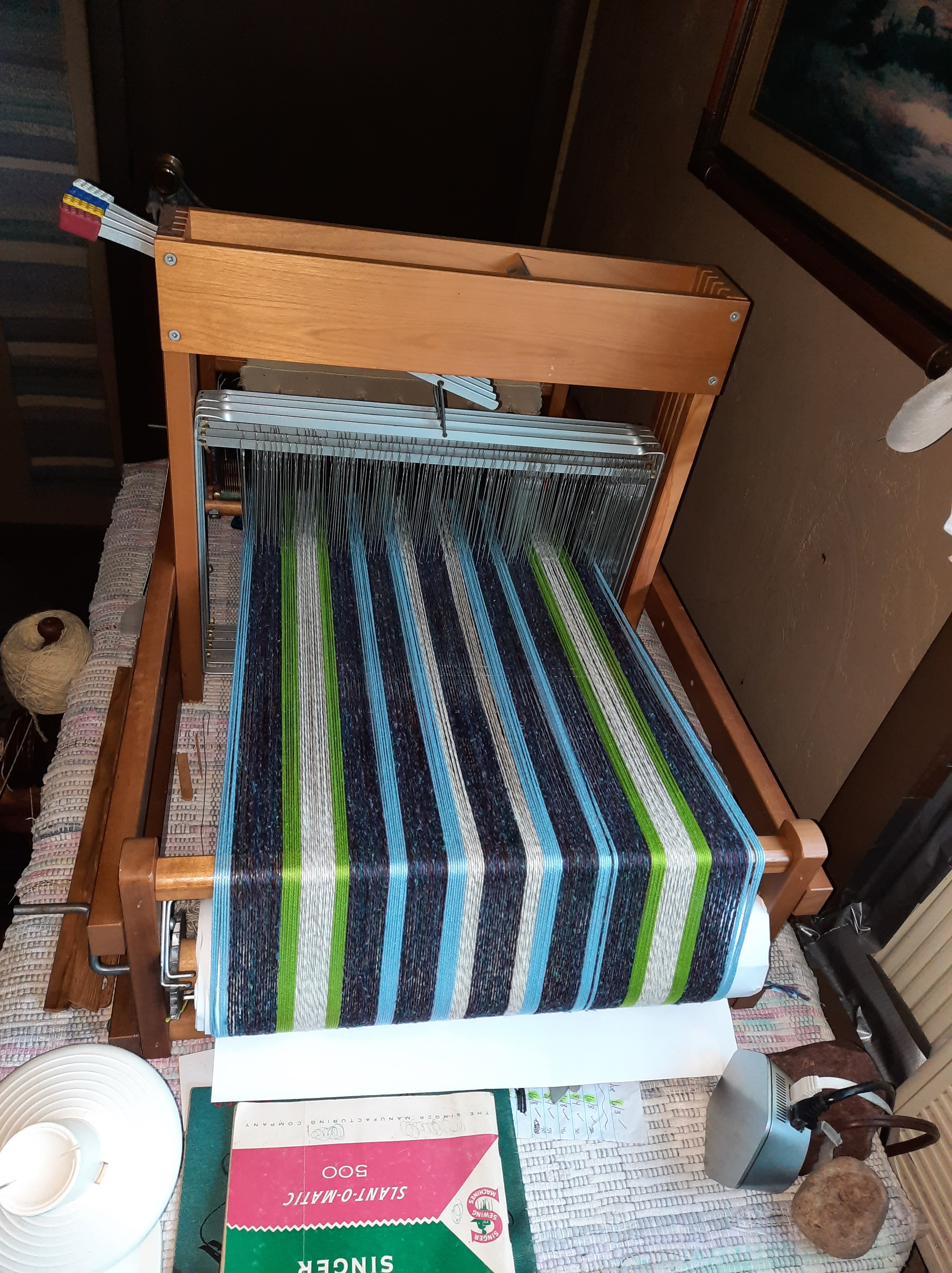
Tying the warp onto the back rear/back apron and beaming it onto the rear warp beam progressed fairly well. It’s slow and steady work and rushing isn’t necessary or desired.

It’s time to have a cup of tea and begin the weaving!!

That’s it for now.

Get busy with creating whatn you like, want, or need. Quit sitting on our brain and get busy!

My favorite weaving pattern for now….

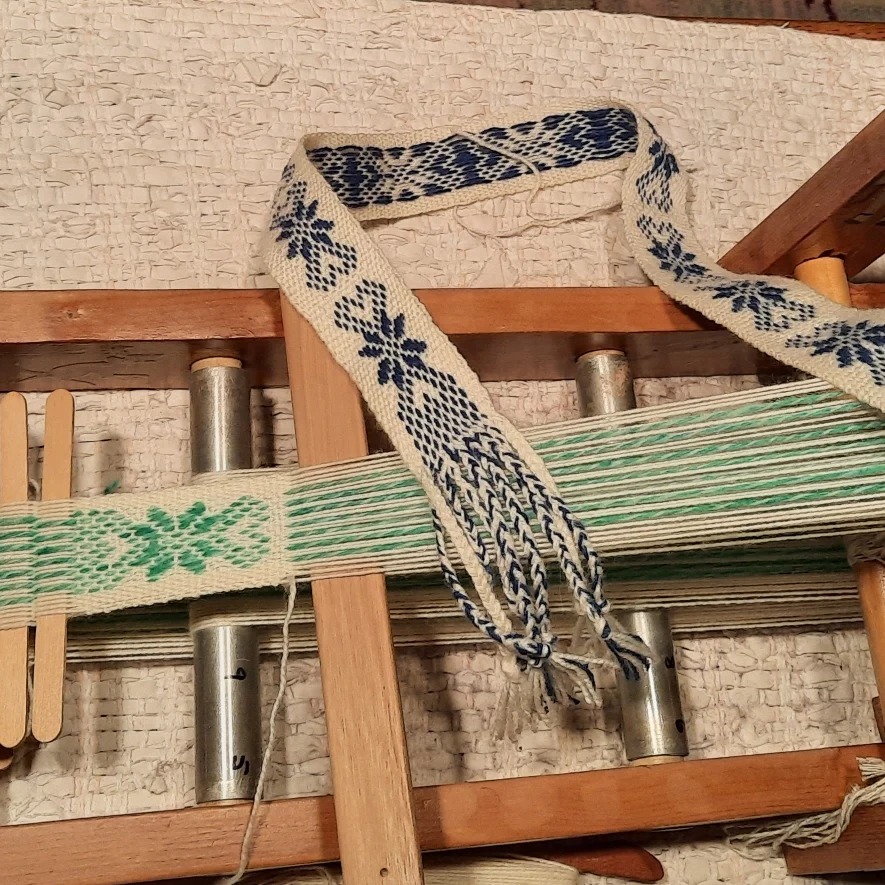
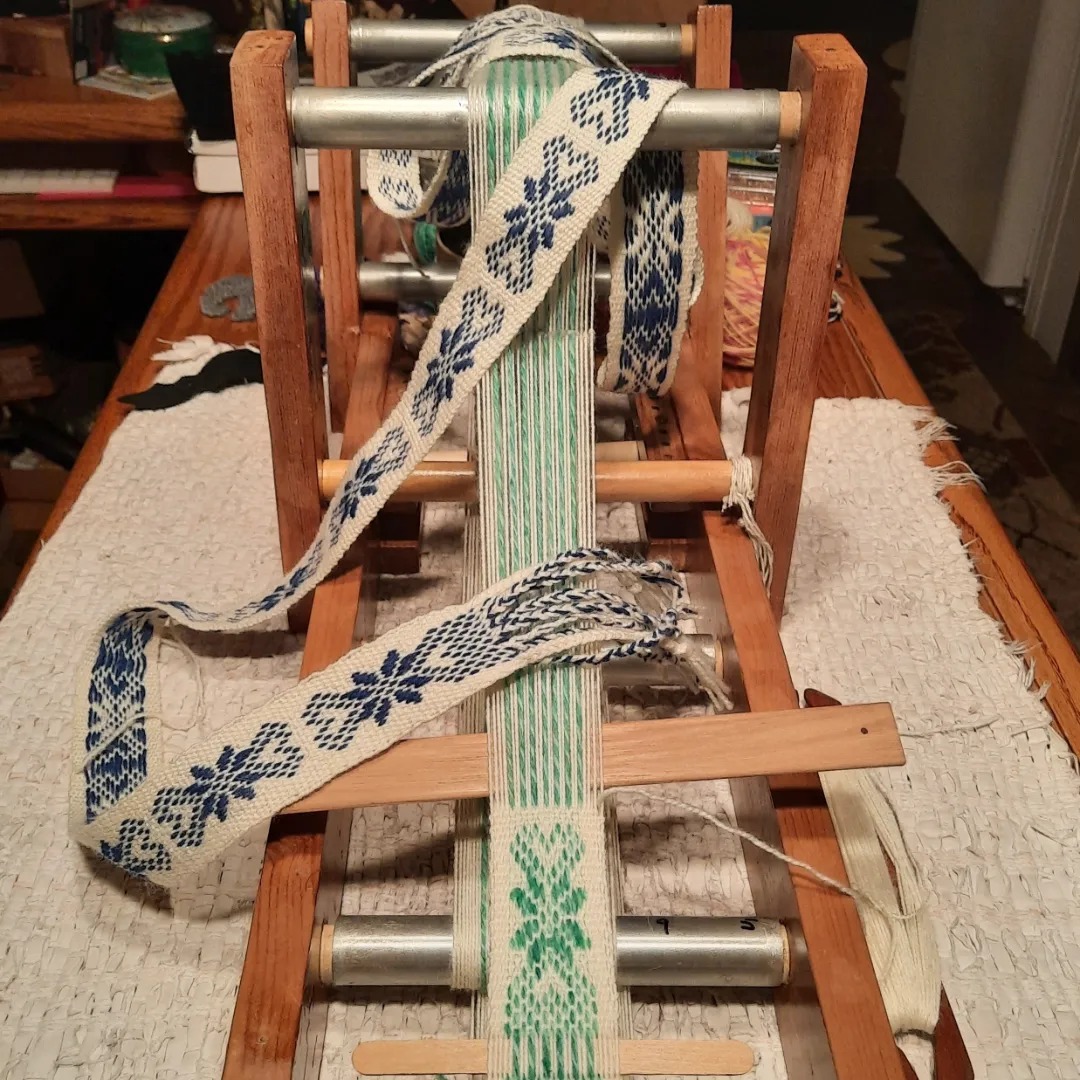
I modified a pattern from the book, The Weaver’s Inkle Pattern Directory, that looks like snowflakes and diamonds. It’s on pg. 77 and is called simply, Baltic-13 2 (it’s actually the one at the bottom of the chart on pg. 77. It’s a neat pattern, but when I started the first one I redrew it so it’s snowflakes and hearts with a 3 row space between each sequence.

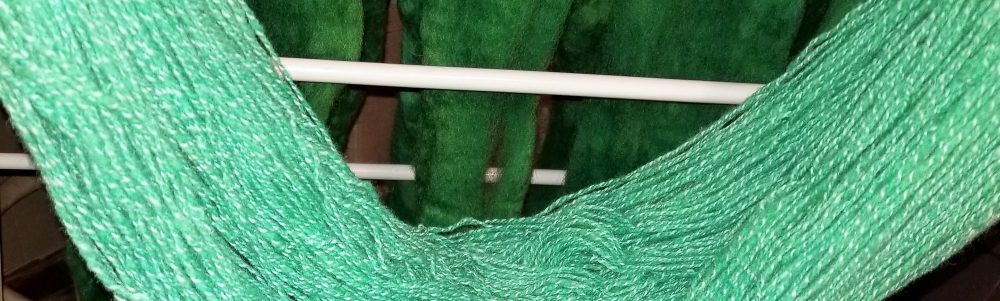
I finished the first belt using this pattern in cream white wool and royal blue sized wool. I rewarped the inkle loom with the cream white and my handspun, handdyed turquiose green wool for the next band/belt.

I graphed a draft of my derivation of the Baltic-13 2 draft and changed the colors for the next belt I will be weaving next. The next image is the weaving draft to be used with the threading chart of Baltic-13 2.

I’ve been warping the inkle loom with 9 extra warp threads (4 up and 5 down) on each side of the pattern(s) because I like more selvage on the edges. This next band/belt will be in dark violet, handspun handdyed light turquoise green, forest green, and the single outside pattern edge in hte dark violet.

When I have time, I’ll post progress pictures on facebook and instagram as I go along.

Get going and make something AMAZING!!! Feel free to use the chart for weaving, knitting, crocheting, etc.

How to build your own multi-purpose loom!

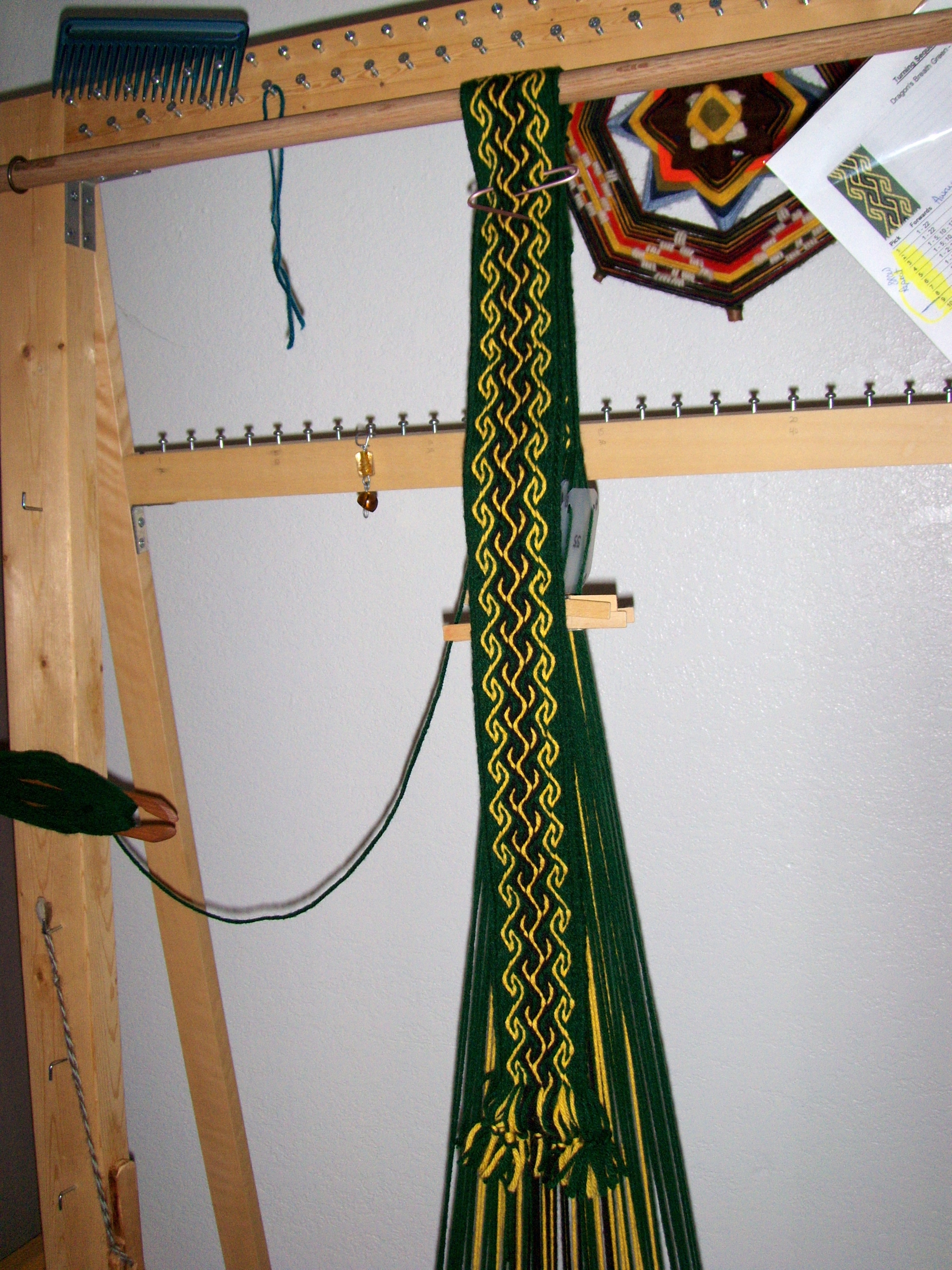
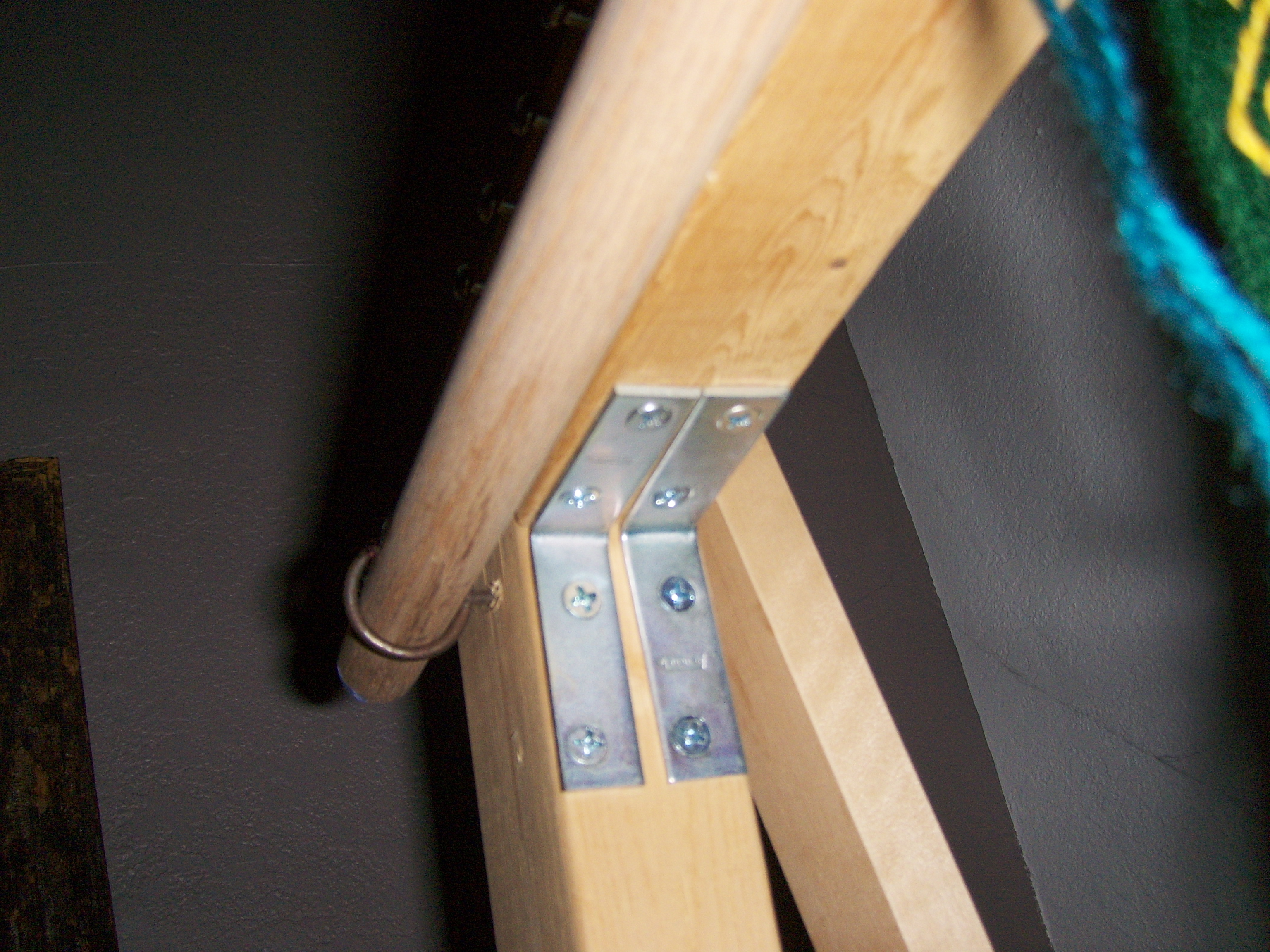
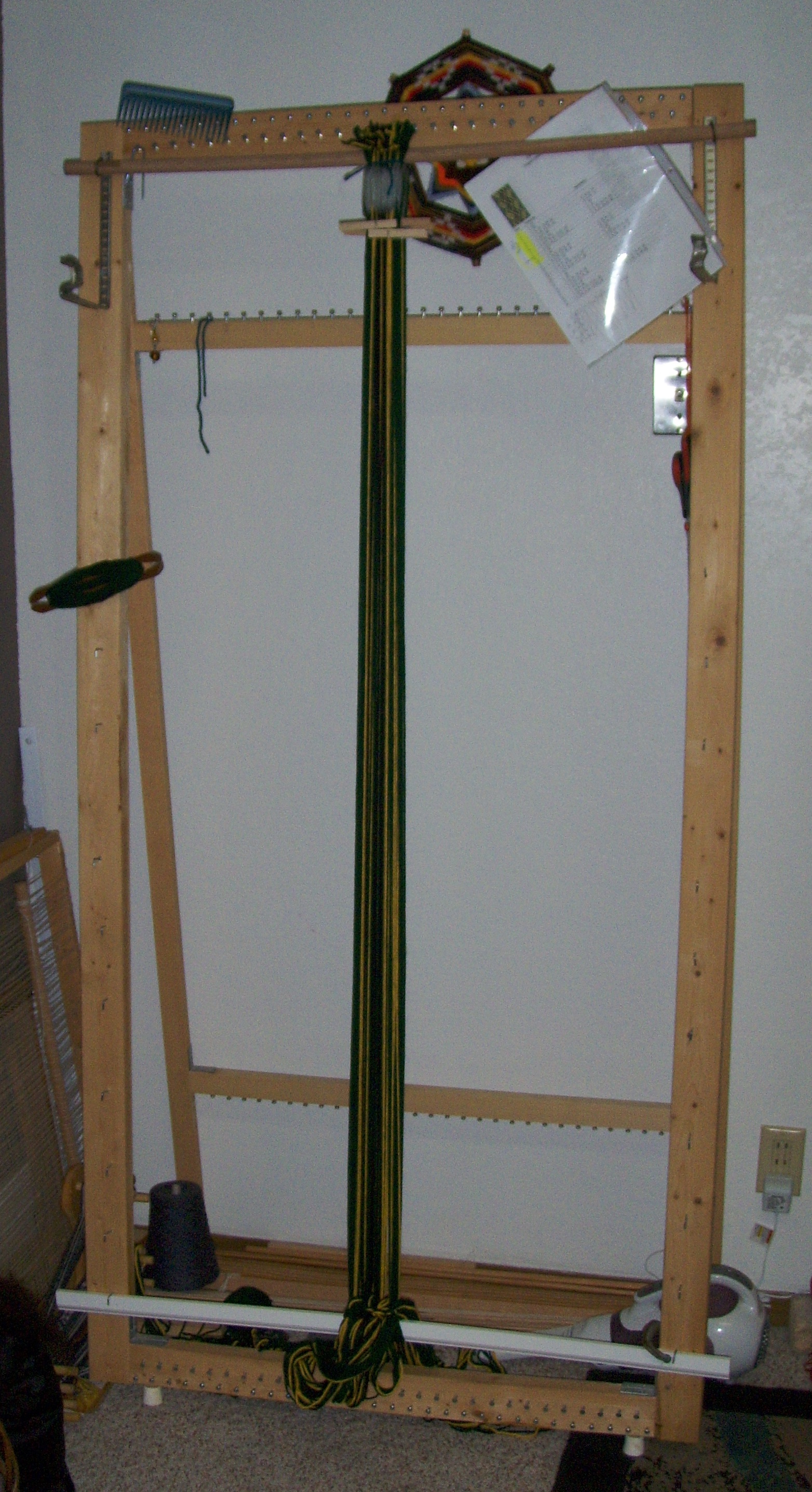
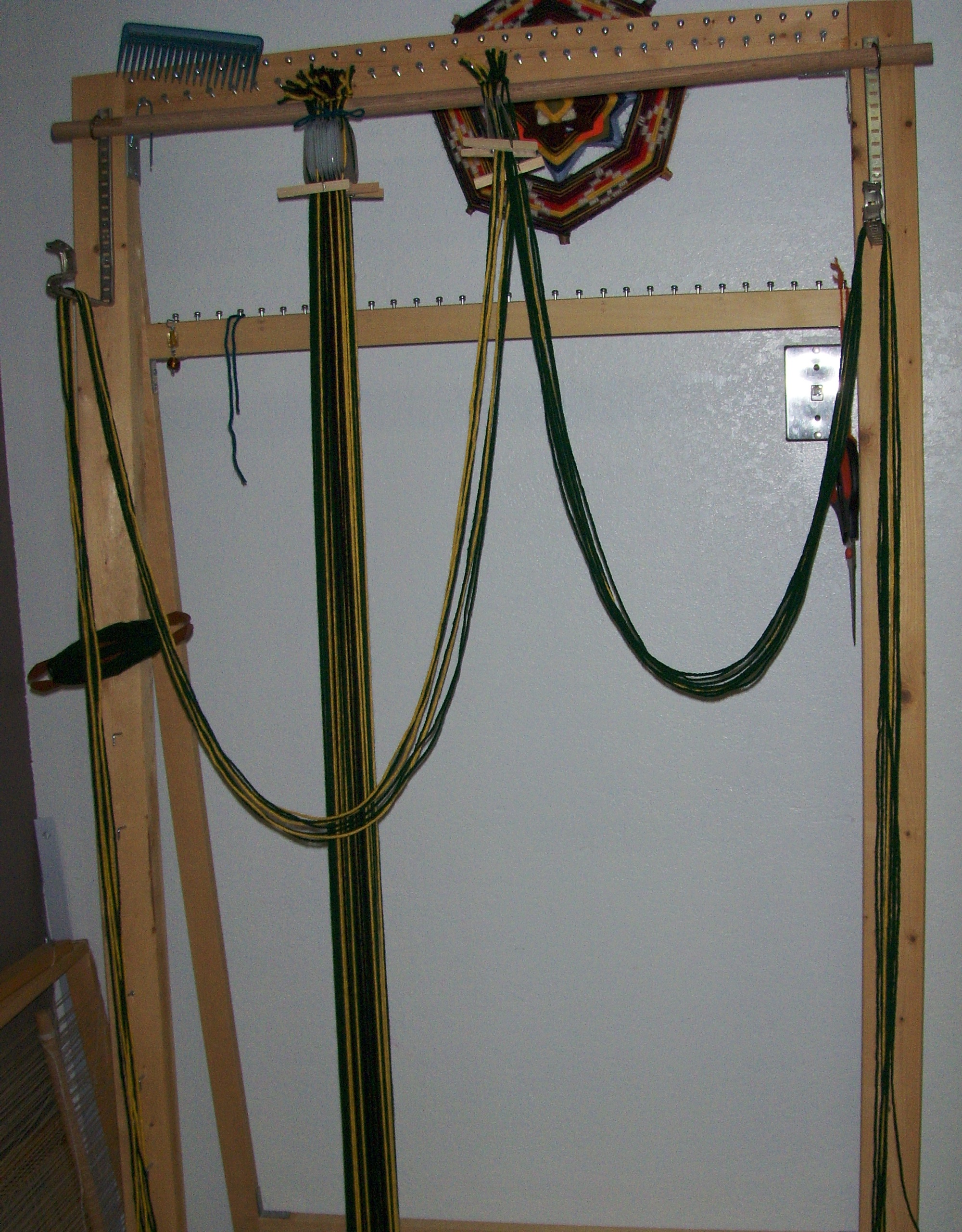
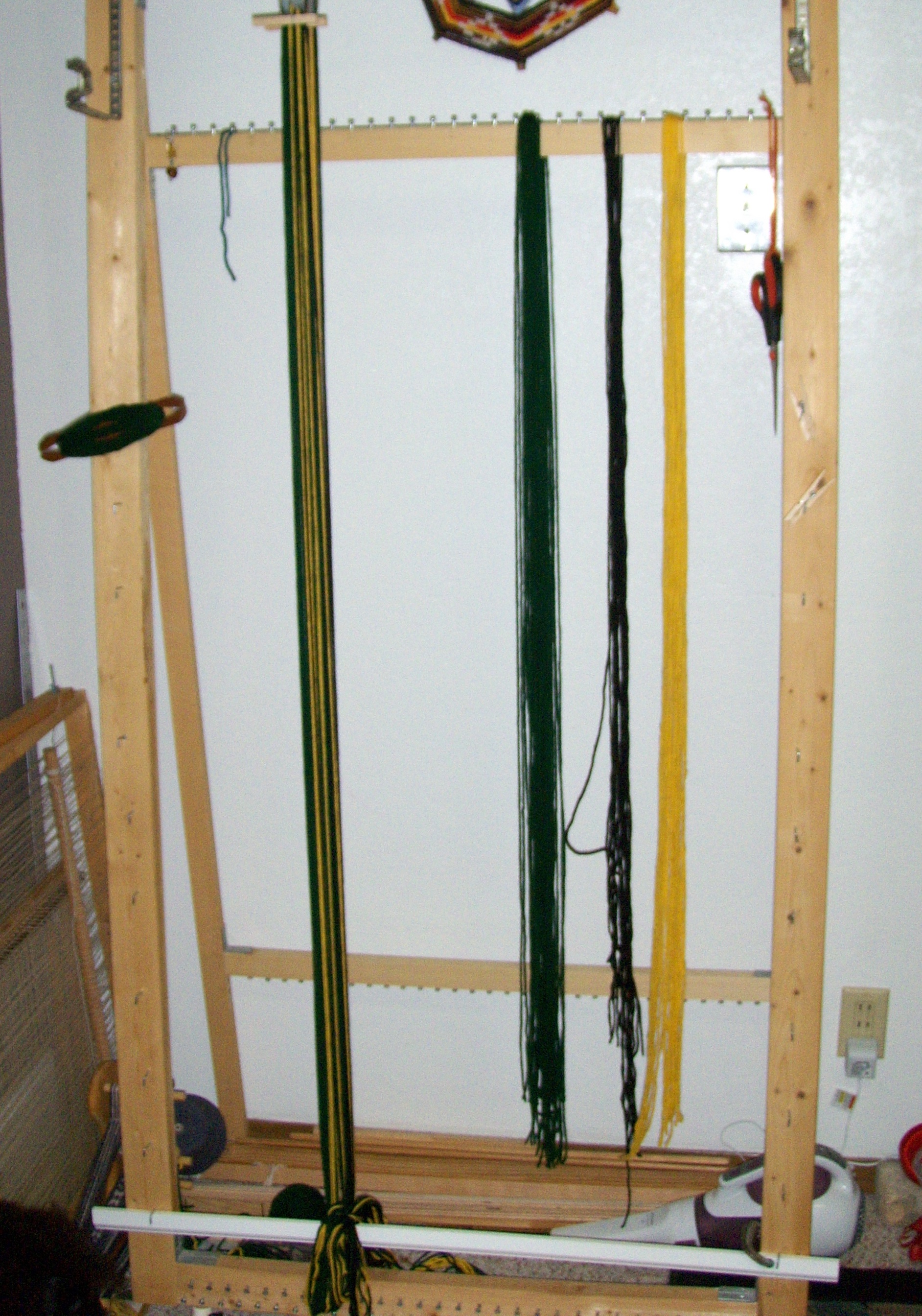
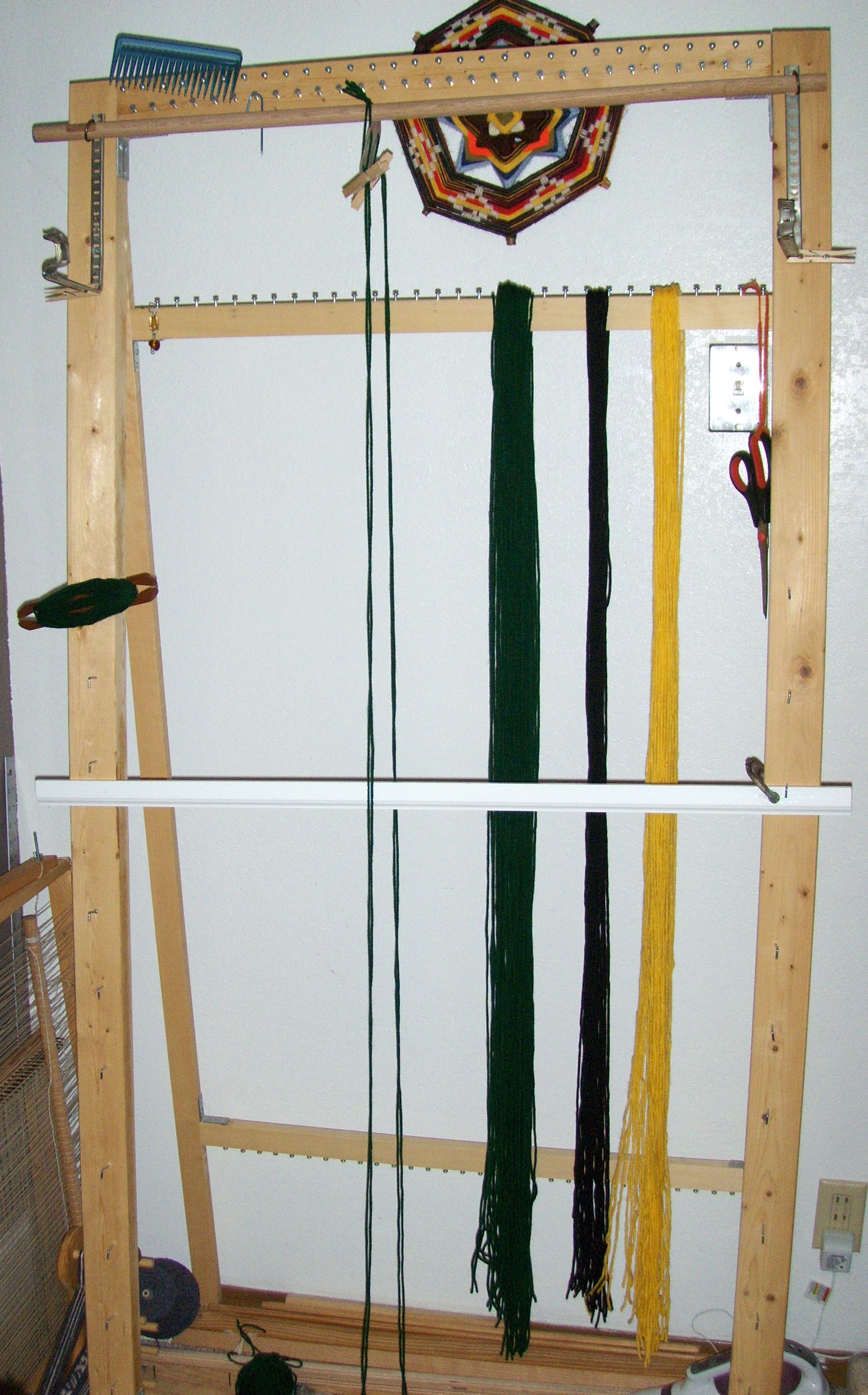
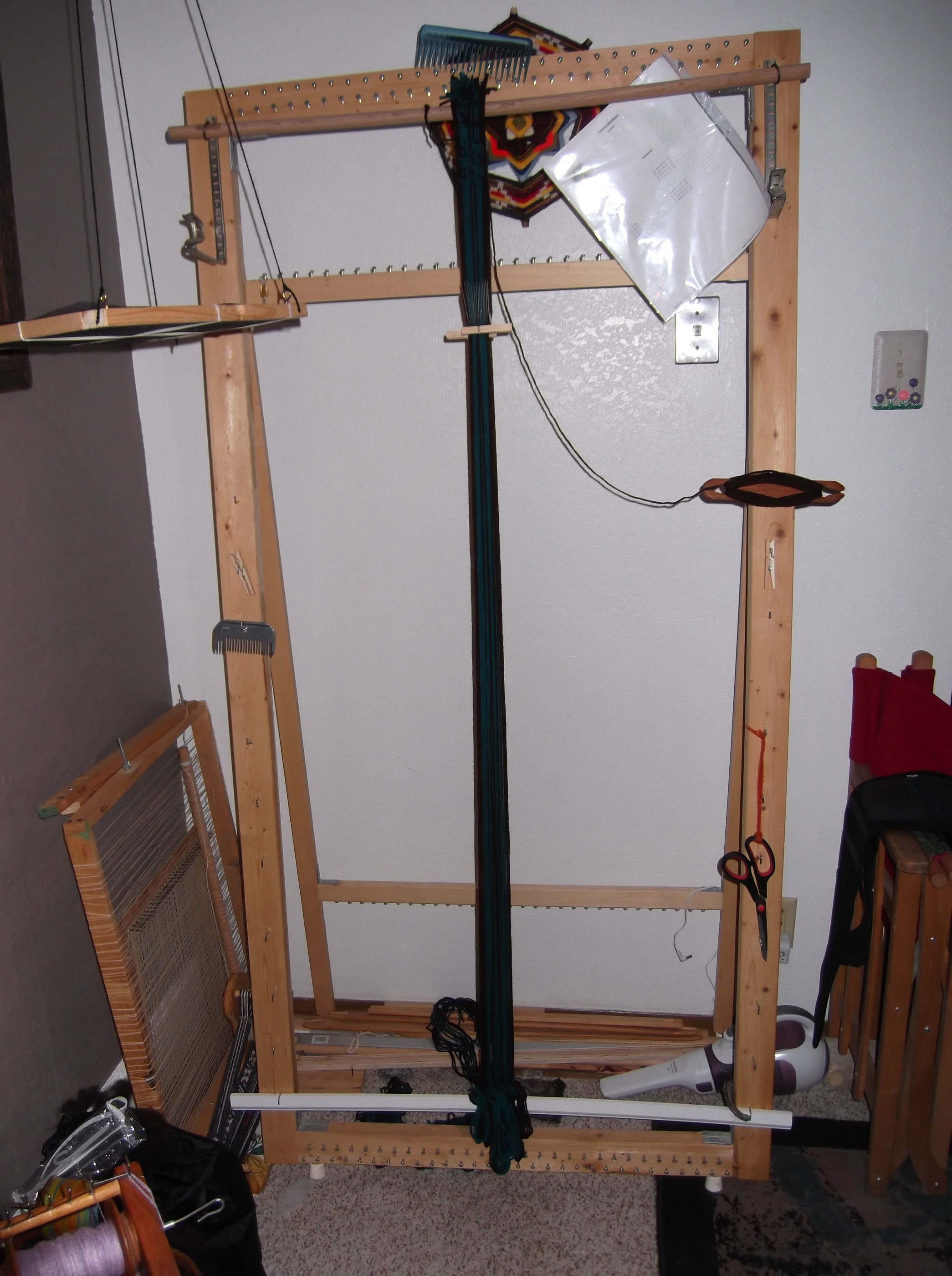
This post is for all of you DIYers that are interested in building a nice, portable, standing weaving loom. This is the same loom I use for darn near everything I weave. It costs less than $50 to make. The pdf file is free to download. You can sell all of the looms you want. DO NOT sell my pattern.

Rug_cardweaving_loom

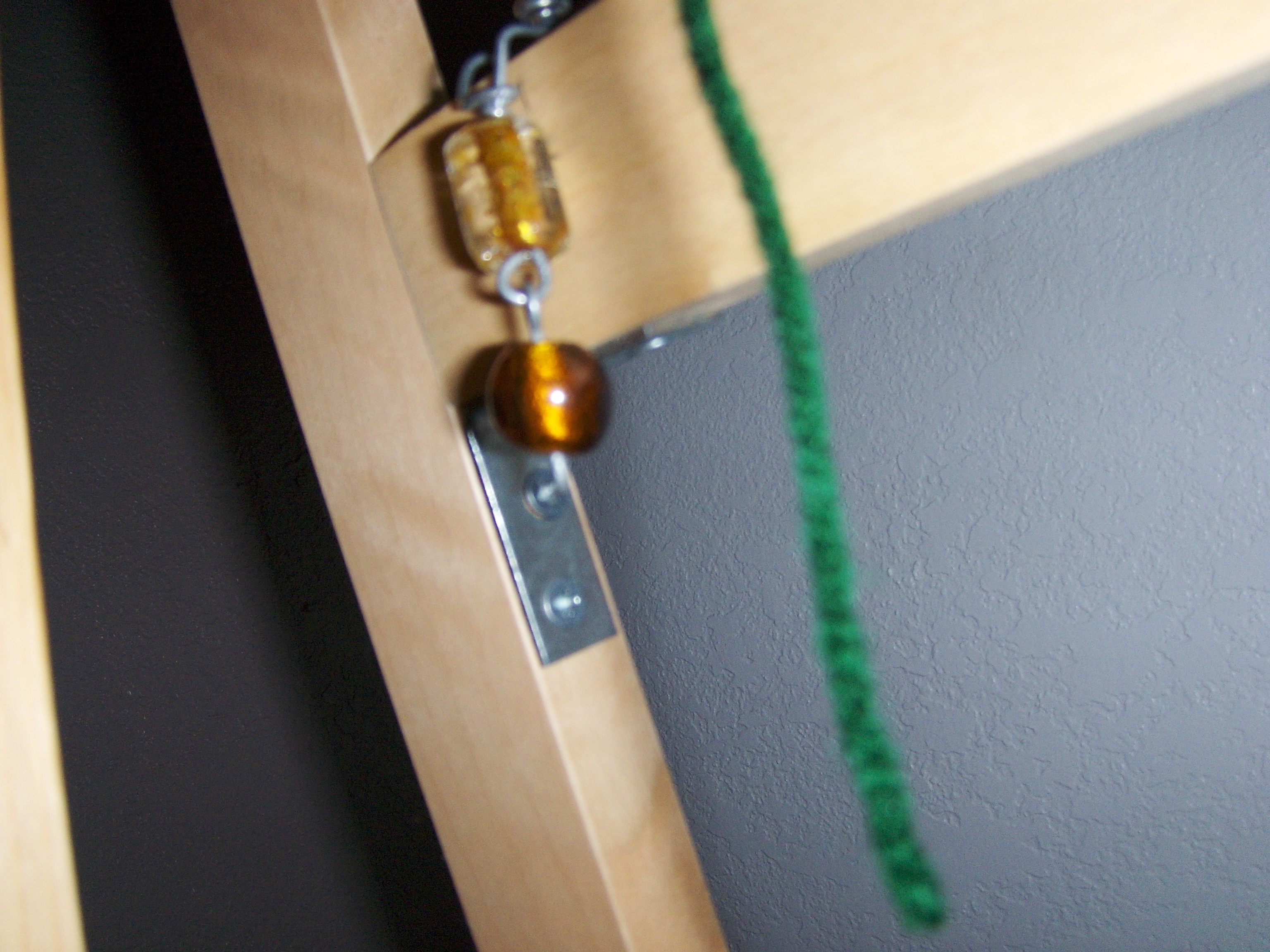
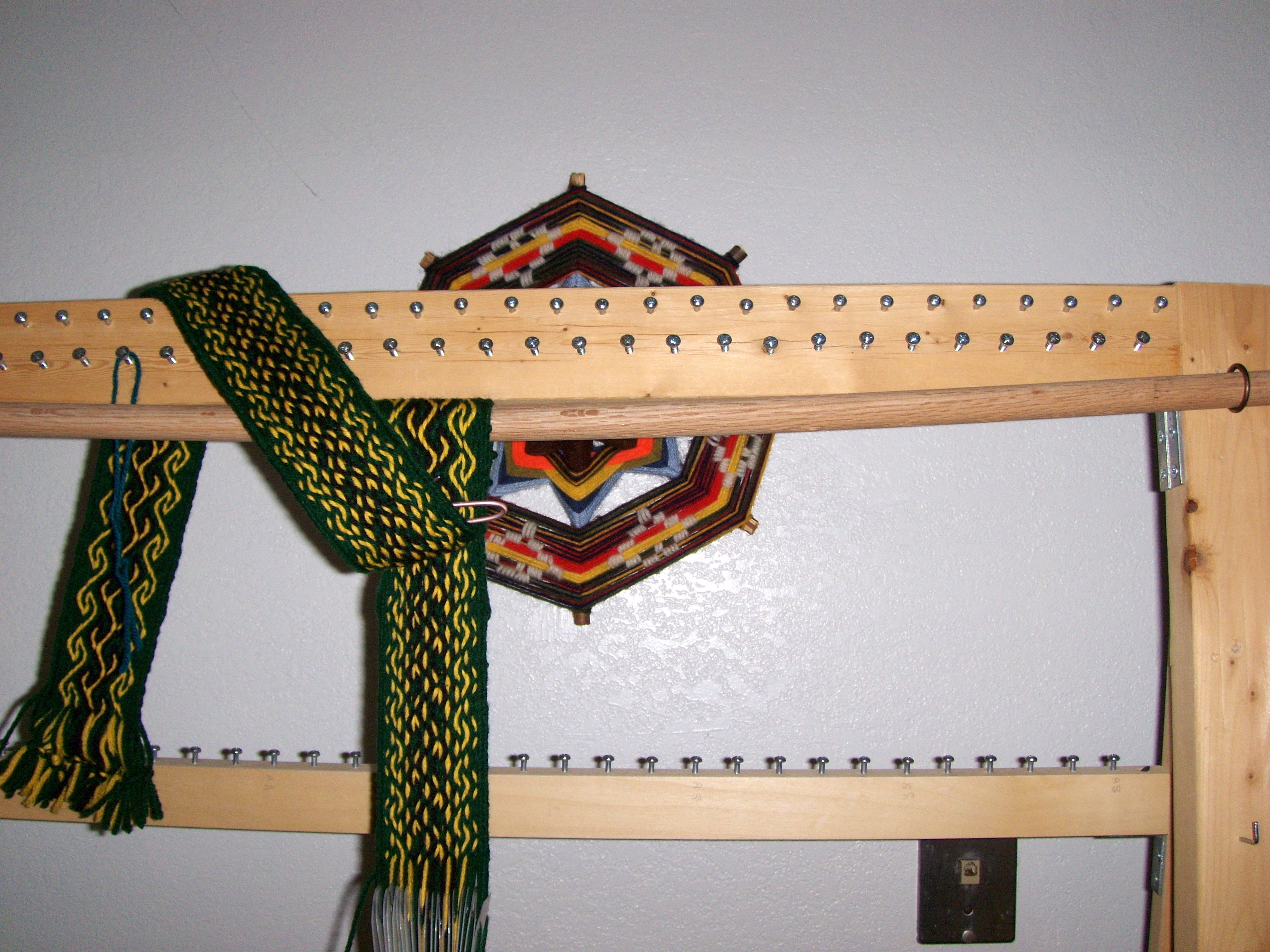
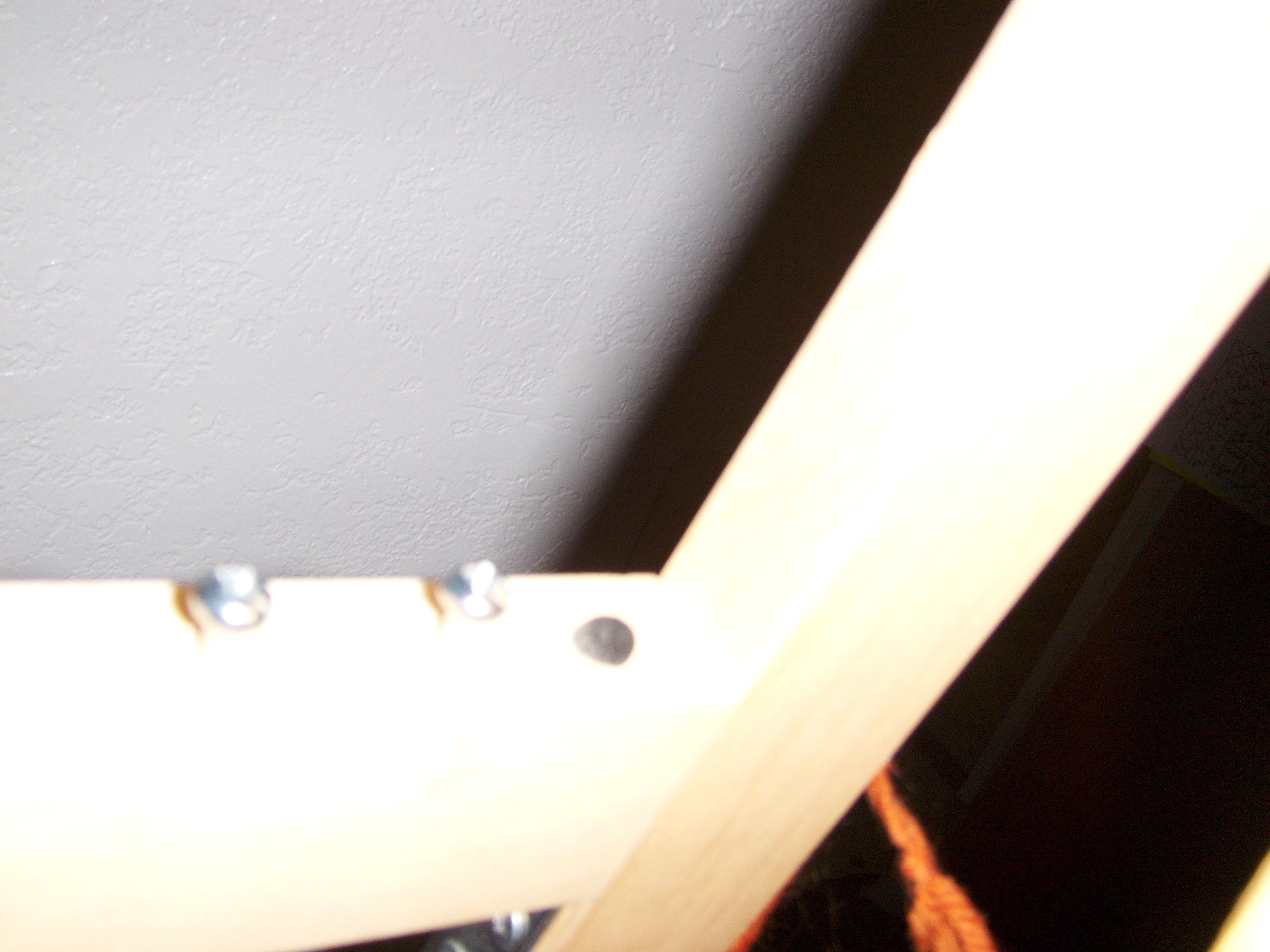
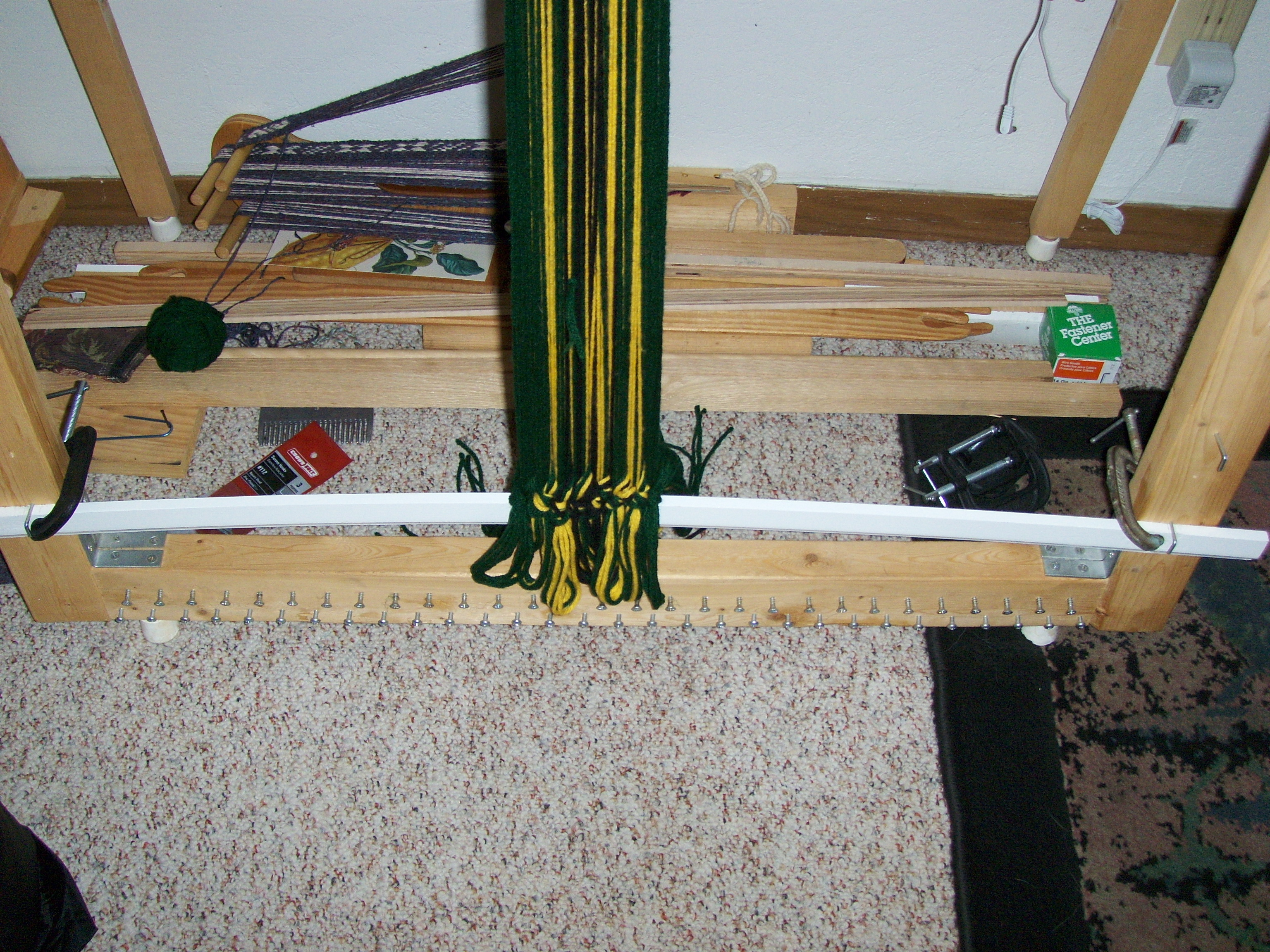
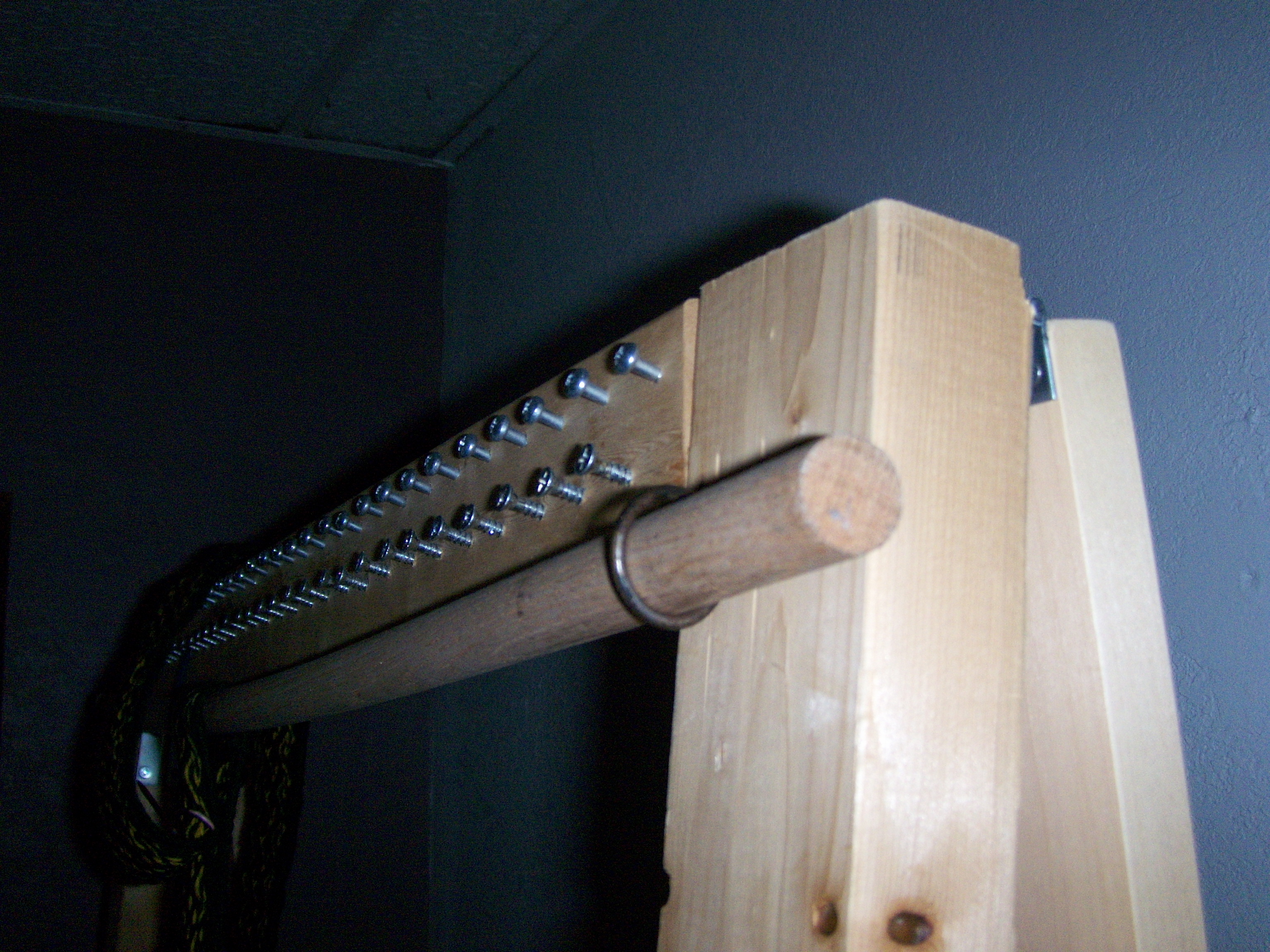
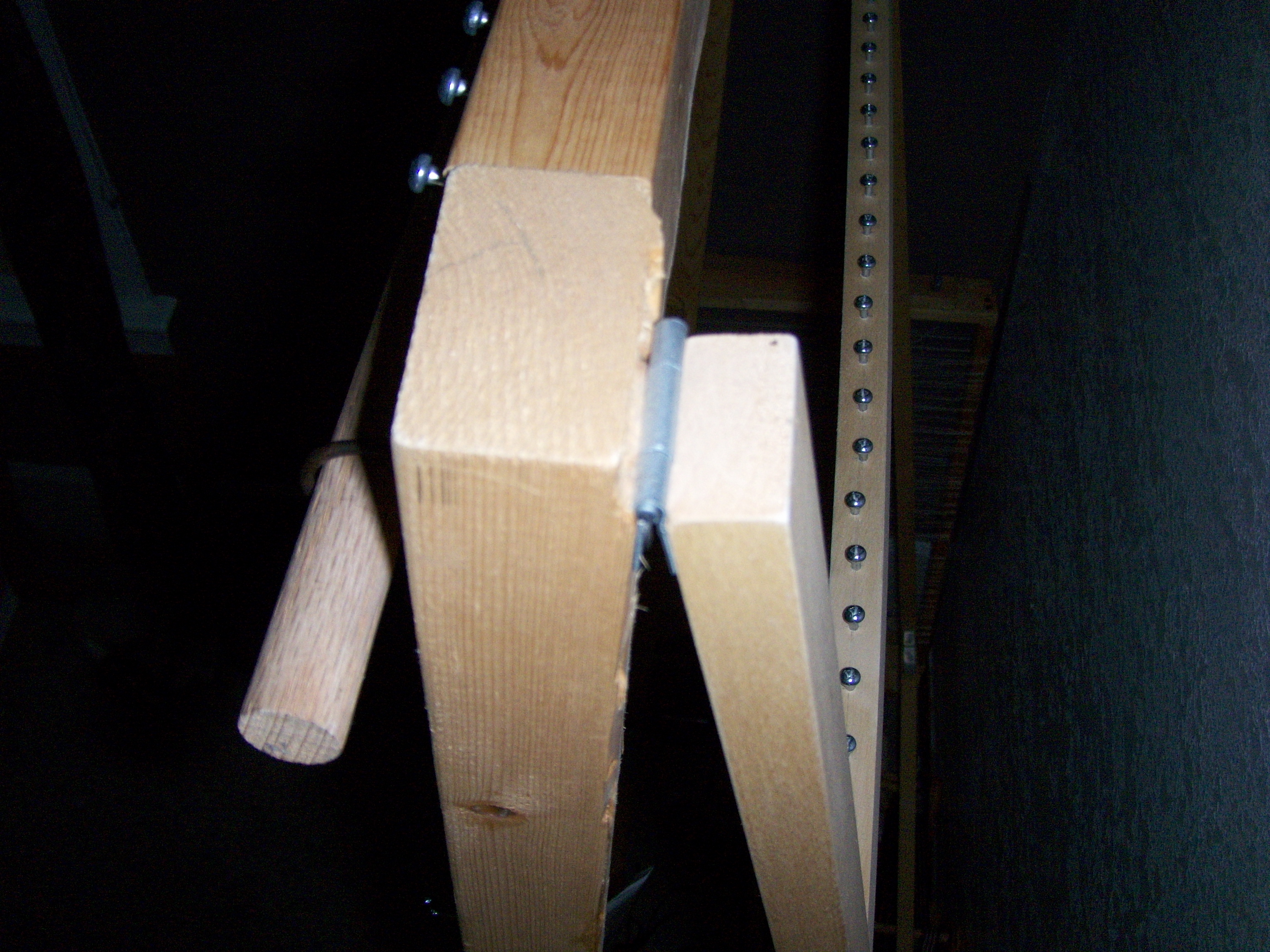
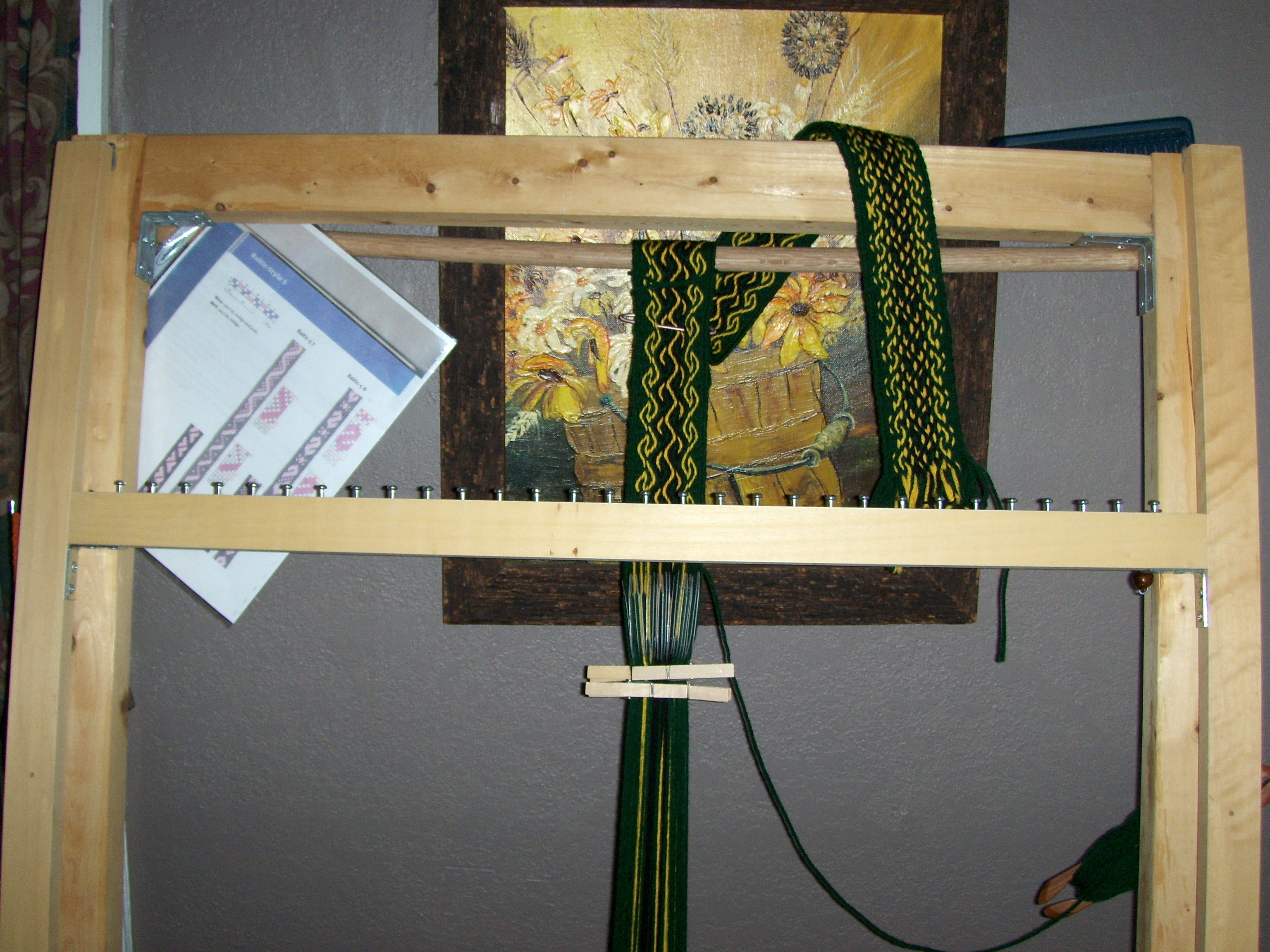
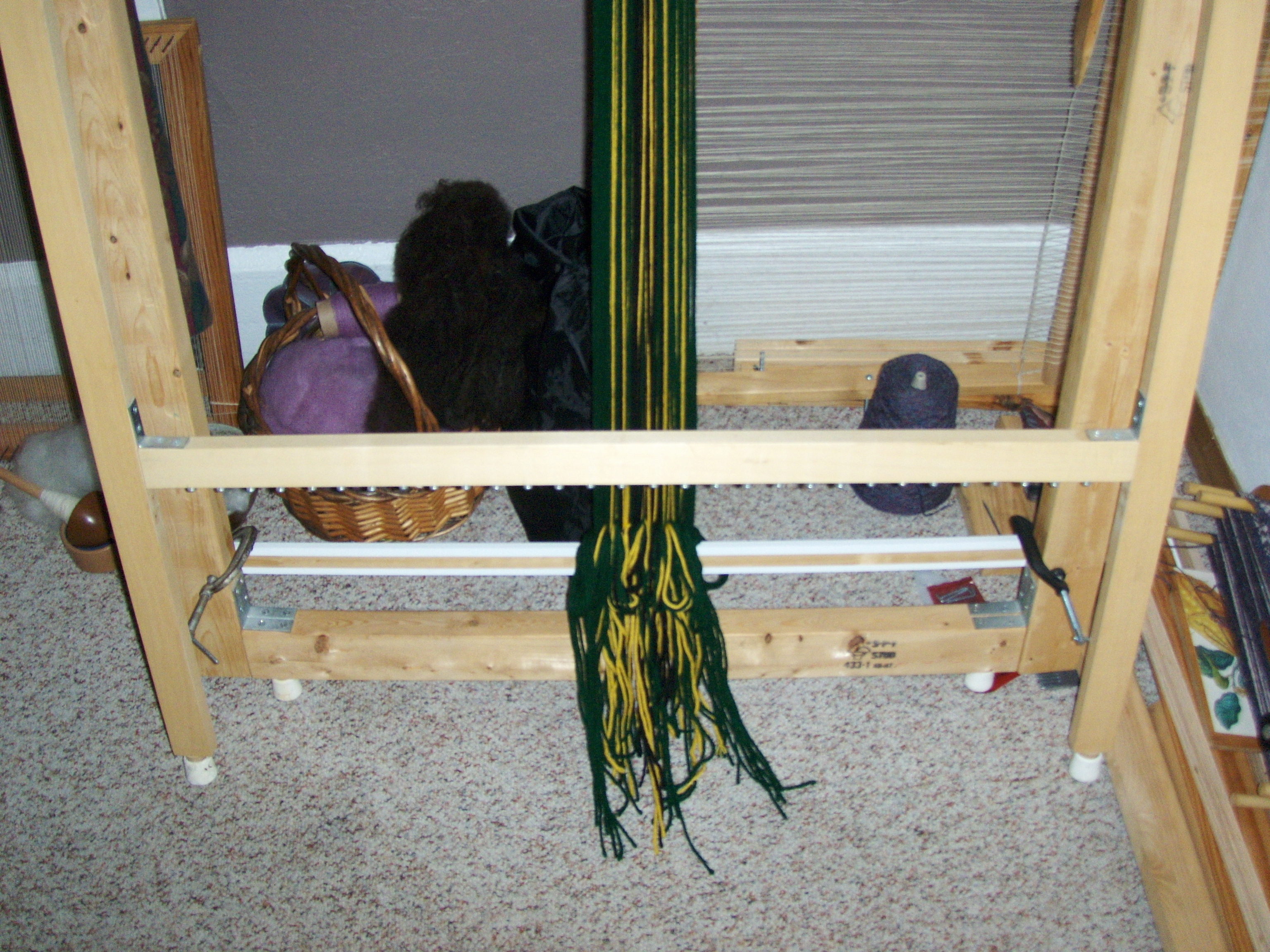
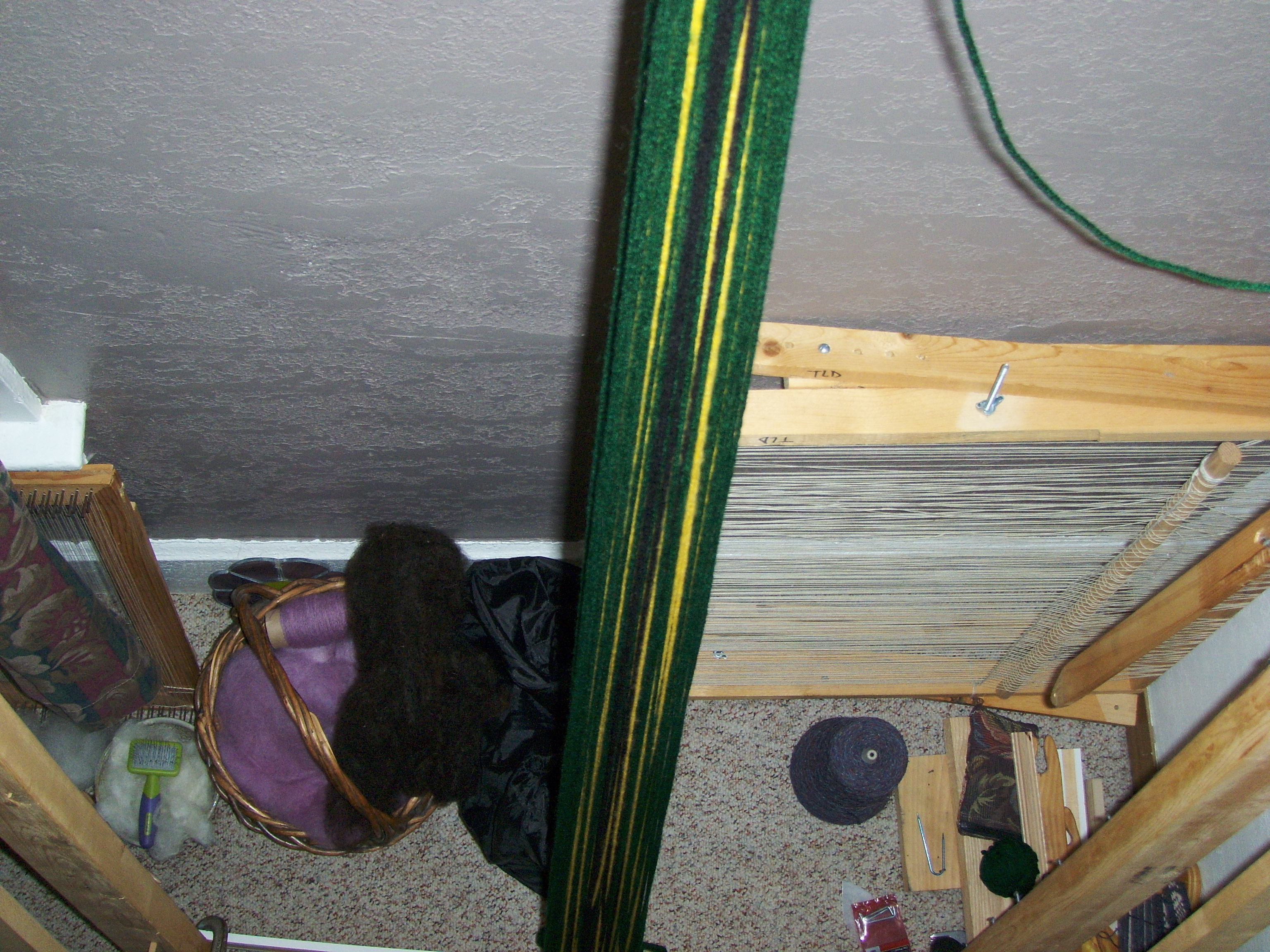
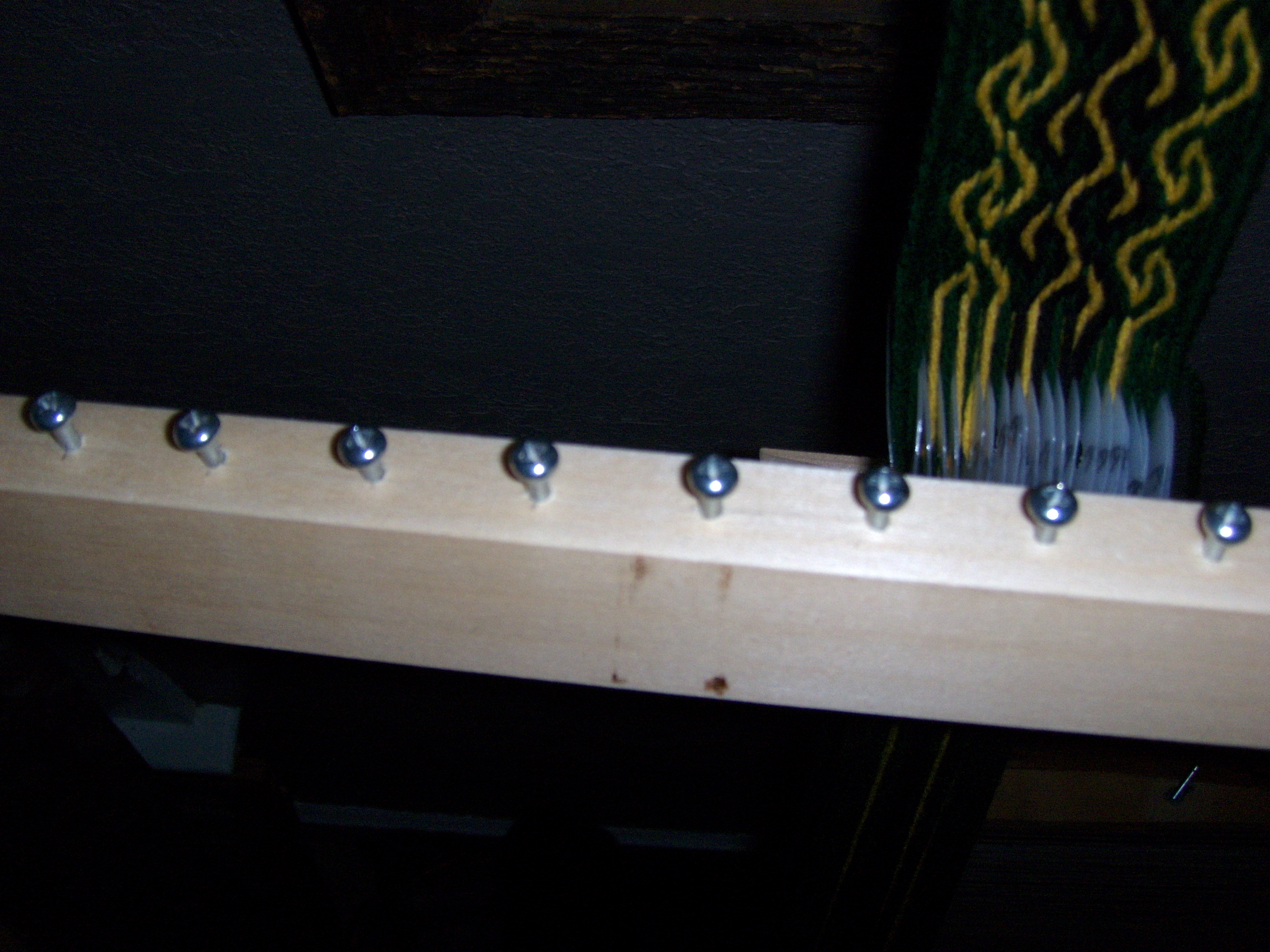
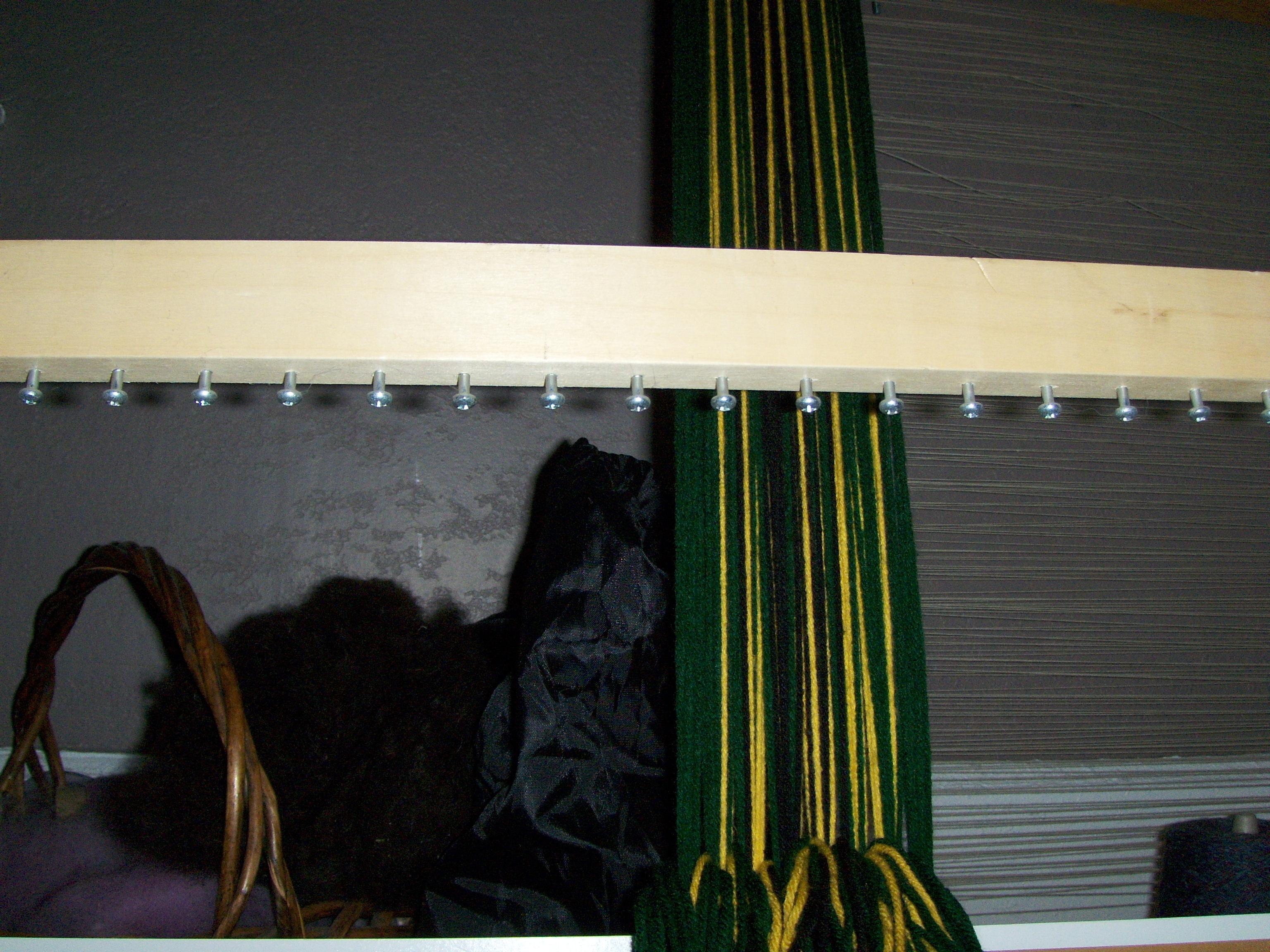
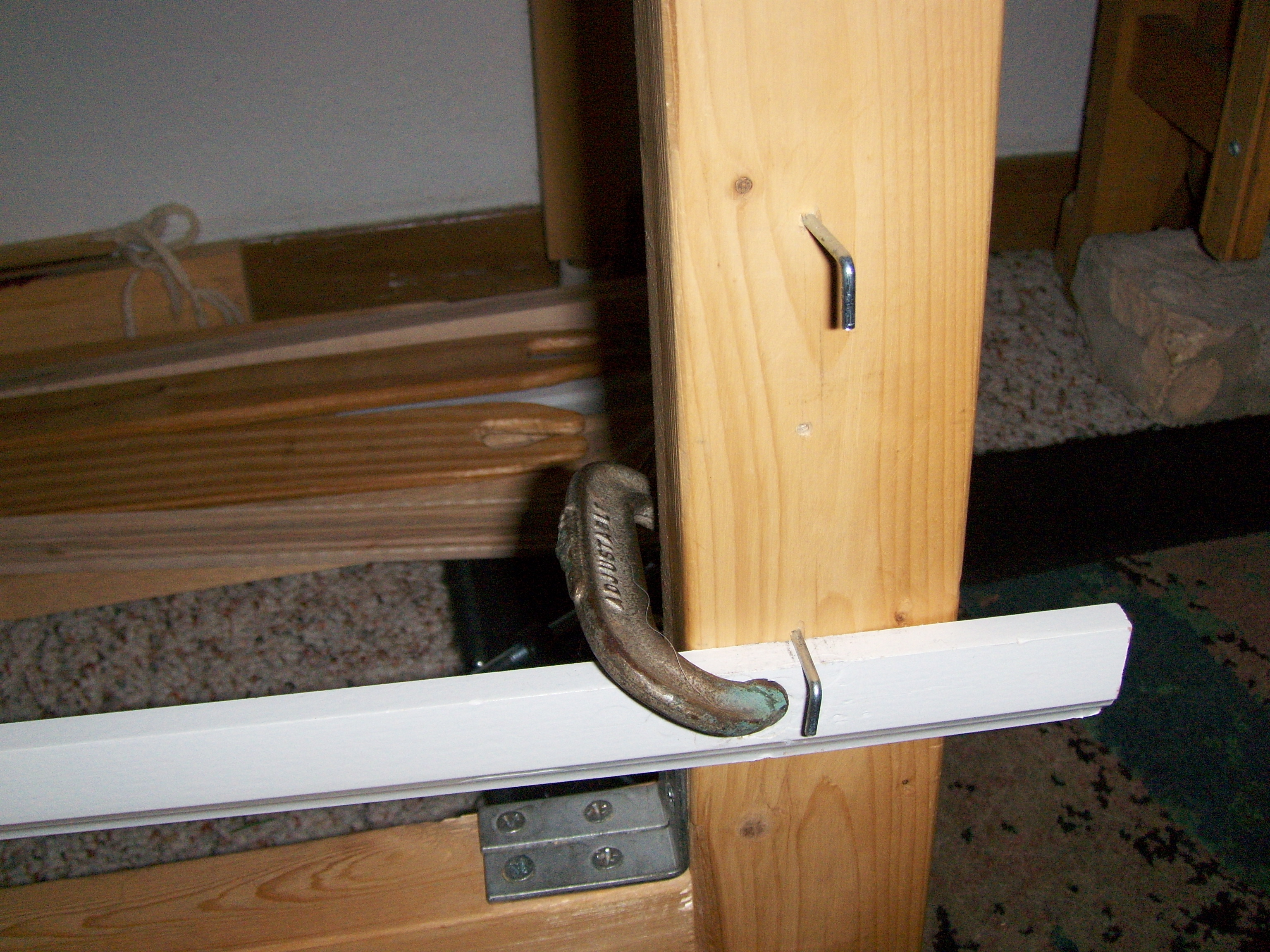
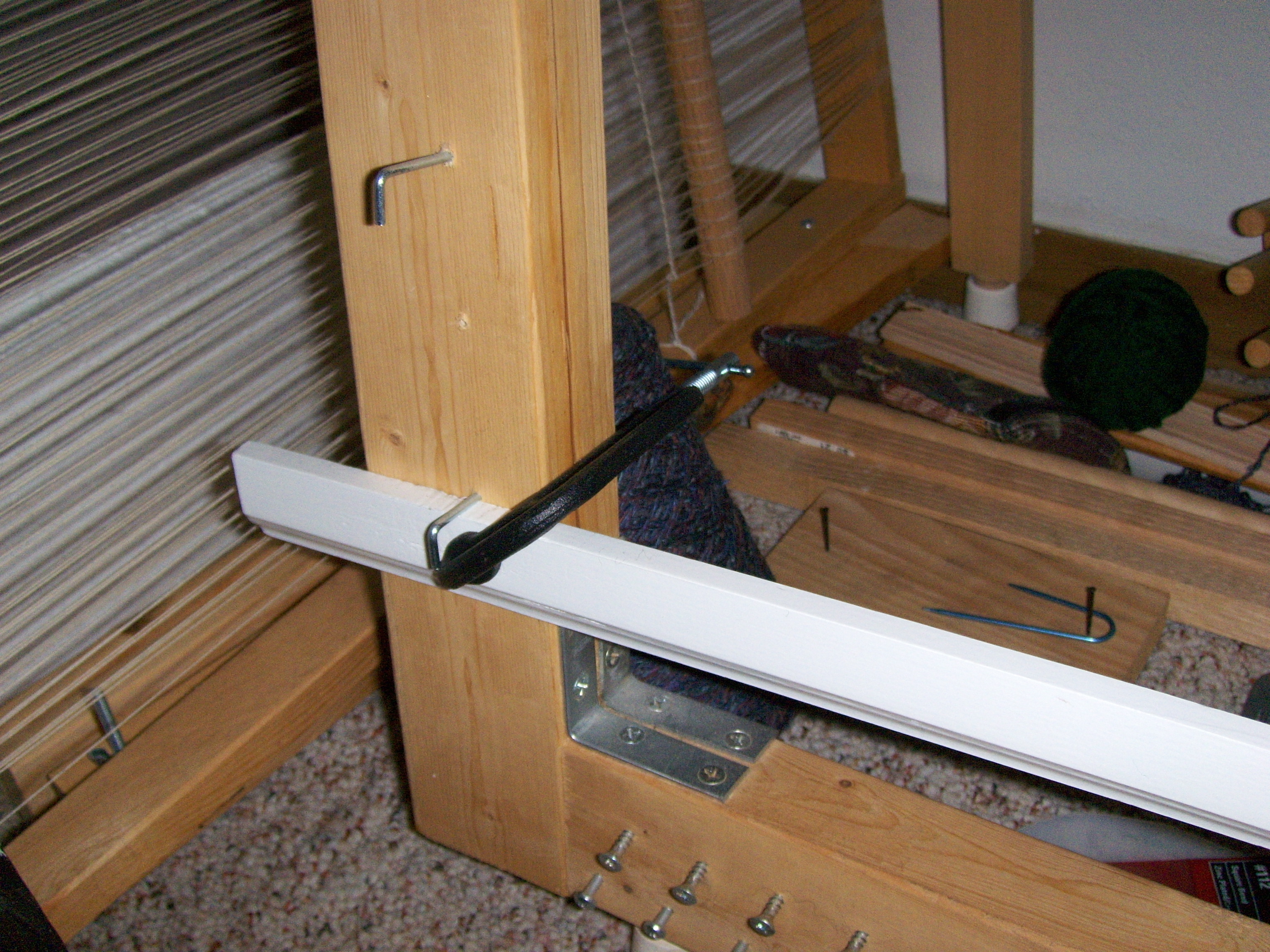
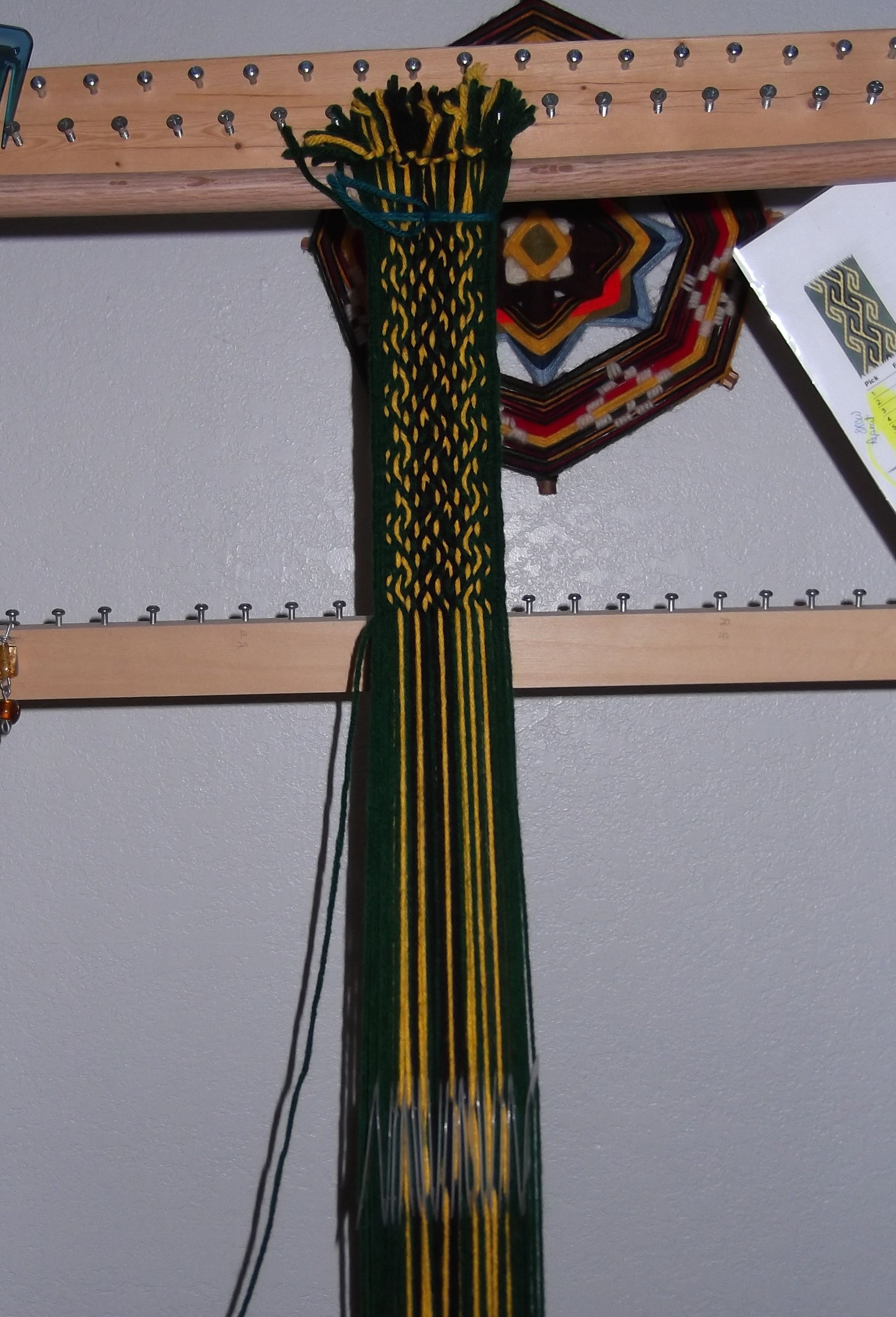
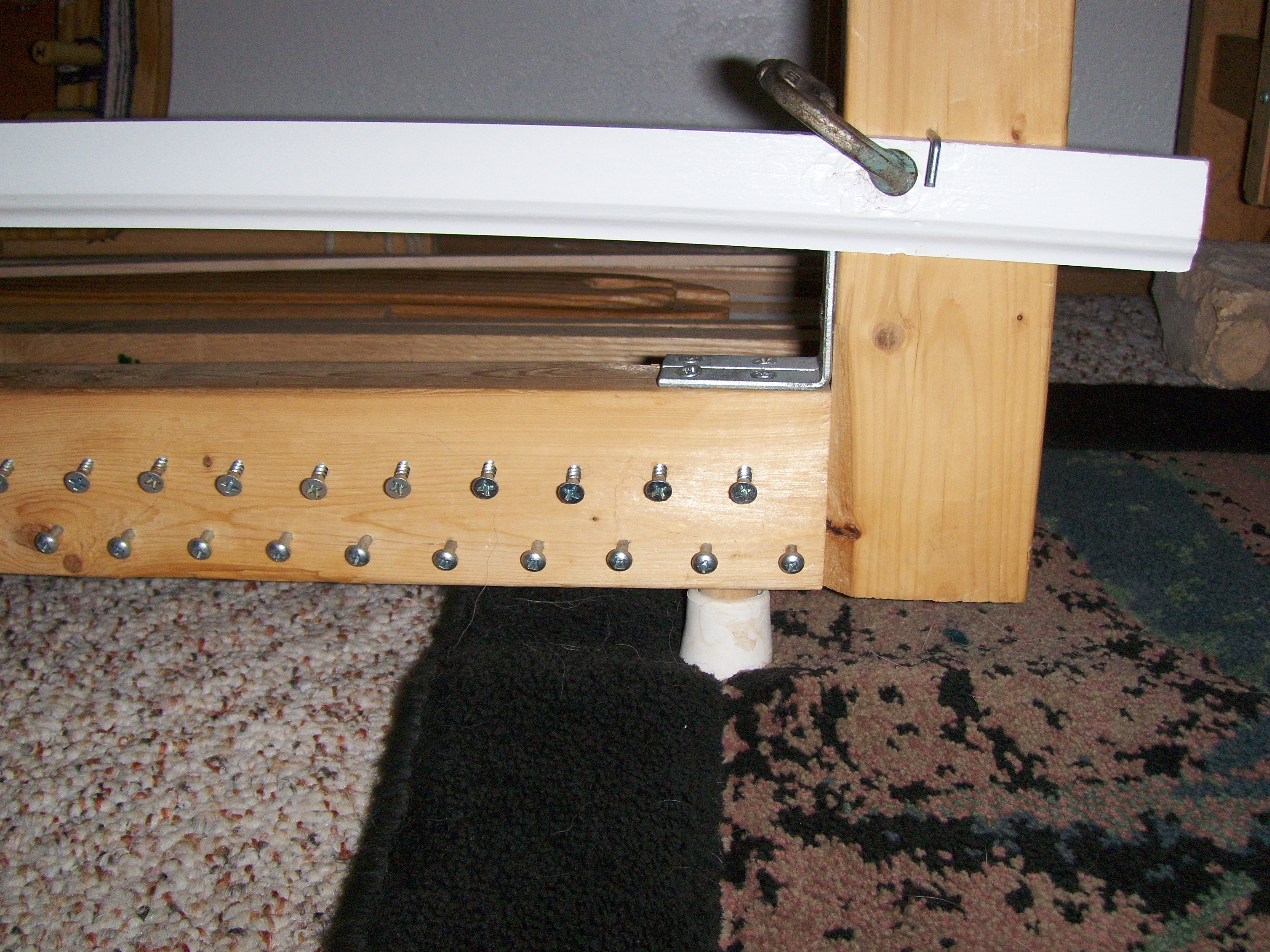
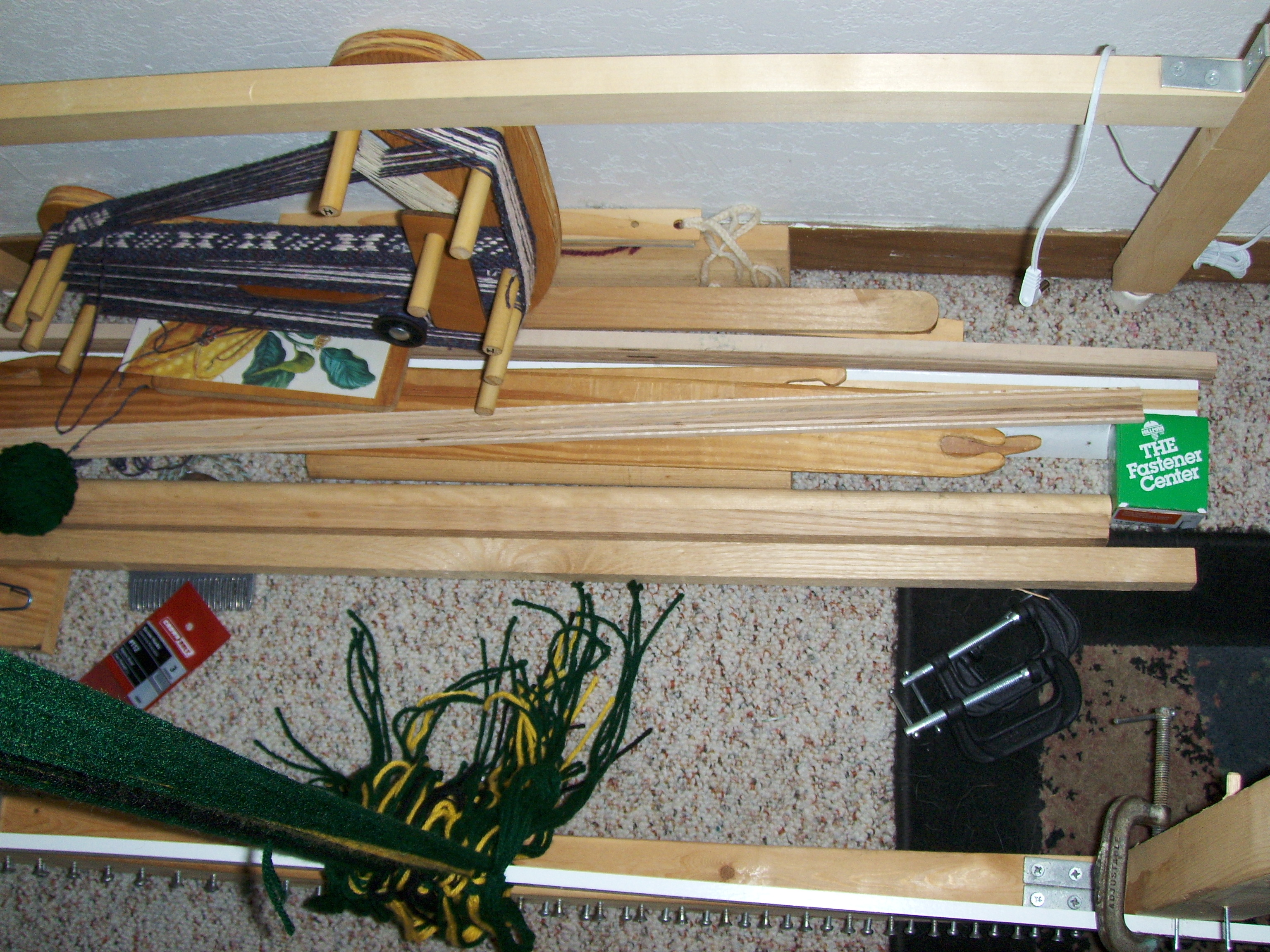
The following pictures are merely for reference while you’re building your loom. Please, if you have any questions, contact me and I’ll do the best I can to help. (And yes, the little folding loom on the floor, to the left of the standing loom, is a tapestry loom that I also made. When time permits, I will do up the instructions for this one as well.)

My beautiful picture

My beautiful picture

My beautiful picture My beautiful picture My beautiful picture My beautiful picture My beautiful picture My beautiful picture My beautiful picture My beautiful picture My beautiful picture My beautiful picture My beautiful picture My beautiful picture My beautiful picture My beautiful picture My beautiful picture My beautiful picture My beautiful picture My beautiful picture finishing attaching the warp to the bottom beam half of the warp up first cards up DSCF1012 The backside of the dragon's breath weaving On the loom My beautiful picture

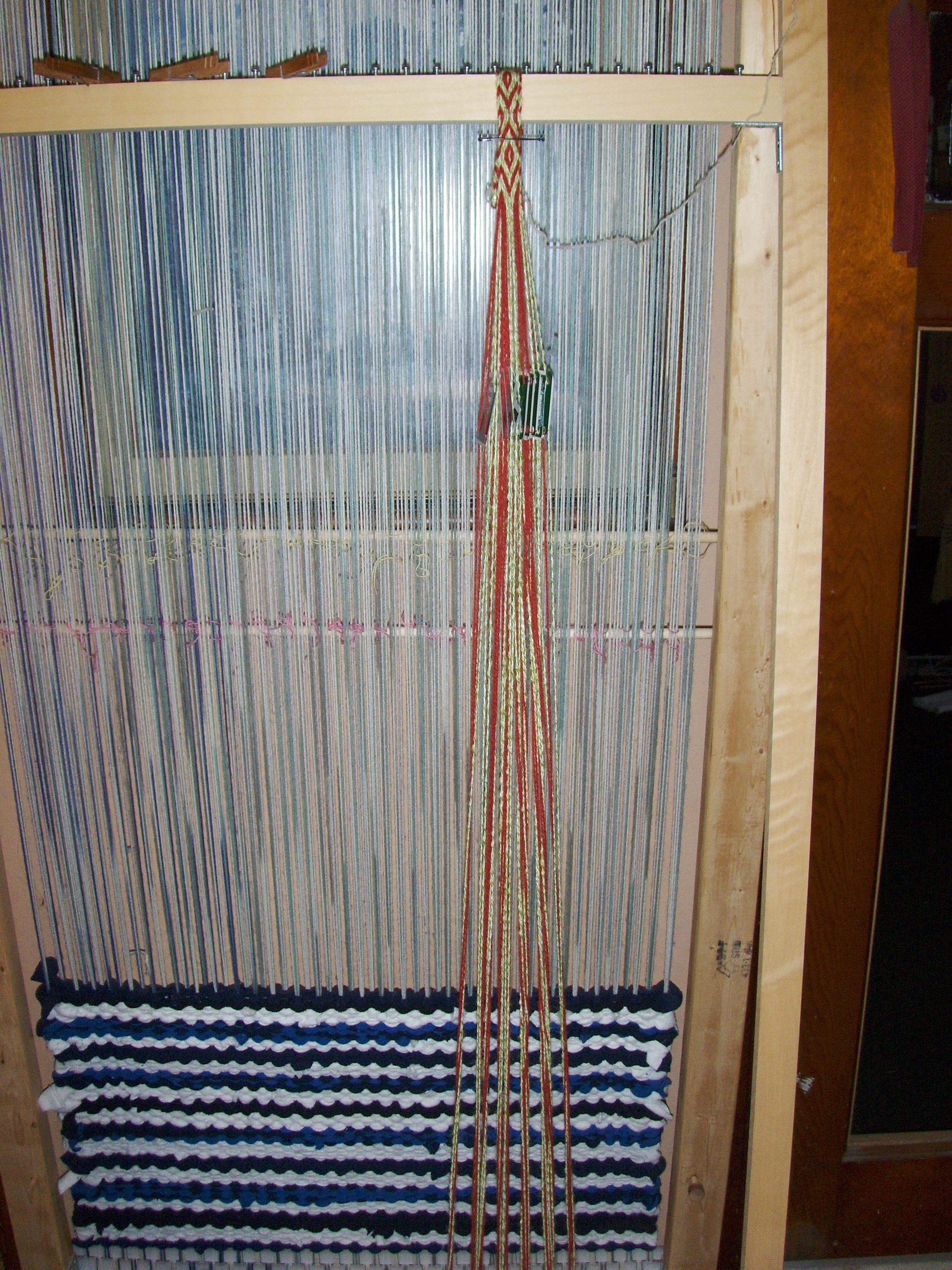
The above photo of the loom has a rug on the front side of it and I turned it around to start a card weaving (it’s the dog leash I currently walk Princess Vanity with)!!

Get busy and weave something!!!