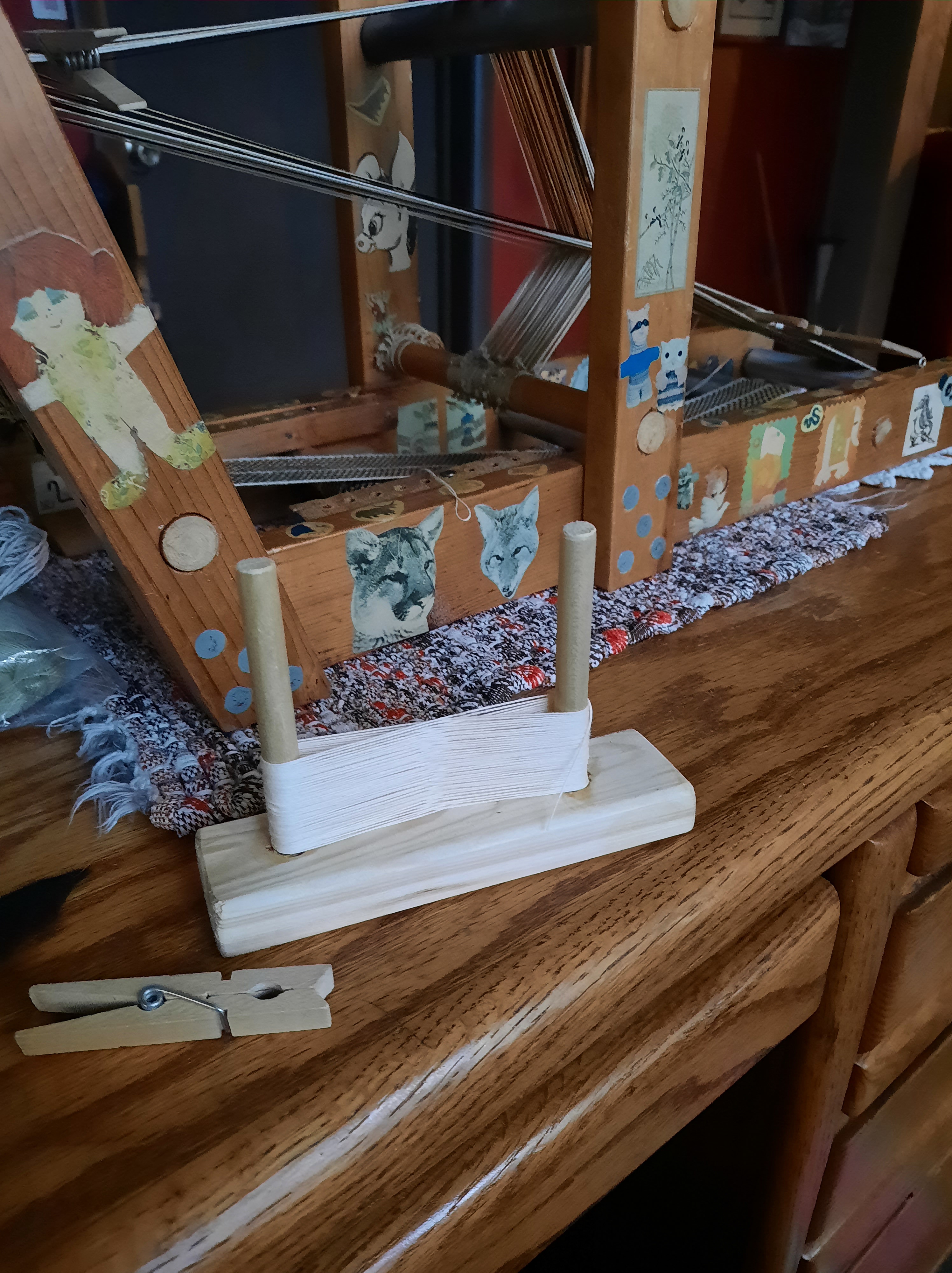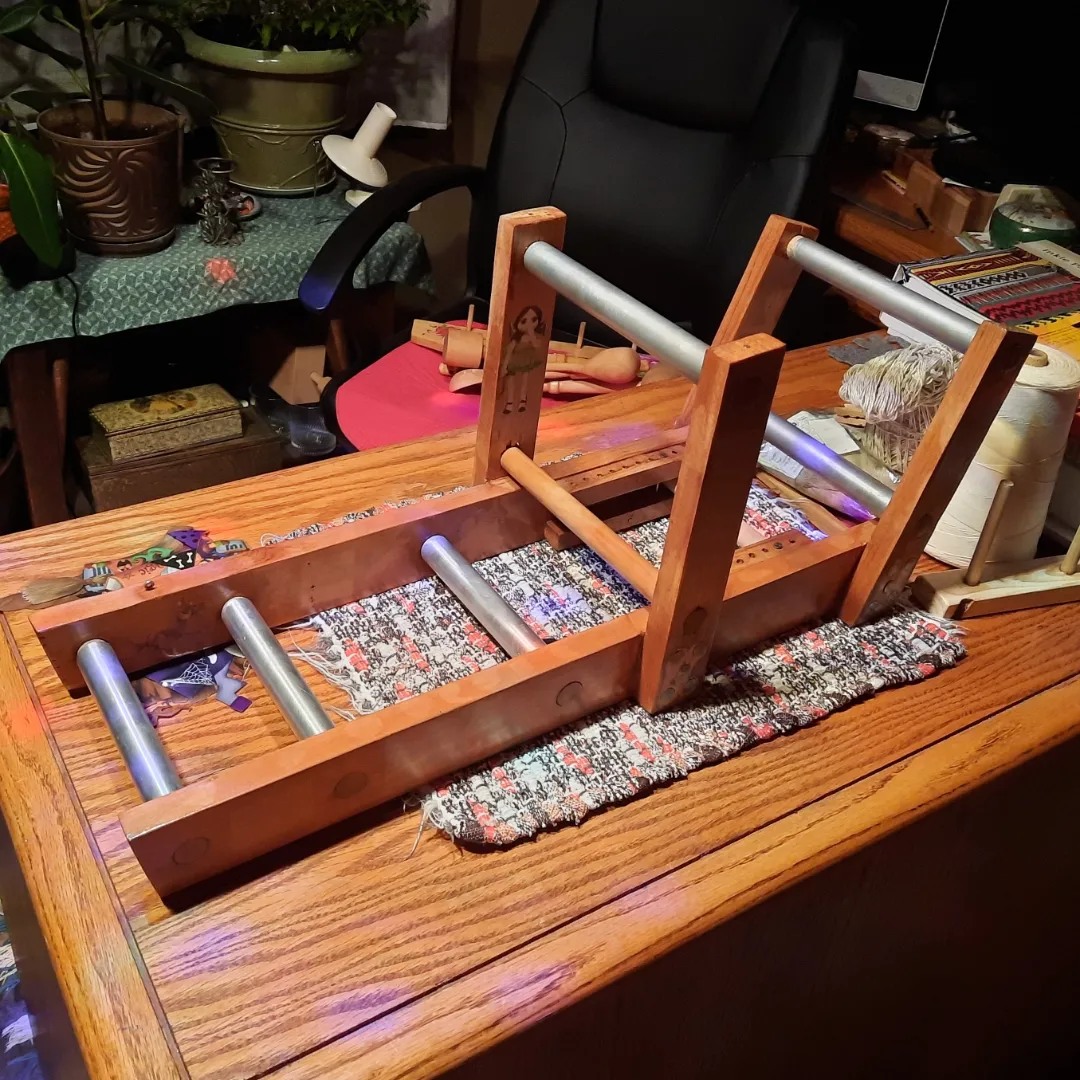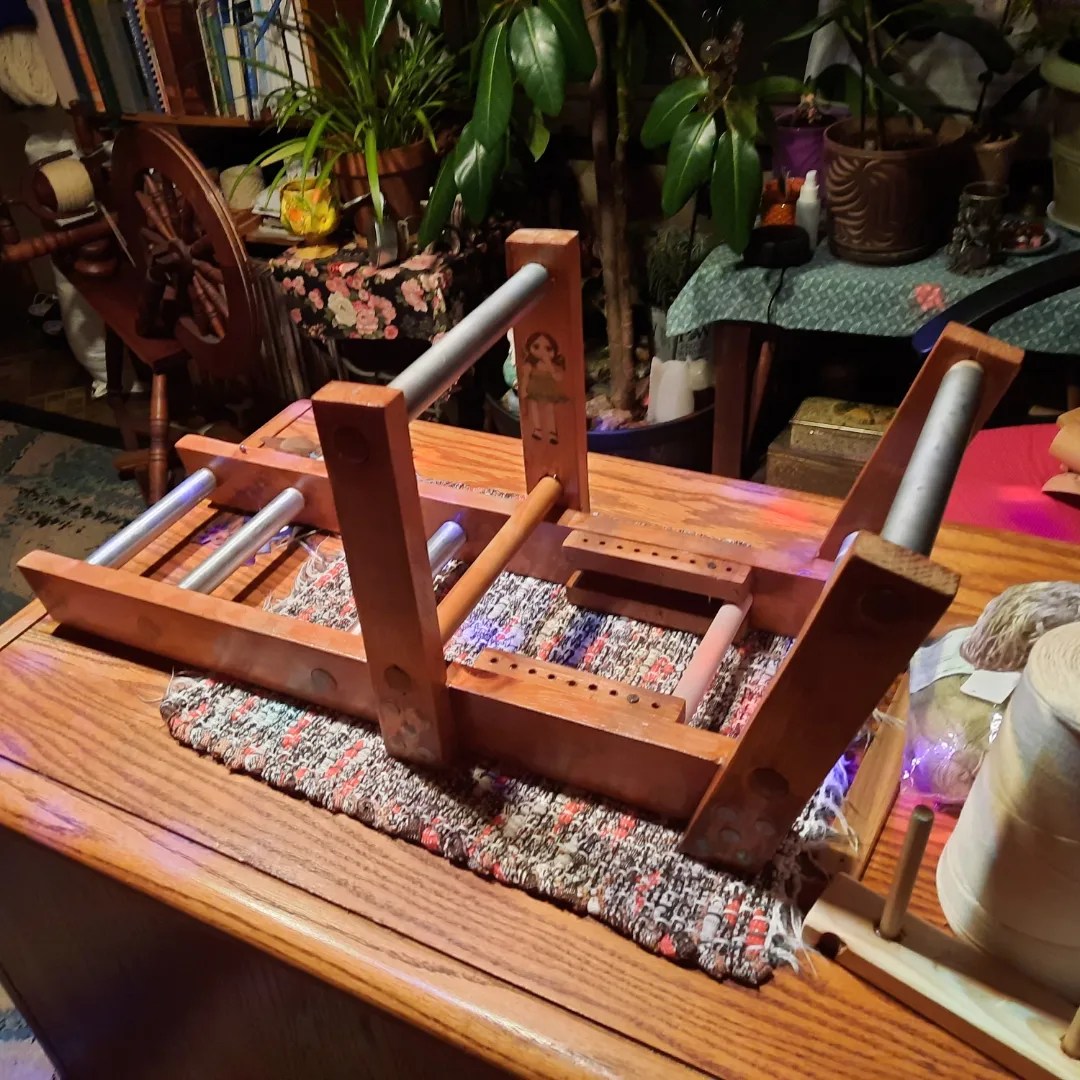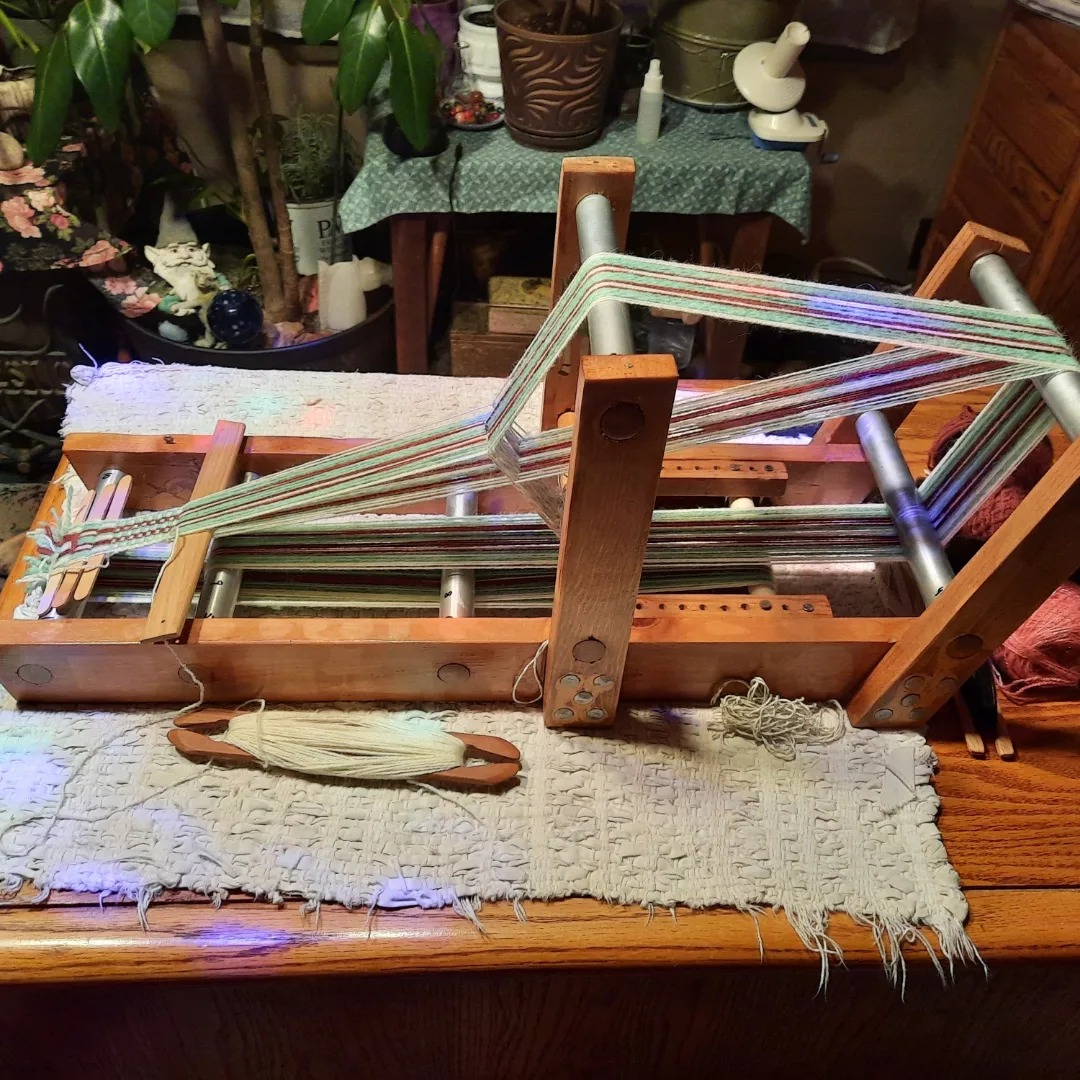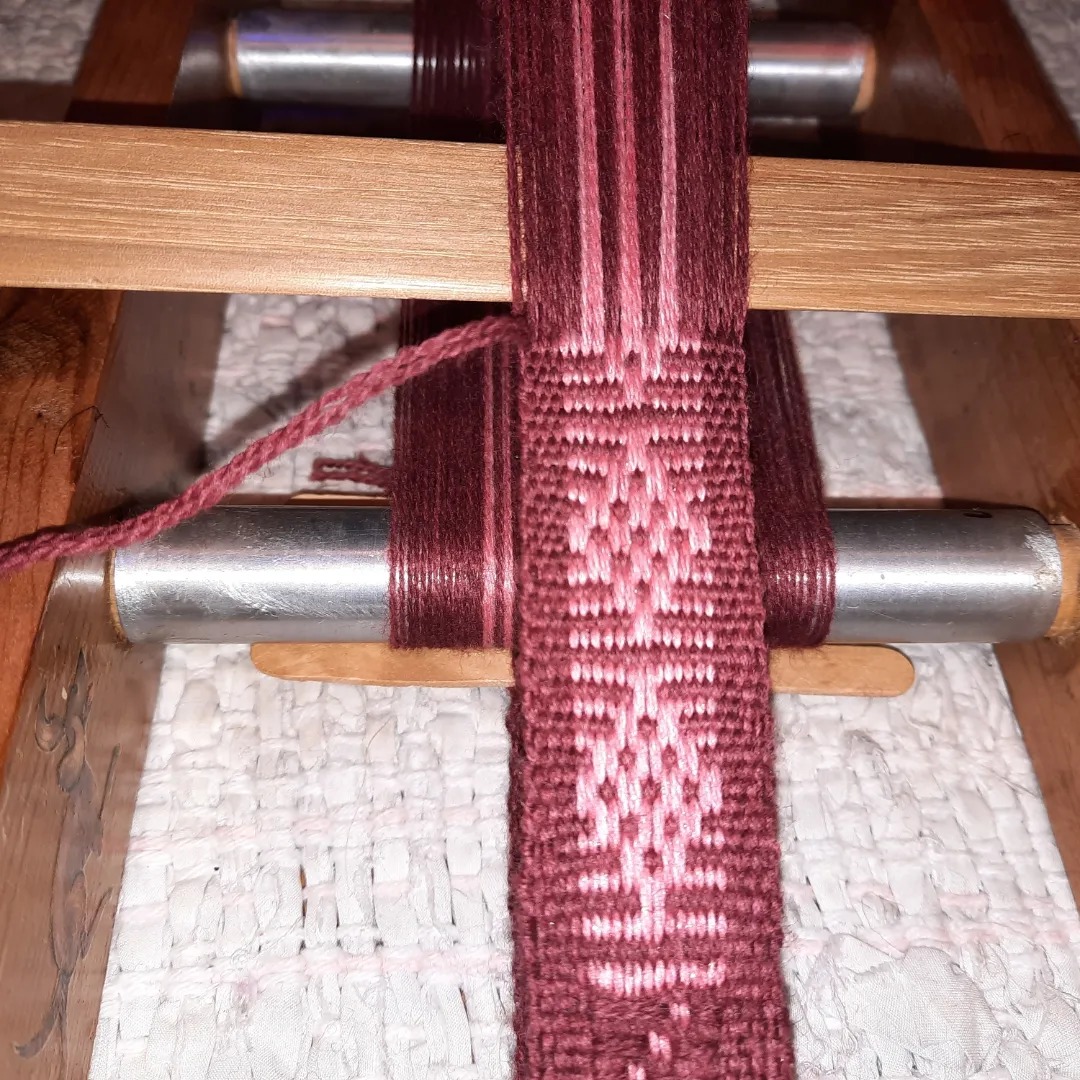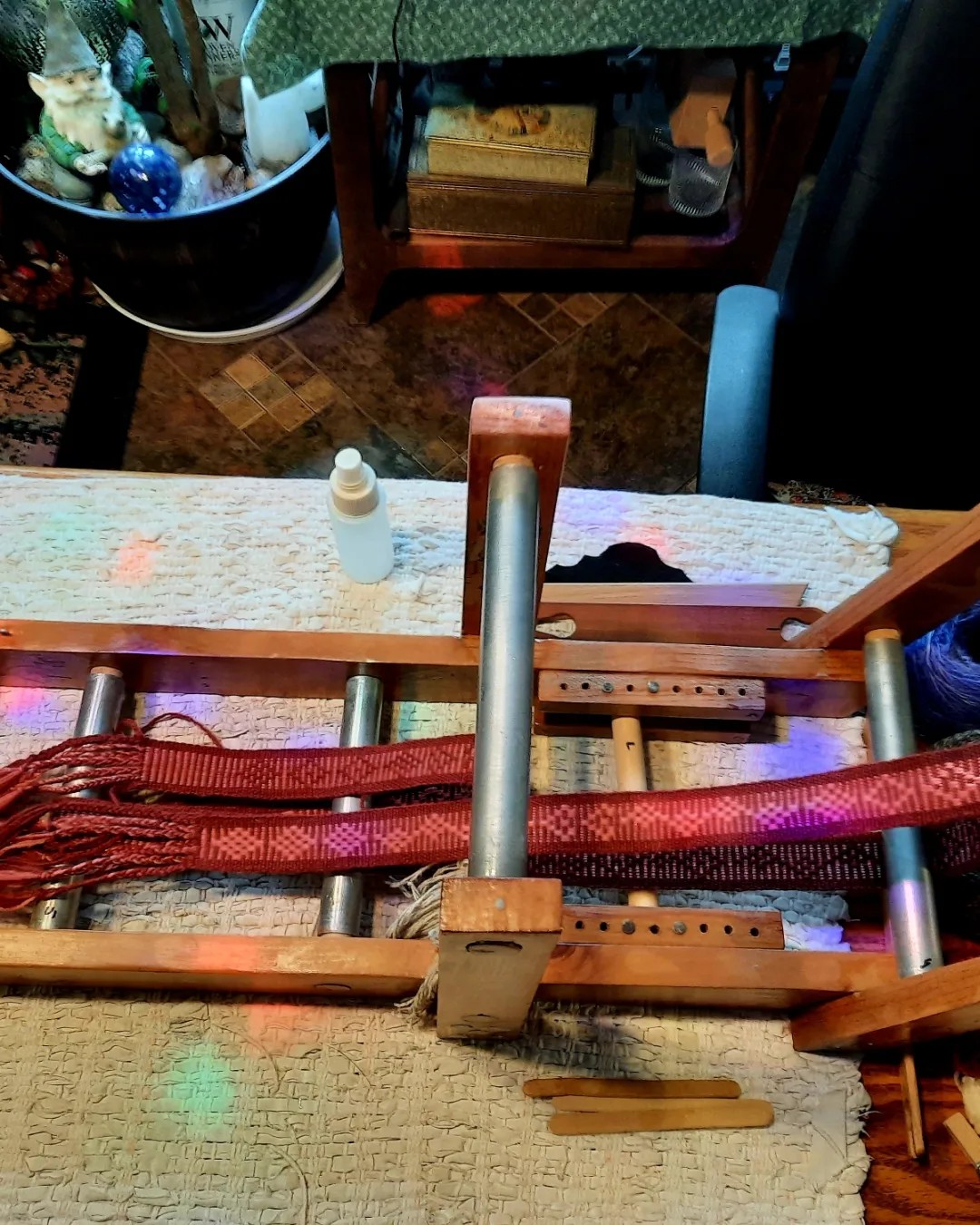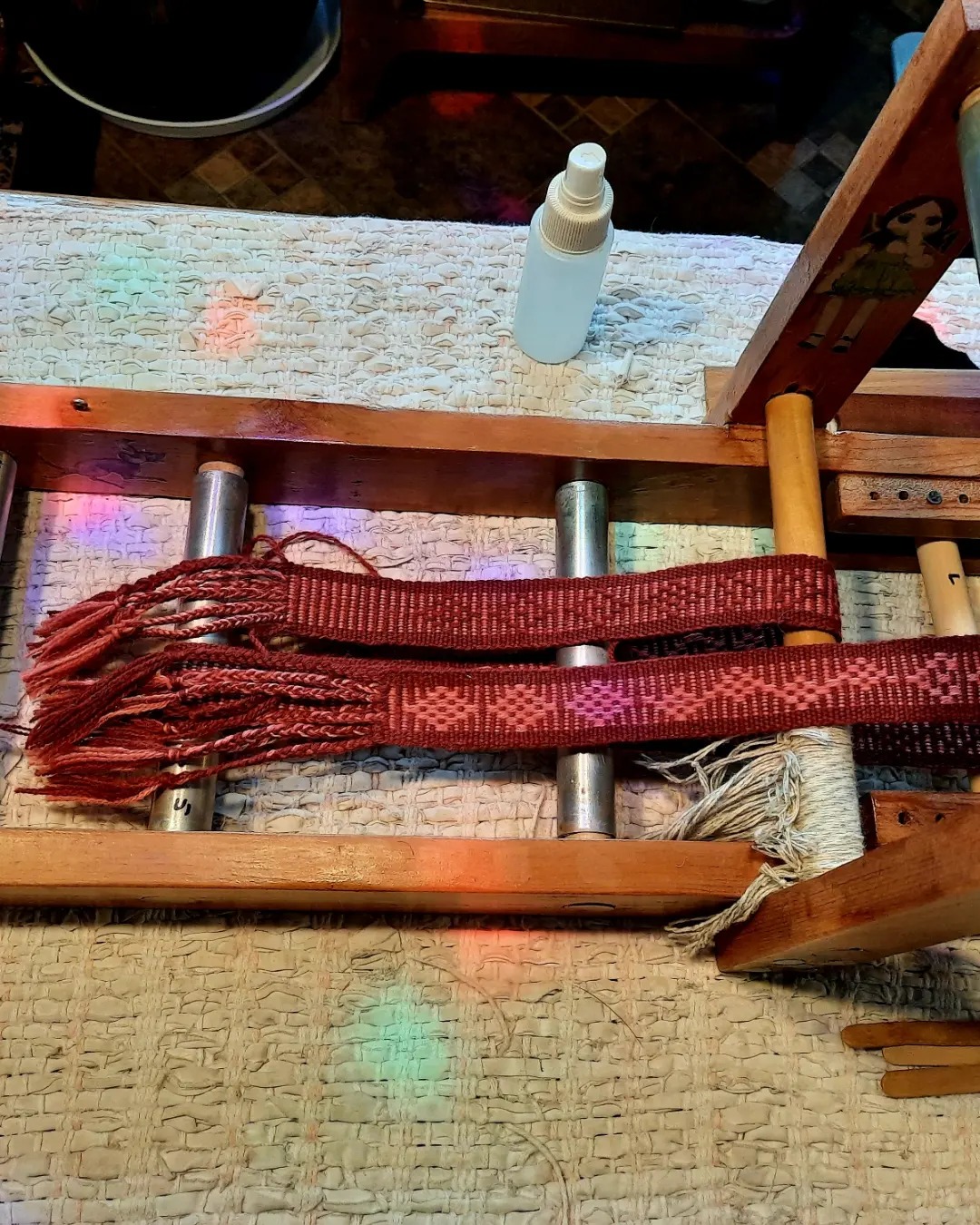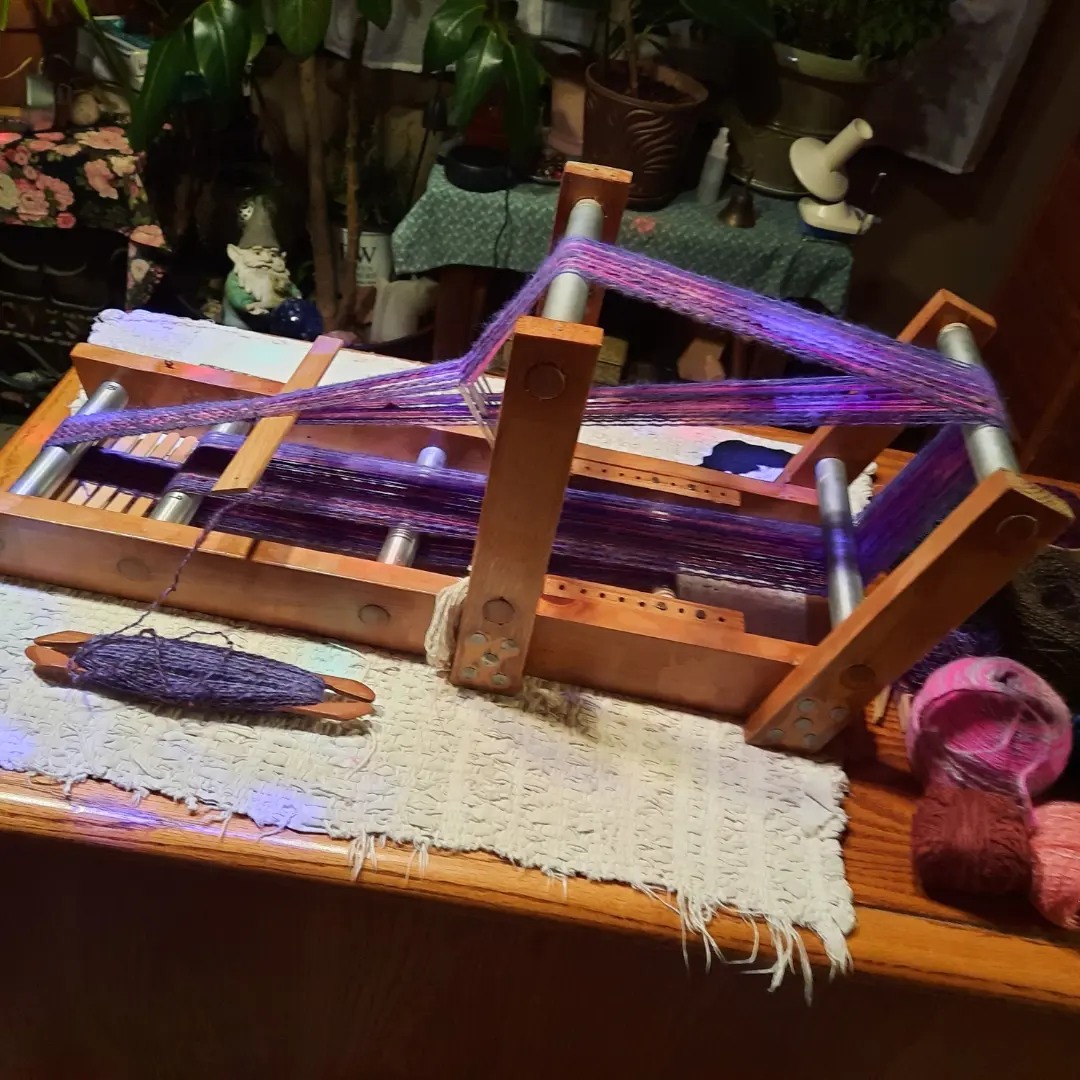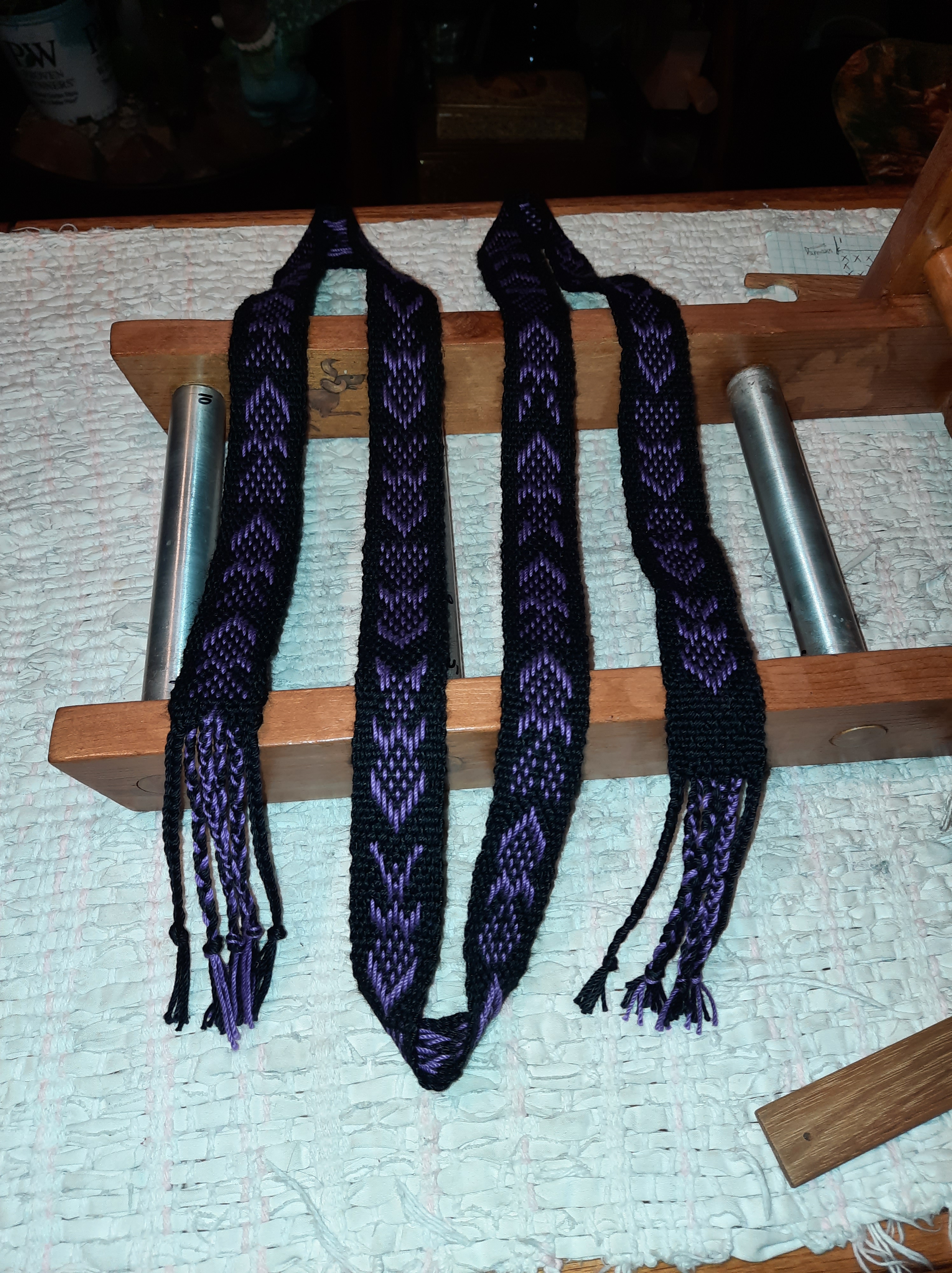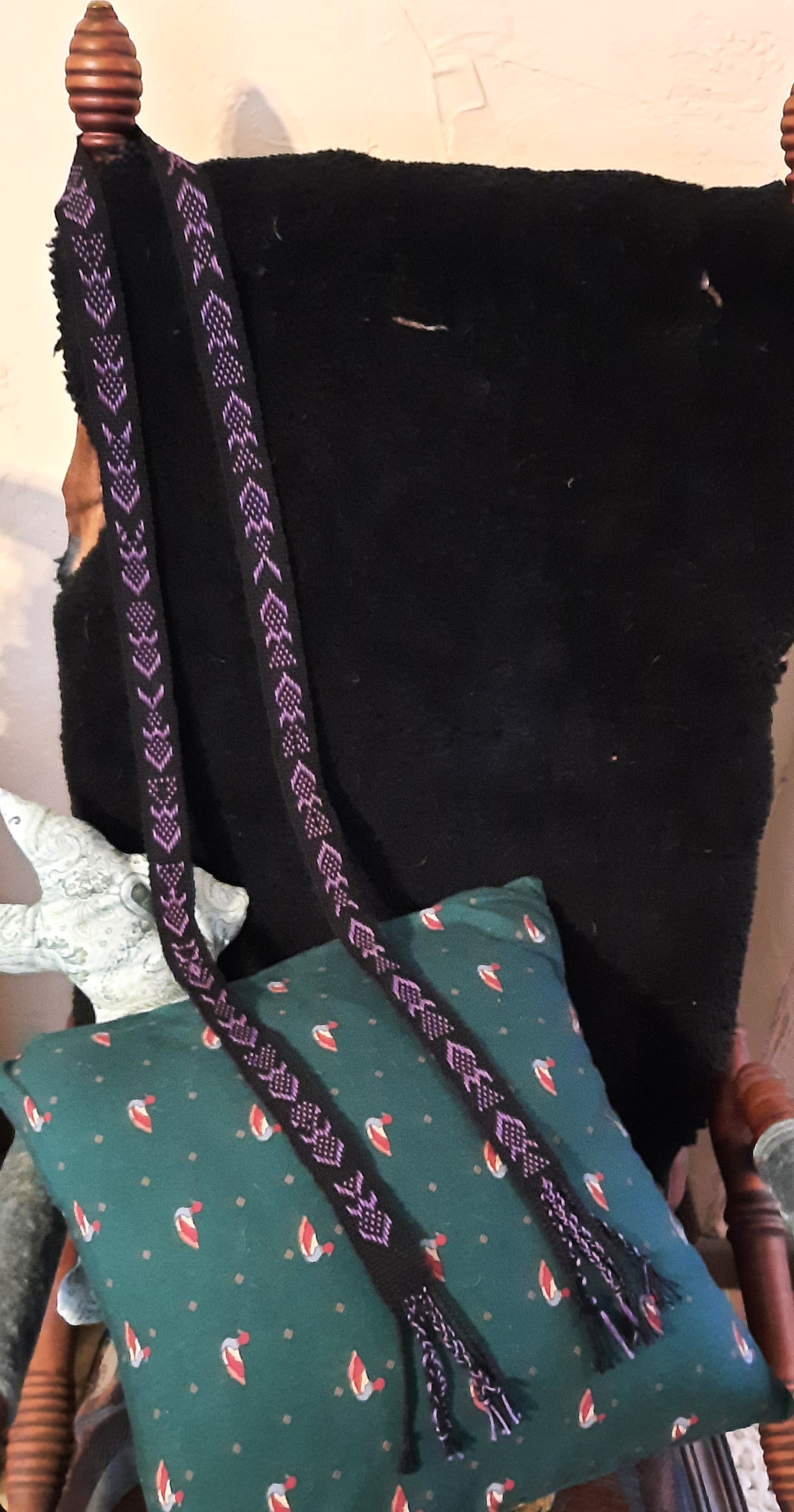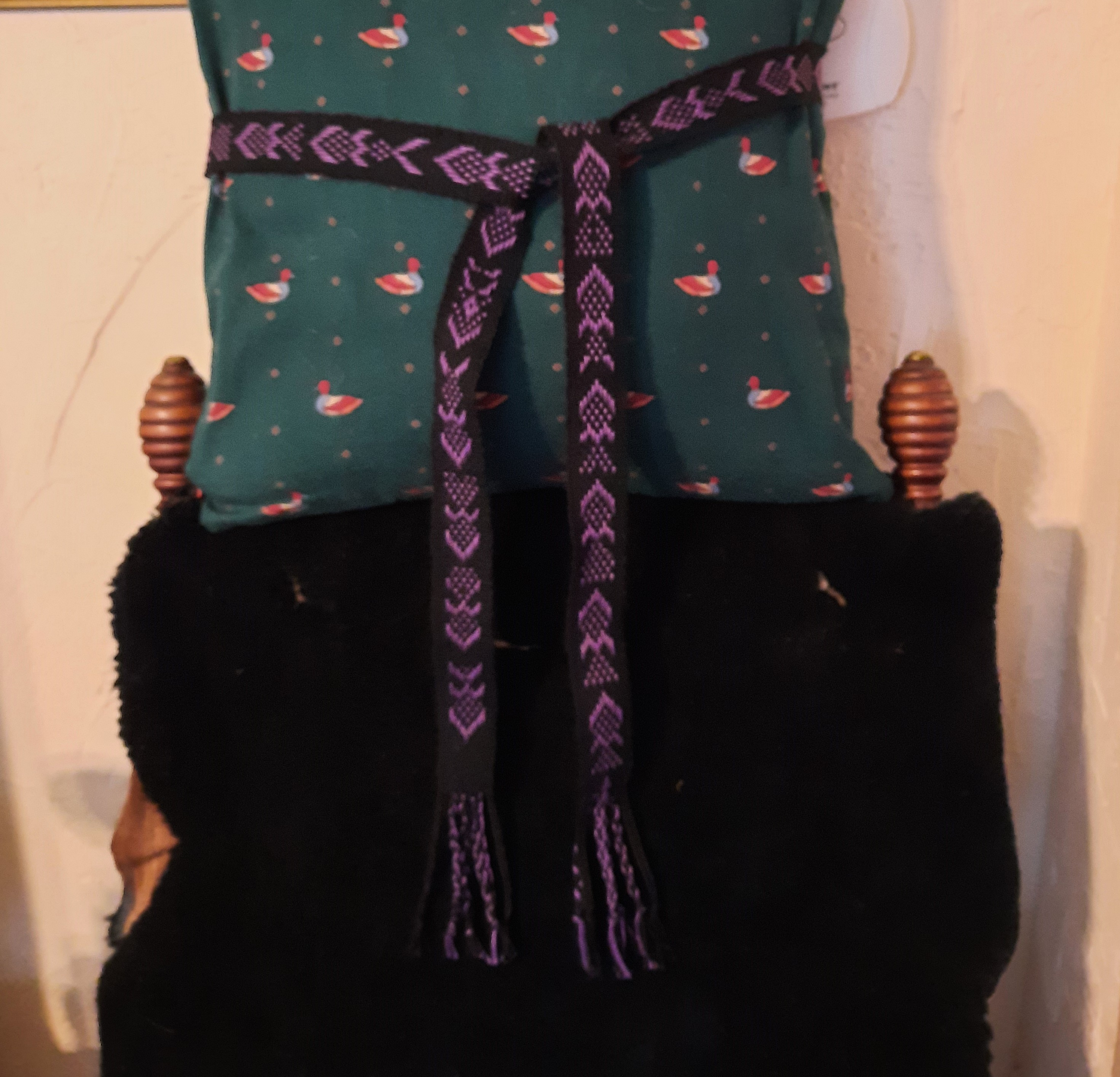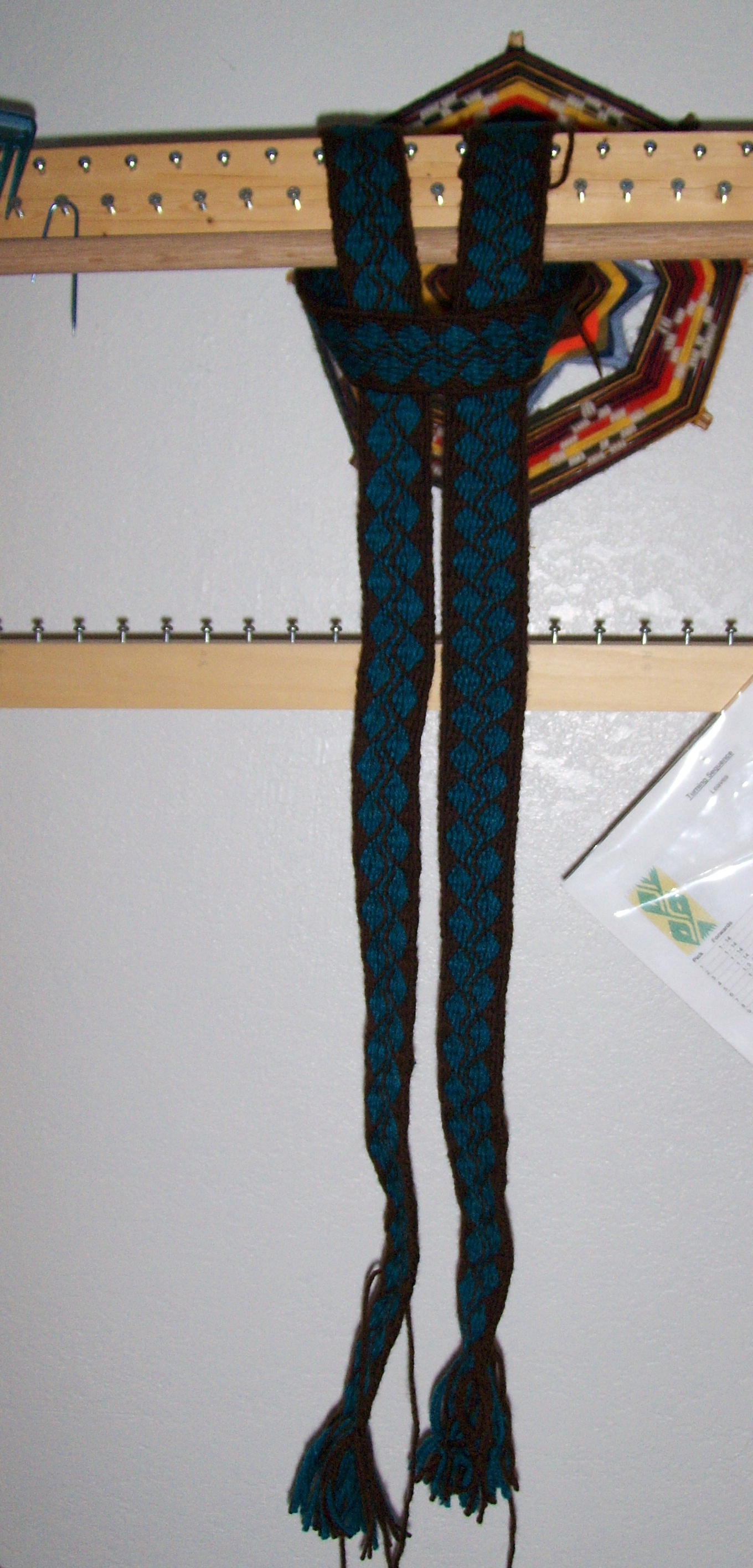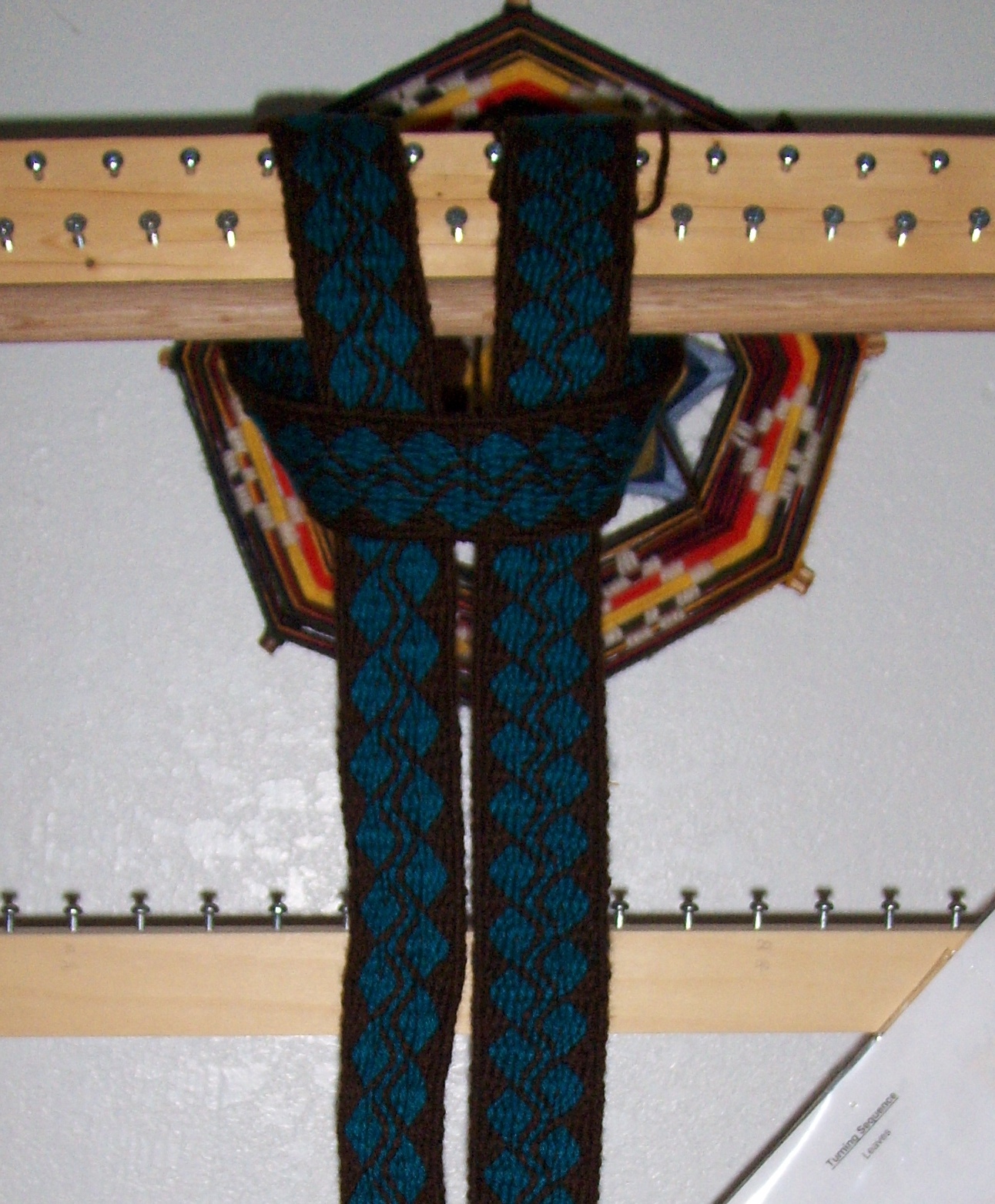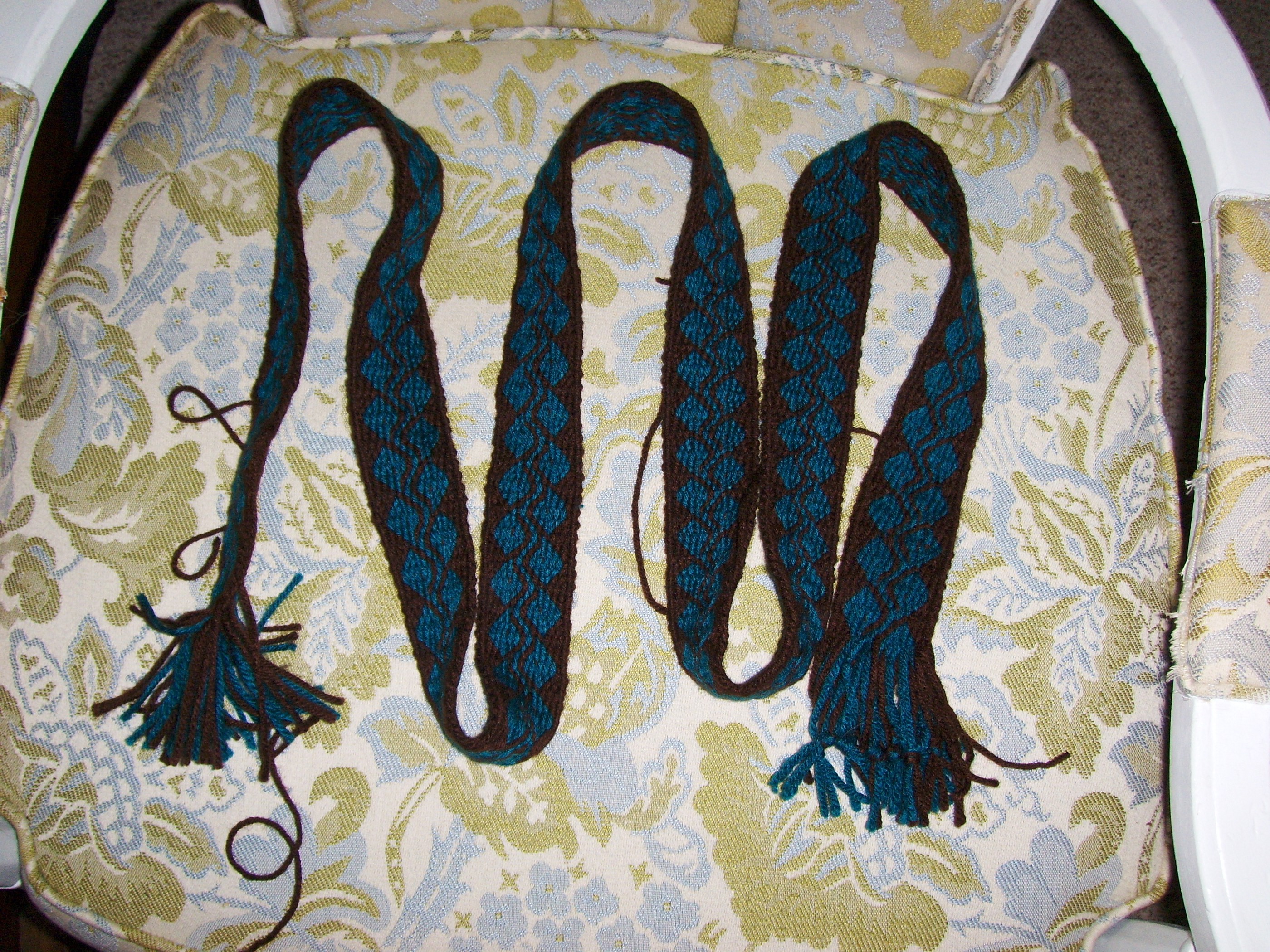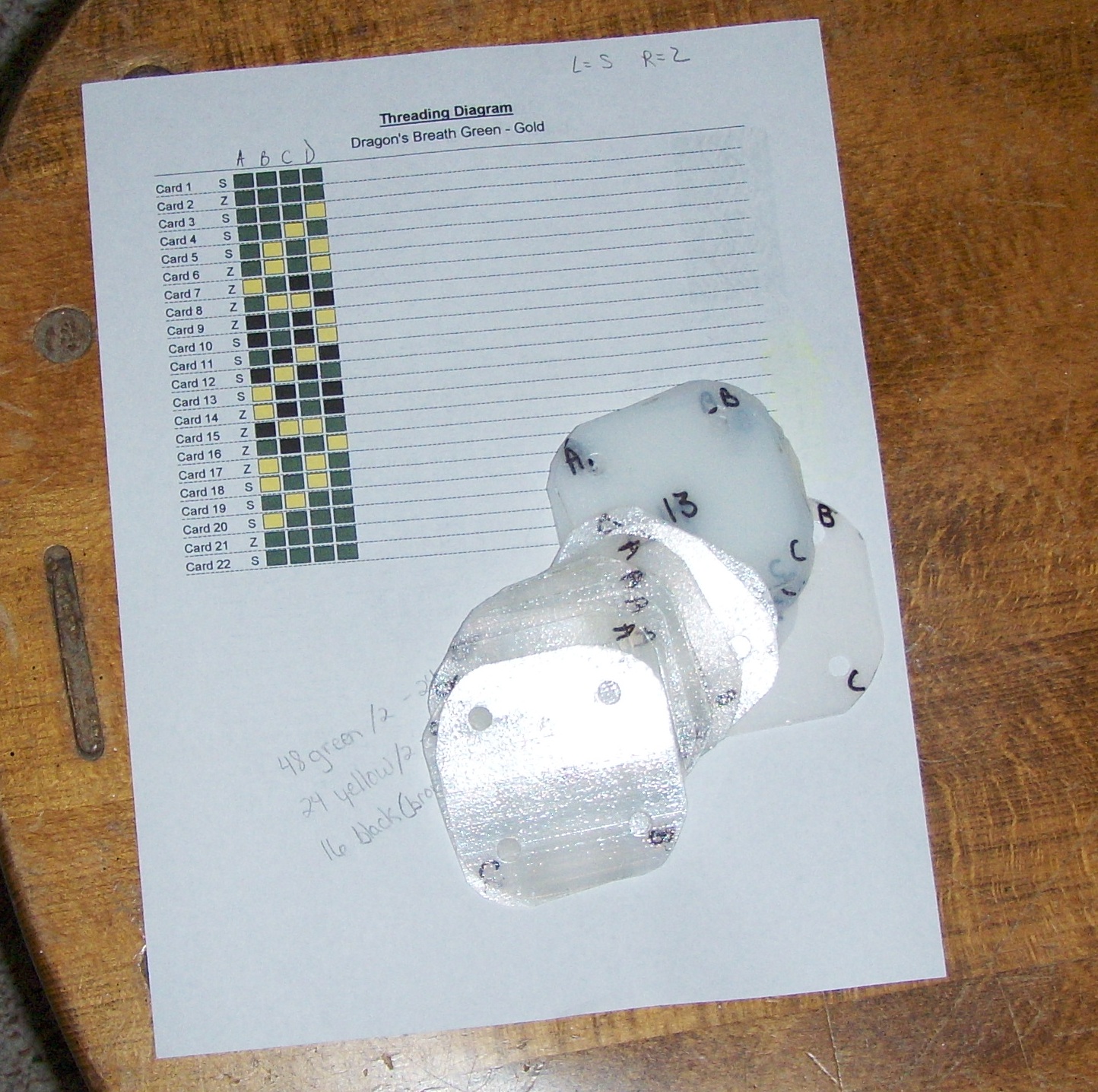
My favorite weaving pattern for now….

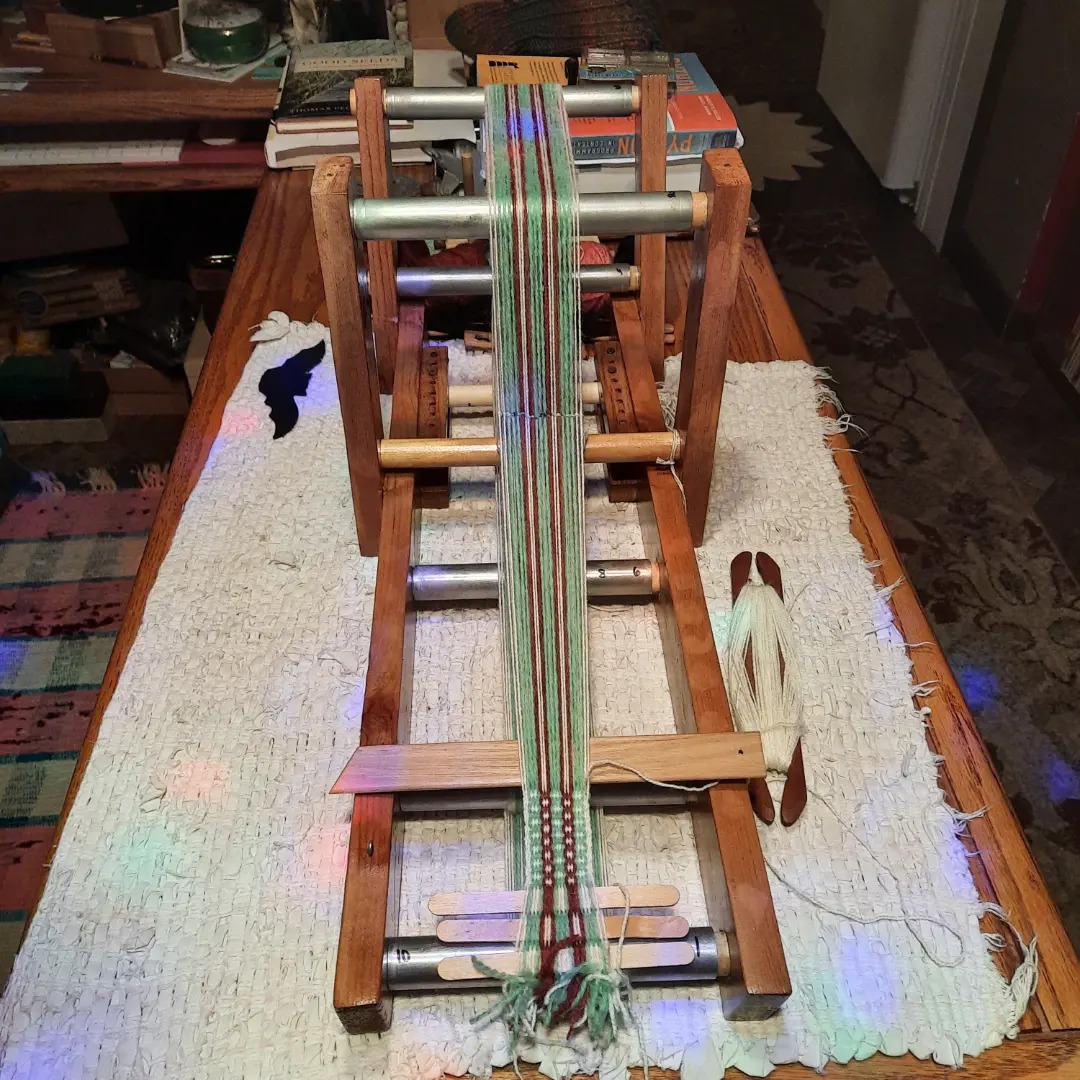
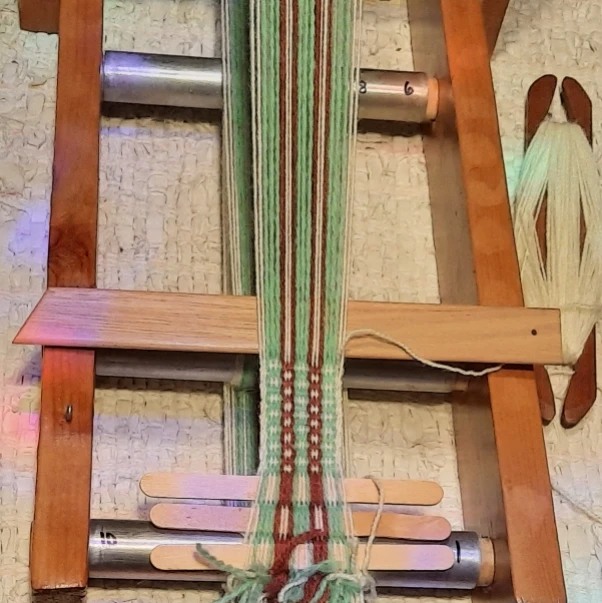
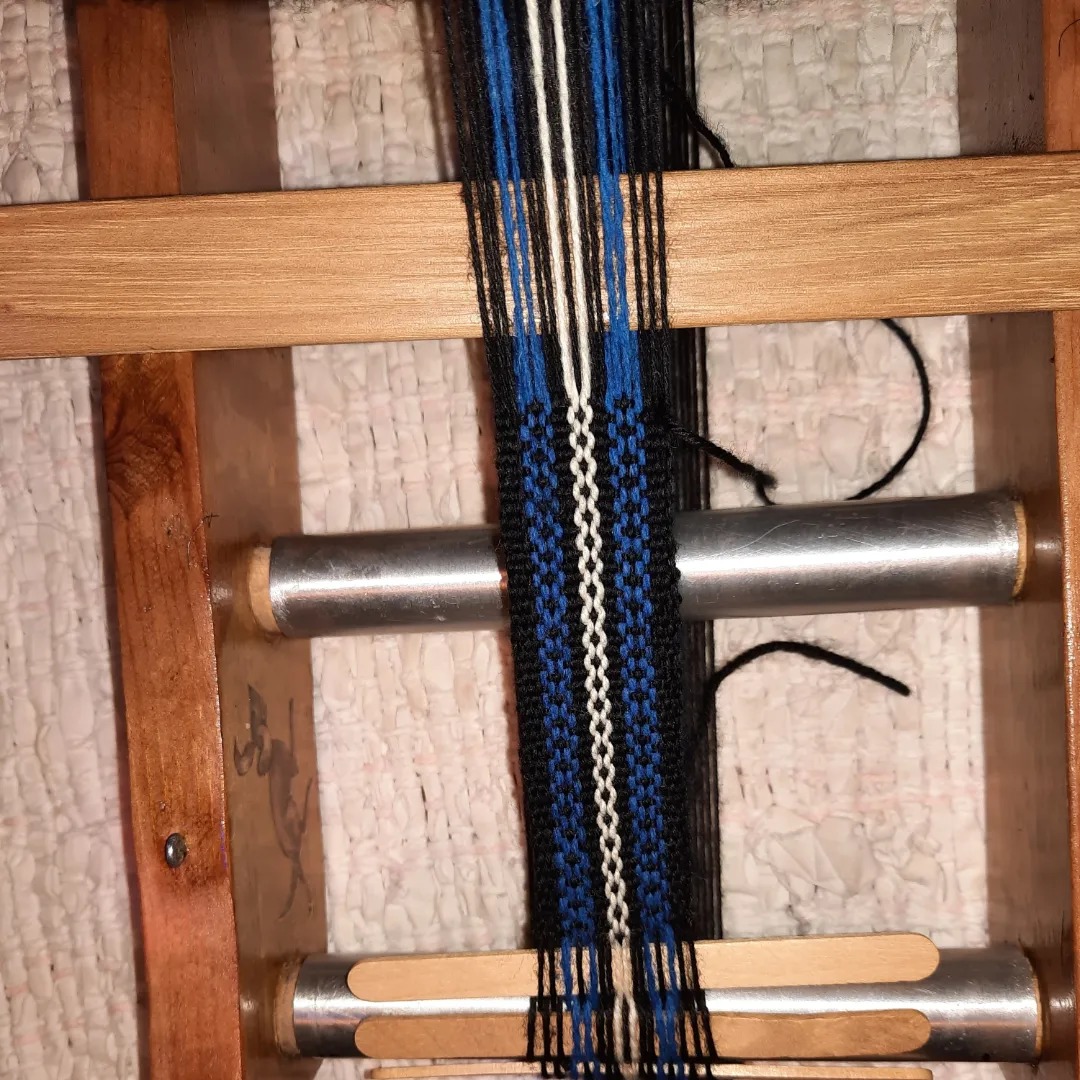
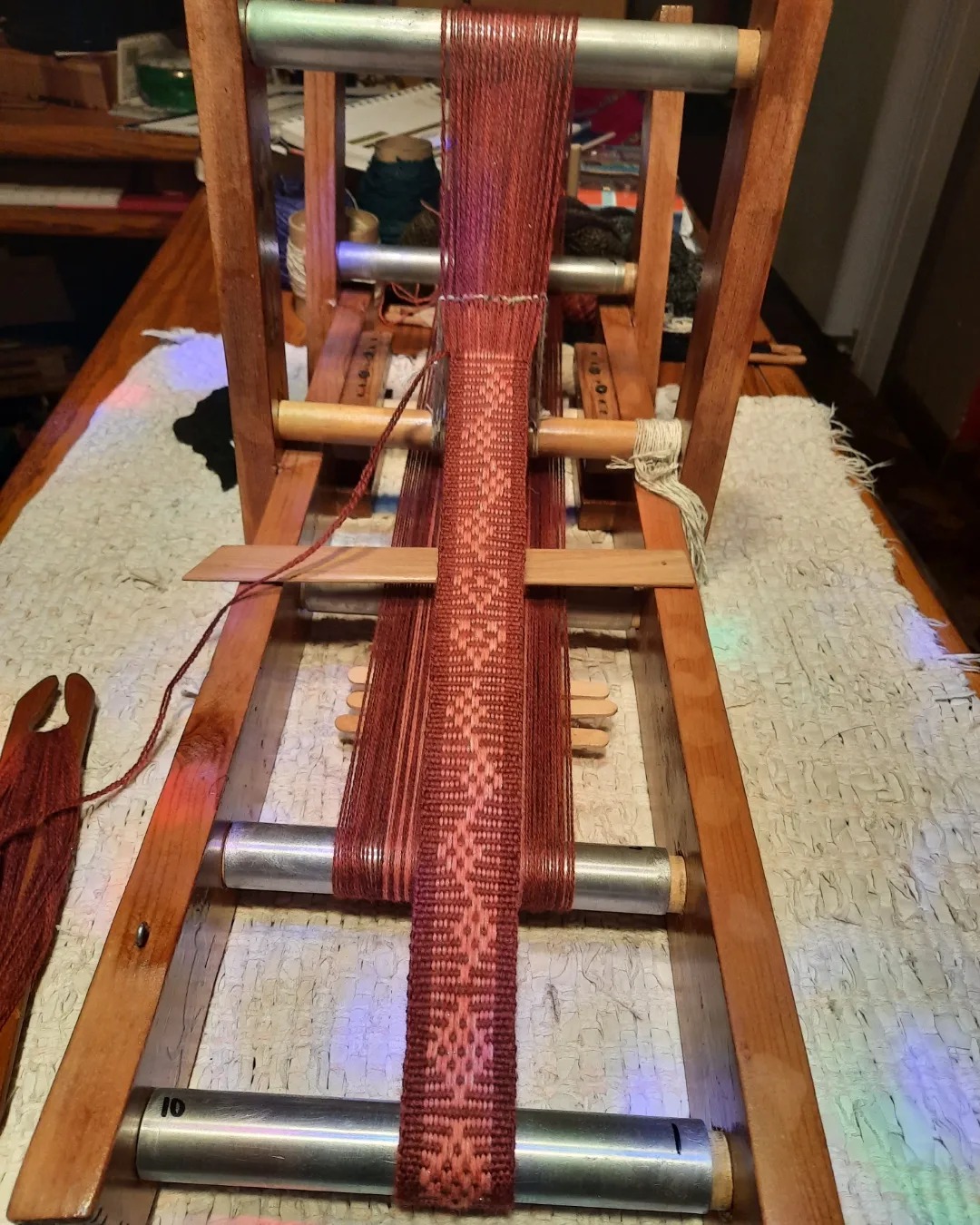
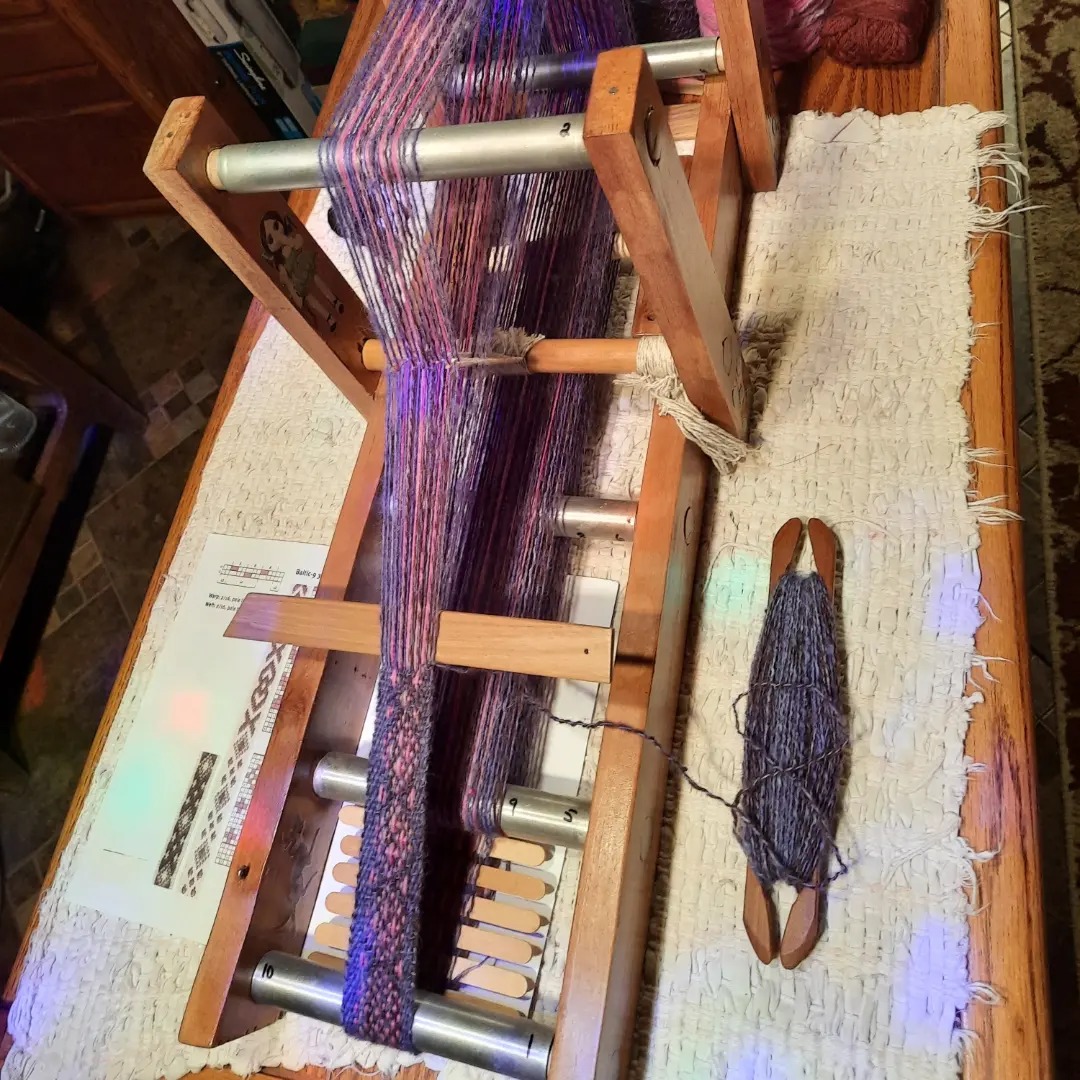
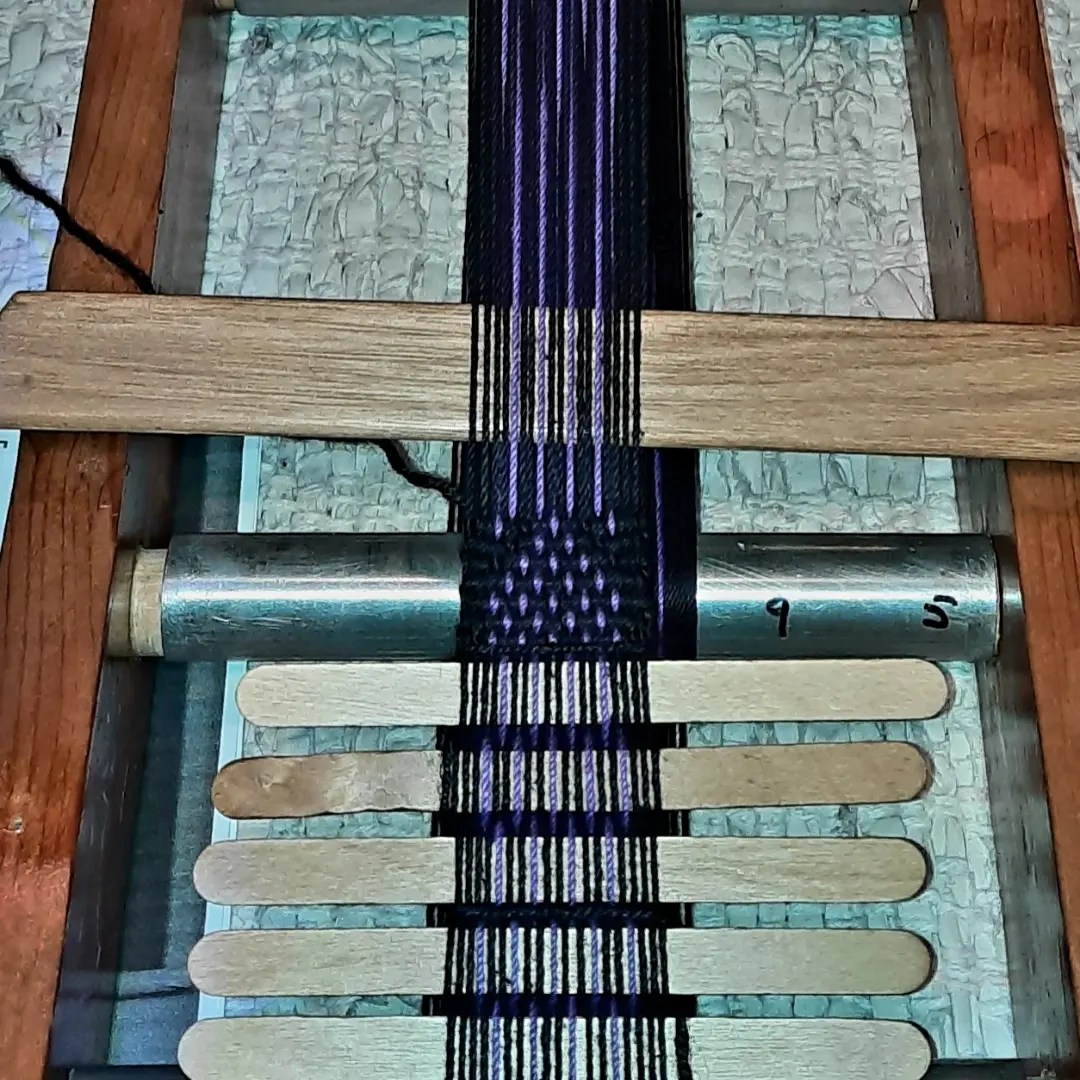
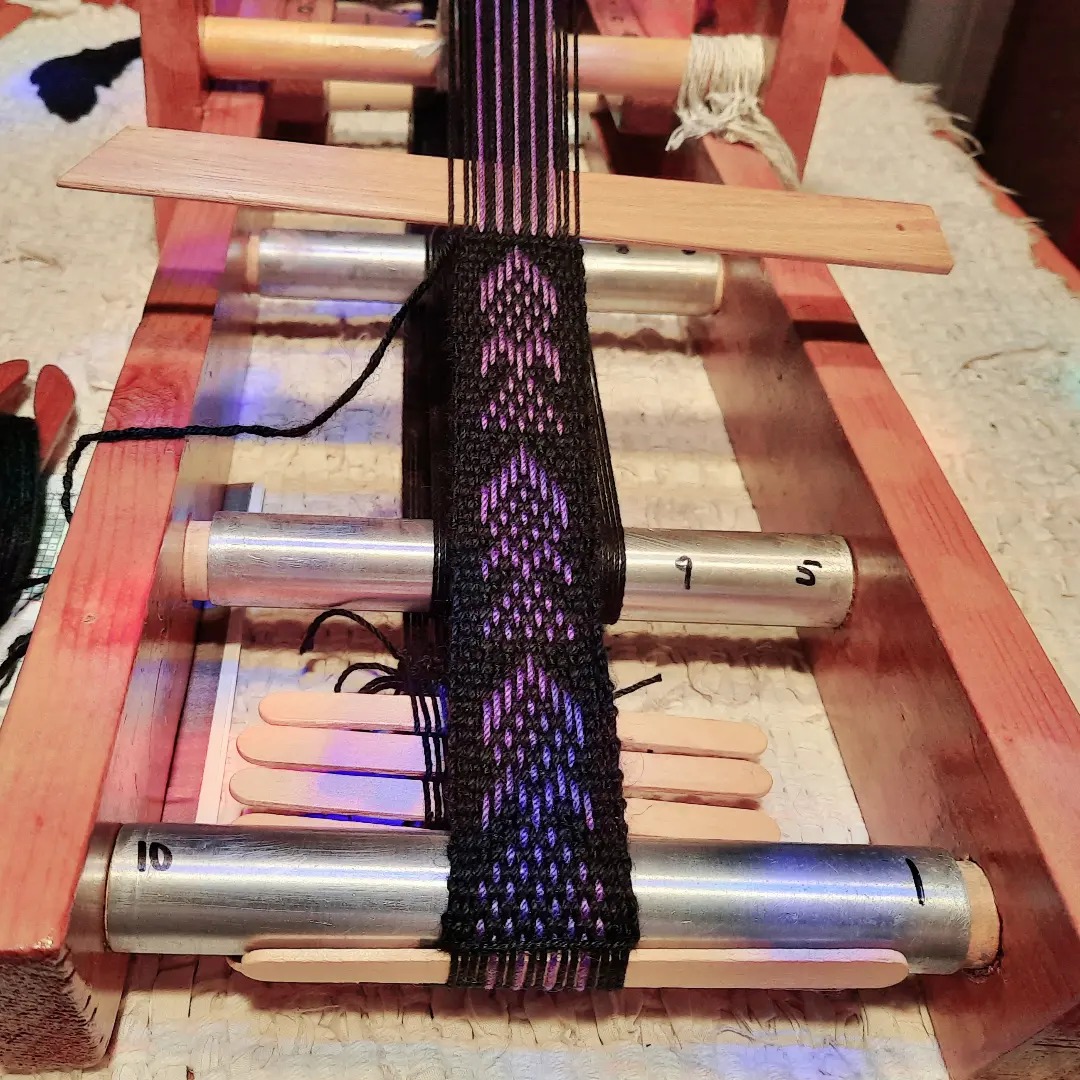
I modified a pattern from the book, The Weaver’s Inkle Pattern Directory, that looks like snowflakes and diamonds. It’s on pg. 77 and is called simply, Baltic-13 2 (it’s actually the one at the bottom of the chart on pg. 77. It’s a neat pattern, but when I started the first one I redrew it so it’s snowflakes and hearts with a 3 row space between each sequence.

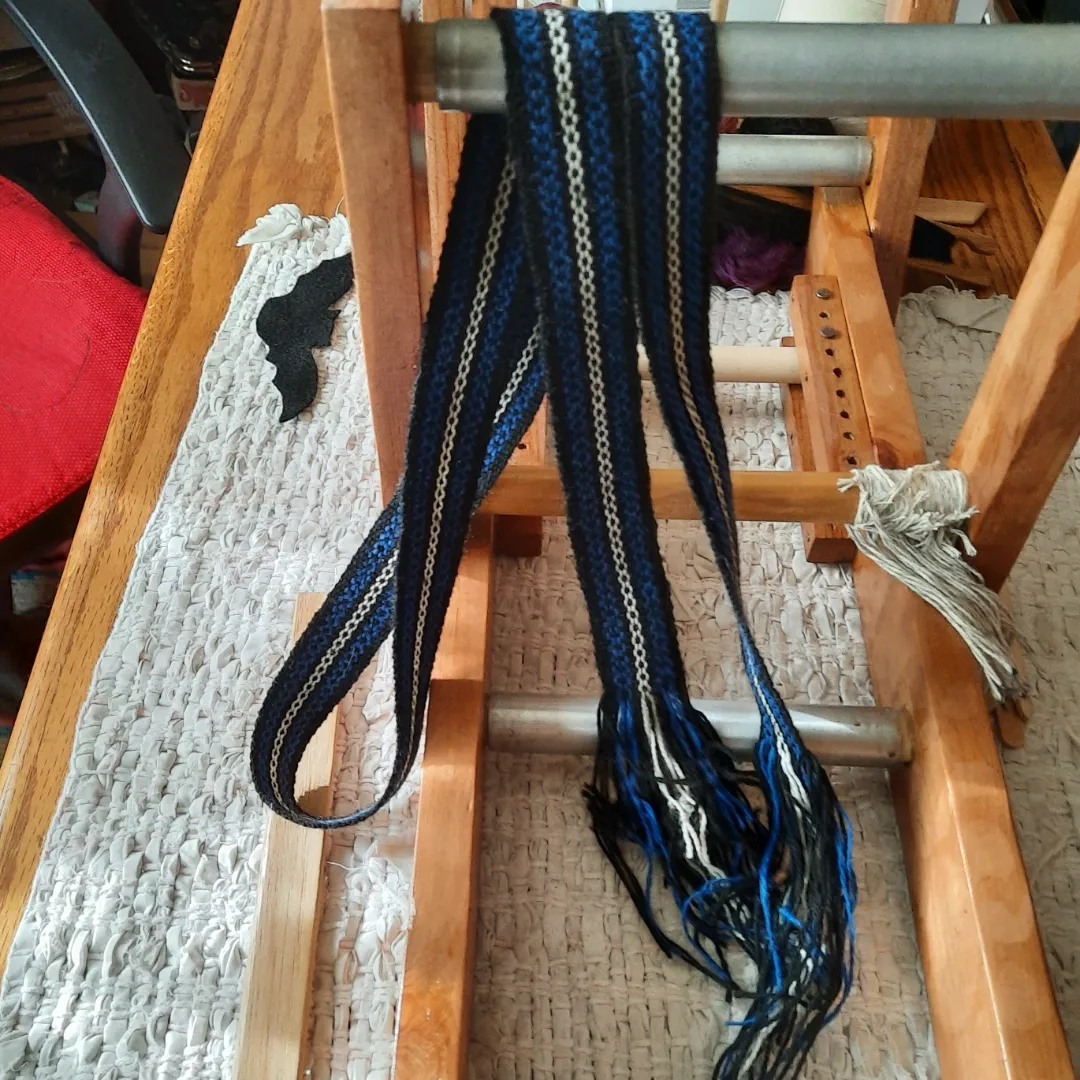
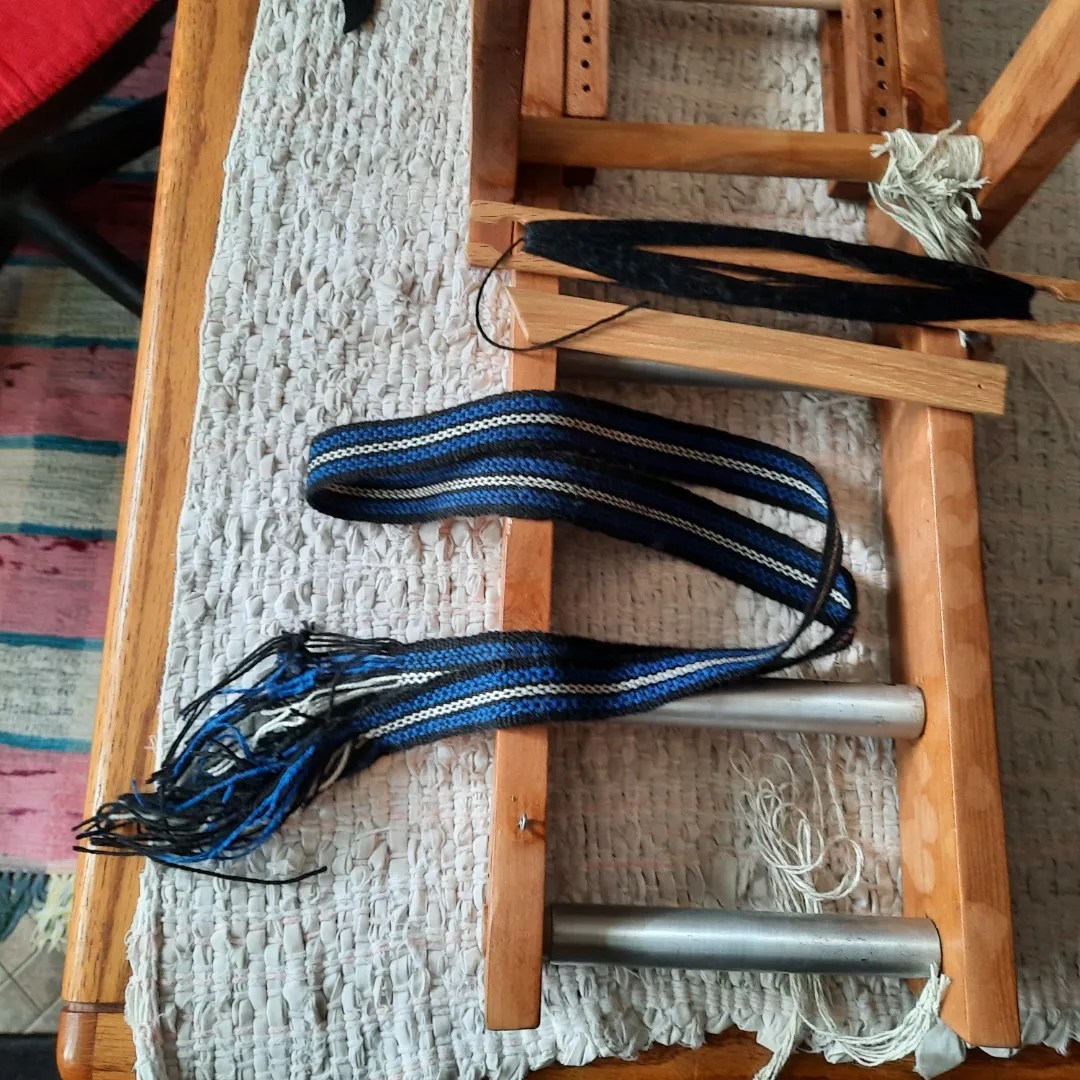
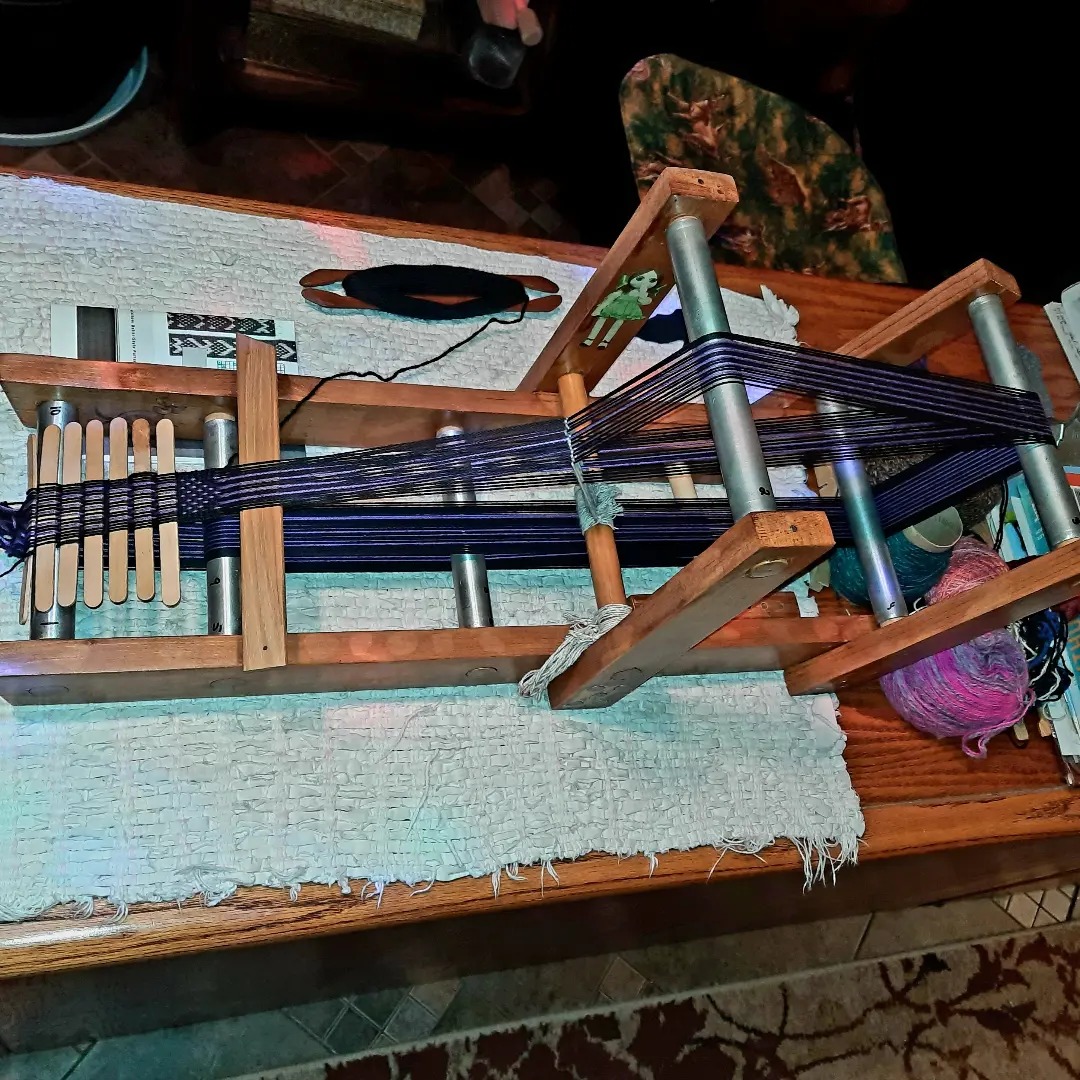
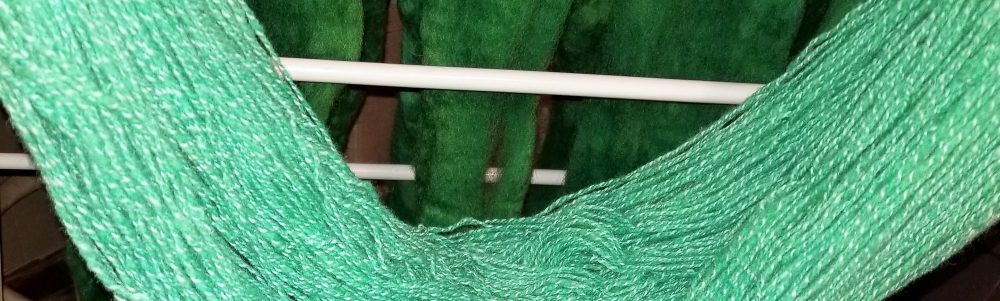
I finished the first belt using this pattern in cream white wool and royal blue sized wool. I rewarped the inkle loom with the cream white and my handspun, handdyed turquiose green wool for the next band/belt.
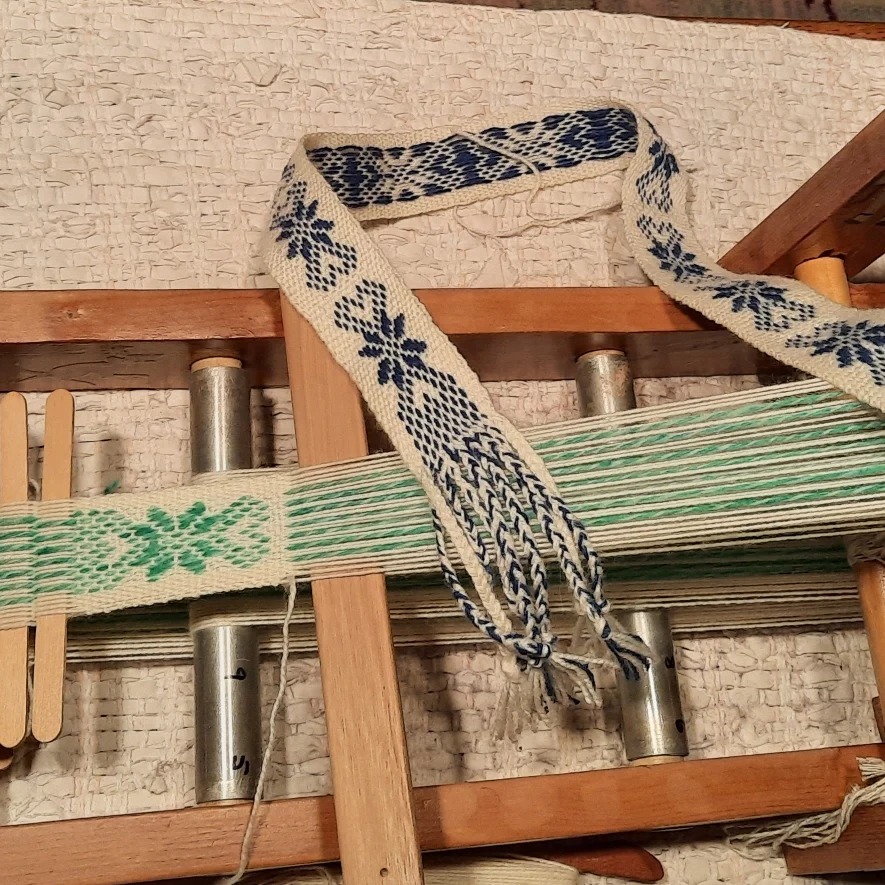
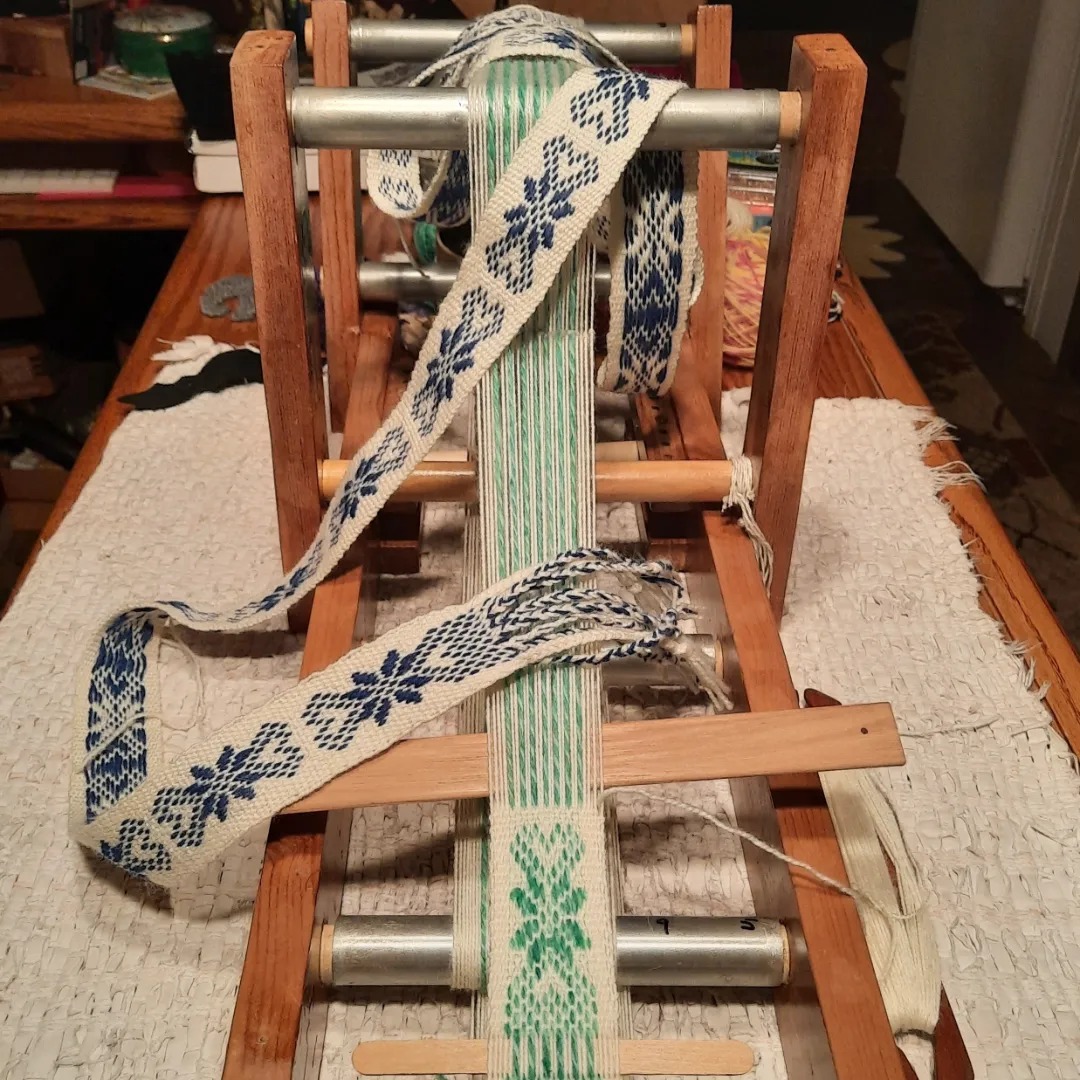
I graphed a draft of my derivation of the Baltic-13 2 draft and changed the colors for the next belt I will be weaving next. The next image is the weaving draft to be used with the threading chart of Baltic-13 2.

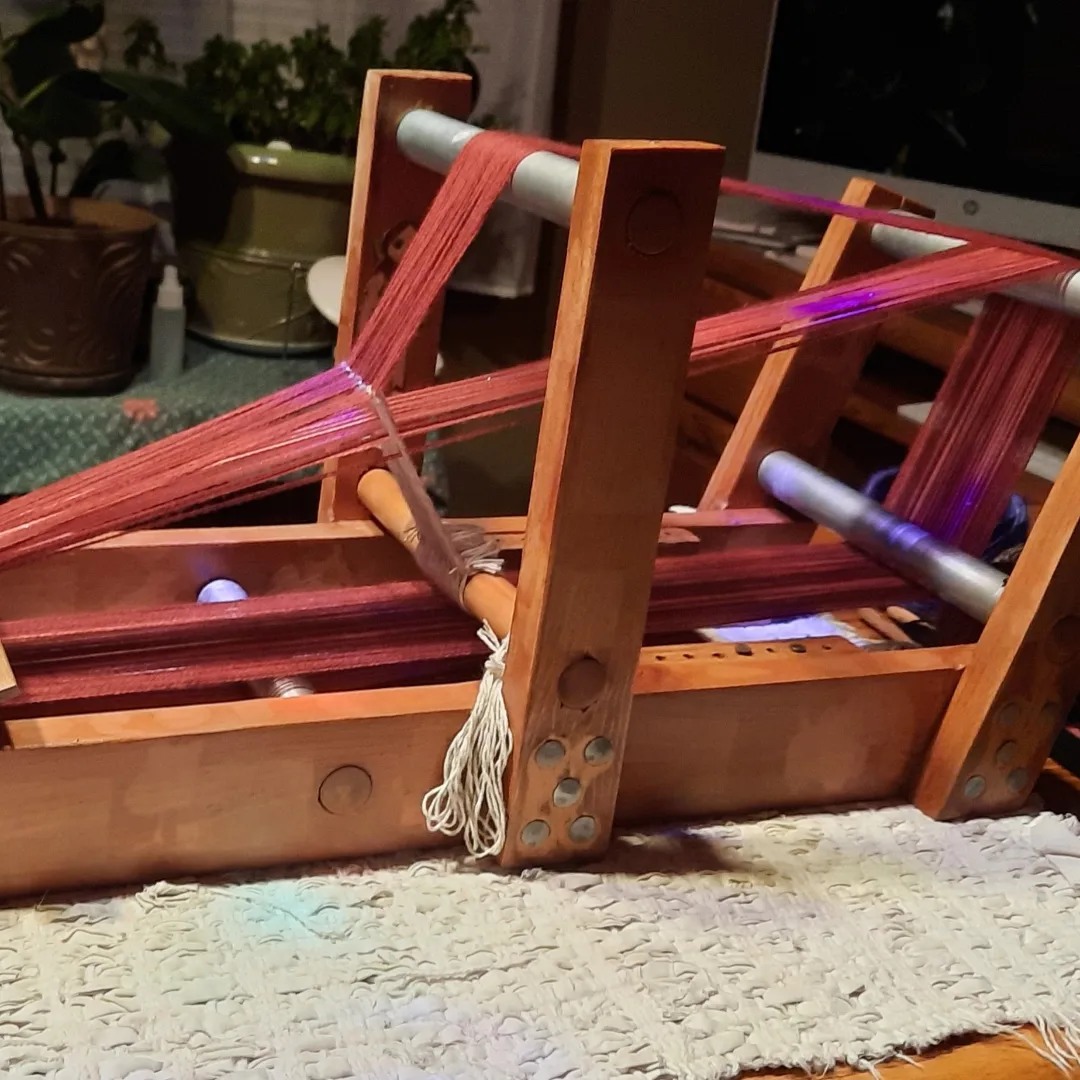
I’ve been warping the inkle loom with 9 extra warp threads (4 up and 5 down) on each side of the pattern(s) because I like more selvage on the edges. This next band/belt will be in dark violet, handspun handdyed light turquoise green, forest green, and the single outside pattern edge in hte dark violet.

When I have time, I’ll post progress pictures on facebook and instagram as I go along.

Get going and make something AMAZING!!! Feel free to use the chart for weaving, knitting, crocheting, etc.
Inkle Loom Weaving Has Been Brought Back Into My Life!

It’s been over 10 years since I started weaving on an inkle loom again. I sold the first inkle loom I had, well over 10 years ago, because there was a lot of life happening with us. Mind you, I like life happening, but not exactly the way it was doing so at that time.

Fast forward 10+ years and about 30 weaving books later: We went to a local auction house and there were tons of weaving looms up for auction. There were floor looms, table top looms, and a couple of small looms that included an inkle loom. I was able to score a handmade inkle loom for under $10 and another loom I might discuss at a later date (after I learn how to use it).

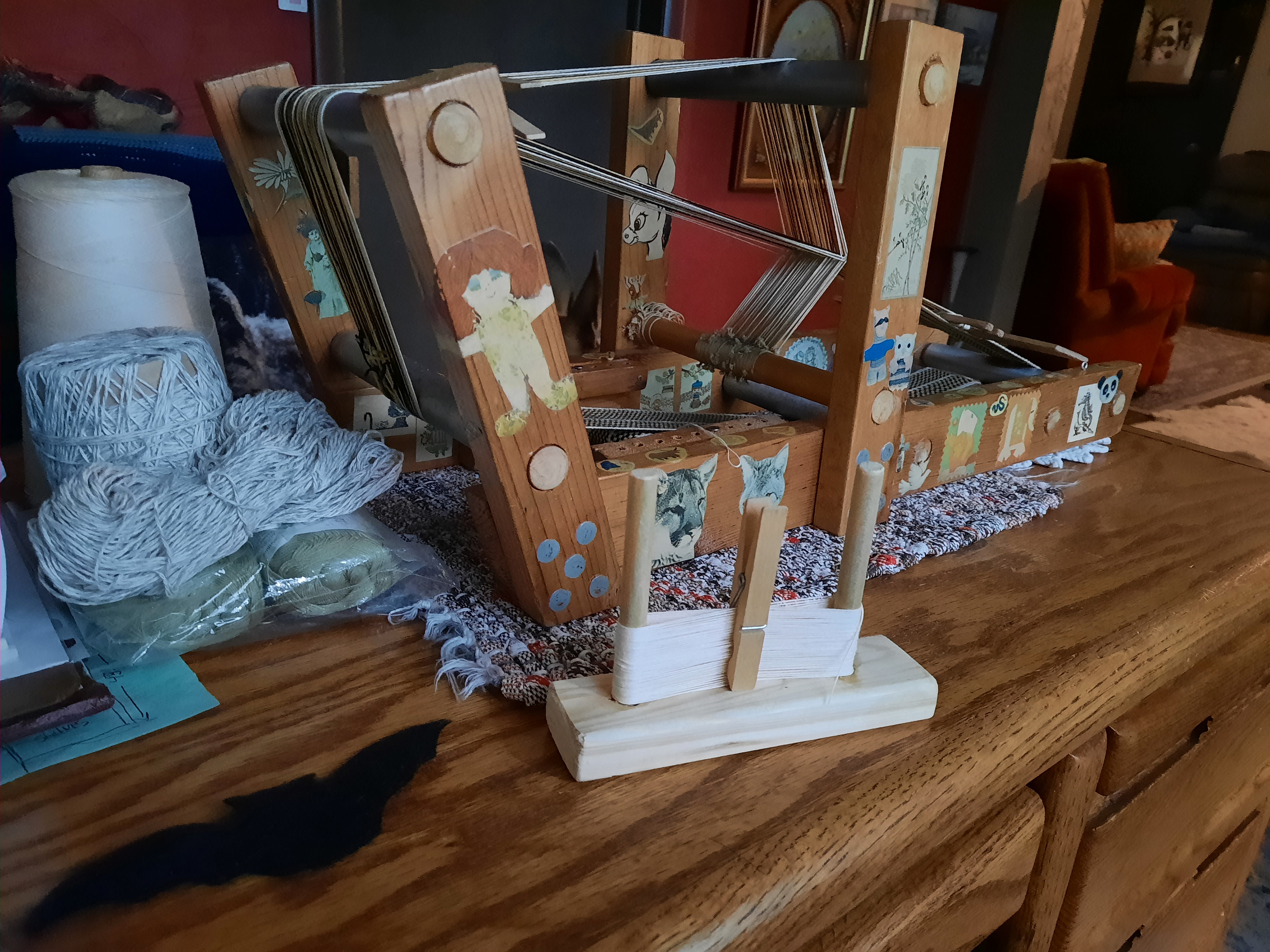
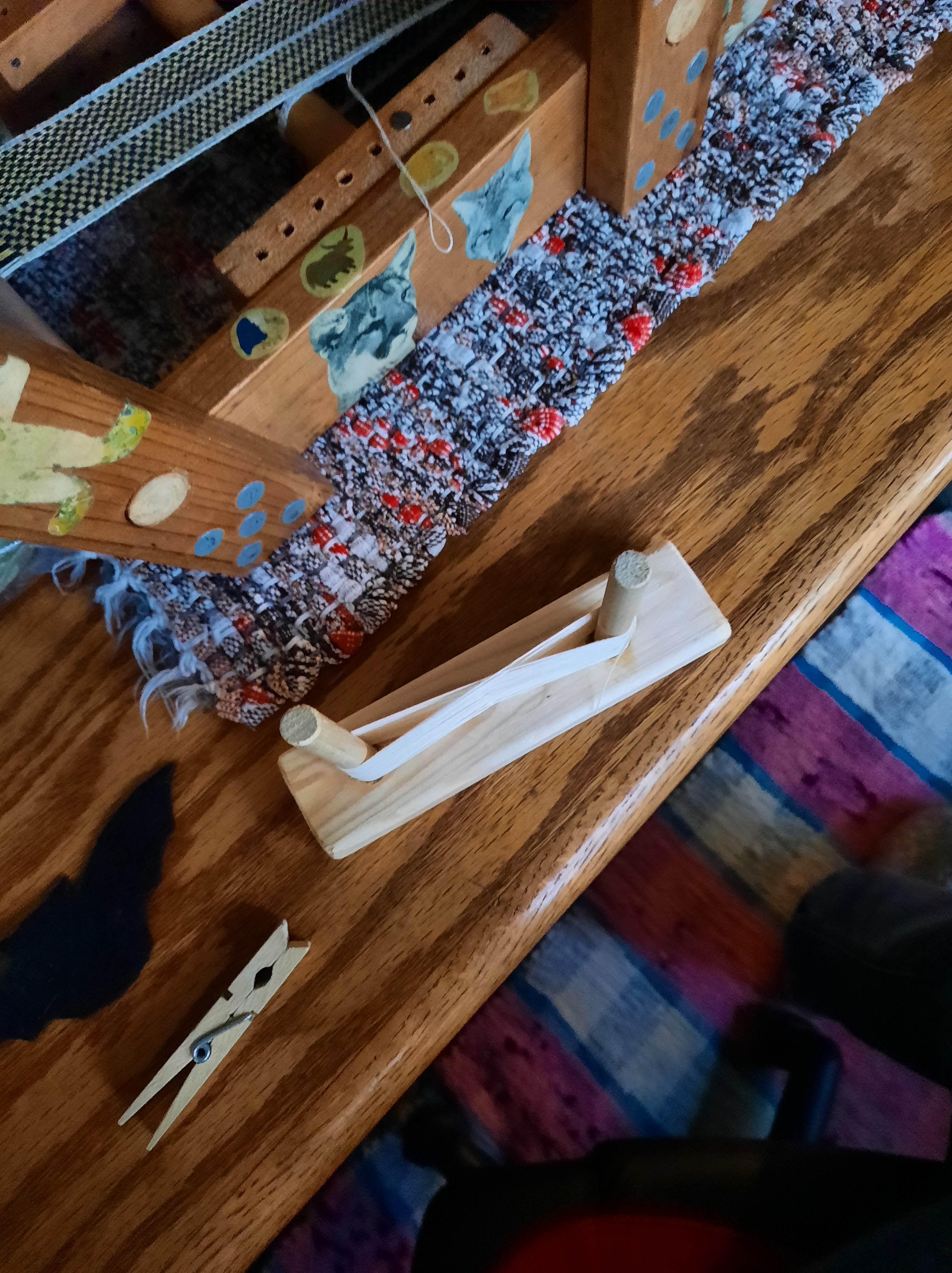
The inkle loom came with a lot of cute stickers all over it and a sample block, inkle band already in progress. I finished weaving it after I dusted, vacuumed, and cleaned the loom and band so I could finish it.

My hubby and I stripped most of the stickers off of it. I left the stickers of the little girl in the green dress and her dog on inside of the loom because I liked them. I sanded it and hubs varnished it.

I rewarped it with rust brown and light green wool for a simple inkle band.

There’s a saying, “If you don’t use it, you’ll lose it.” I still knew the basics, but I had to relearn how to do the string heddles warping procedure.

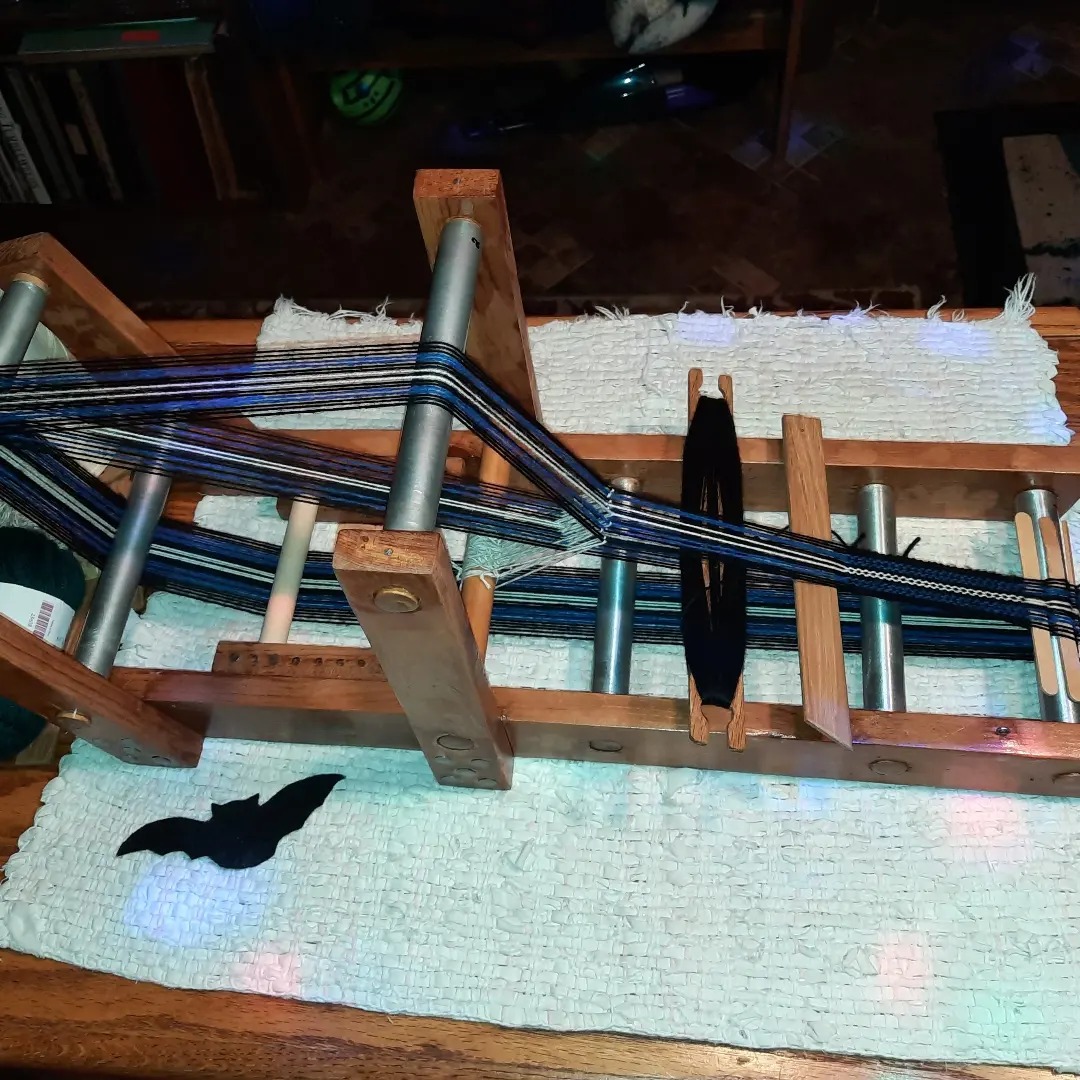
After I cut off the brown and green band, I rewarped it again, with black, blue, and white wool for another very short band because I once again forgot to place the unheddled warp threads in the right place.

With the 4th band, I feel that I’m back in the swing of it and it’s coming along quite nicely.

I dove right in and finished this Baltic style 9, diamond sampler belt with braided ends, rather quickly. I wove another sampler after that.

Obviously, I need to weave in the ends on this one, but otherwise I’m pleased with it because it’s woven using my handspun wool yarn! This is made of 2 Baltic style 9 samples from the book, “The Weaver’s Inkle Pattern Directory”.

This black and purple band became completely a Baltic style 9 freestyle. It’s fishes! Every shape of fish I could graph on paper because I needed to see every variation!

This fish band is my fav right now, however it is listed in my Etsy shop for sale right now along with the rust brown and pink diamond band!!

Get busy and make something! Anything!! It doesn’t matter what it is so long as you give it a go!!!

A New Spindle, Bobbin, and Spinning Wheel Maker to Check Out

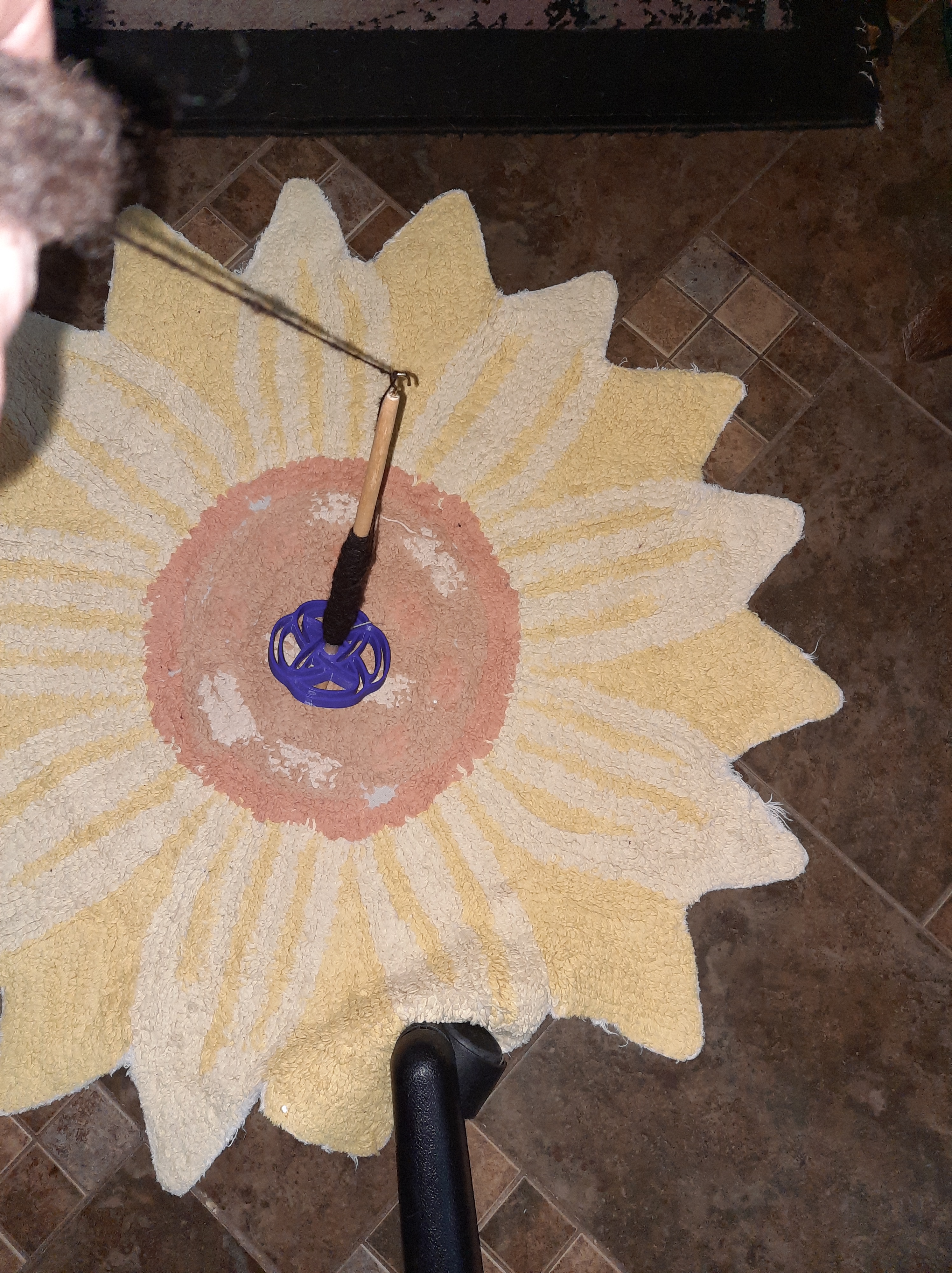
While reading the February/March 2023 issue of Mother Earth News, I came across a very interesting article titled, “3D-Printed Charkha, Spinning in the Digital Age” written by Joseph Bjork. Out of curiosity and a desire to have a few more bobbins for my fastest spinning wheel, I acquired a spindle kit and a spare bobbin kit from the GoodandBasic shop on Etsy.

3D Printed Charkha, Spinning in the Digital Age as seen in the February March 2023 issue of Mother Earth News

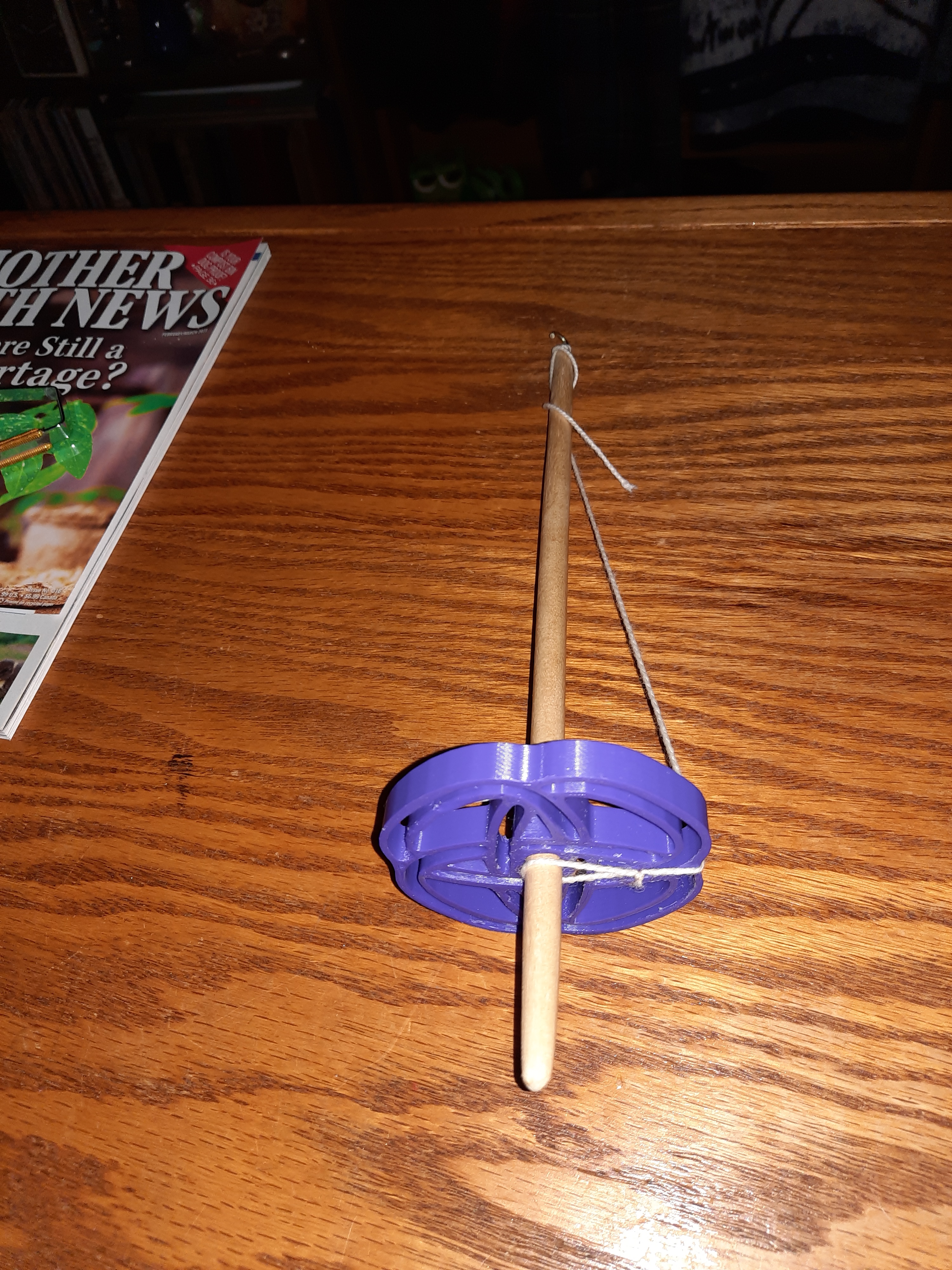
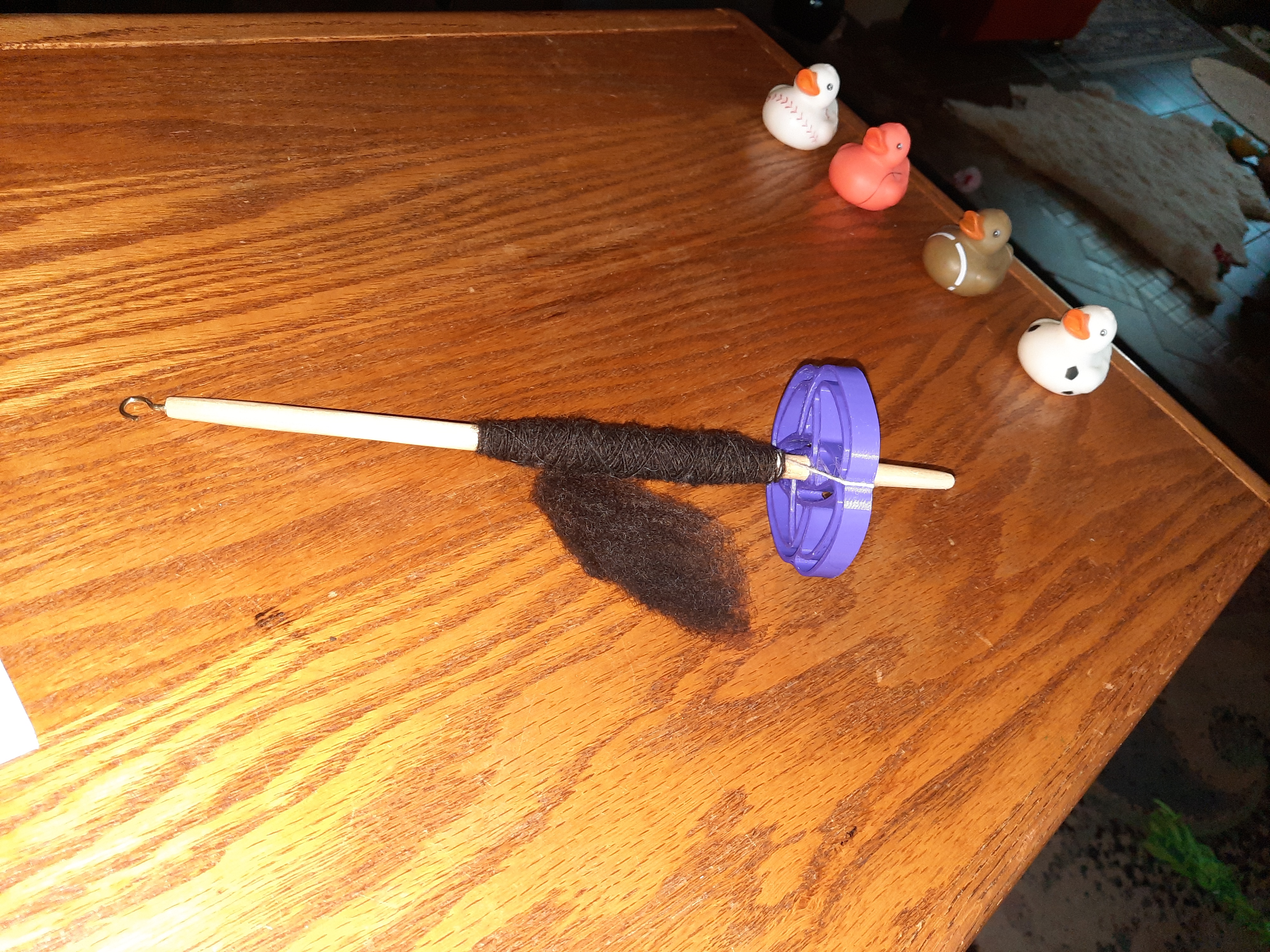
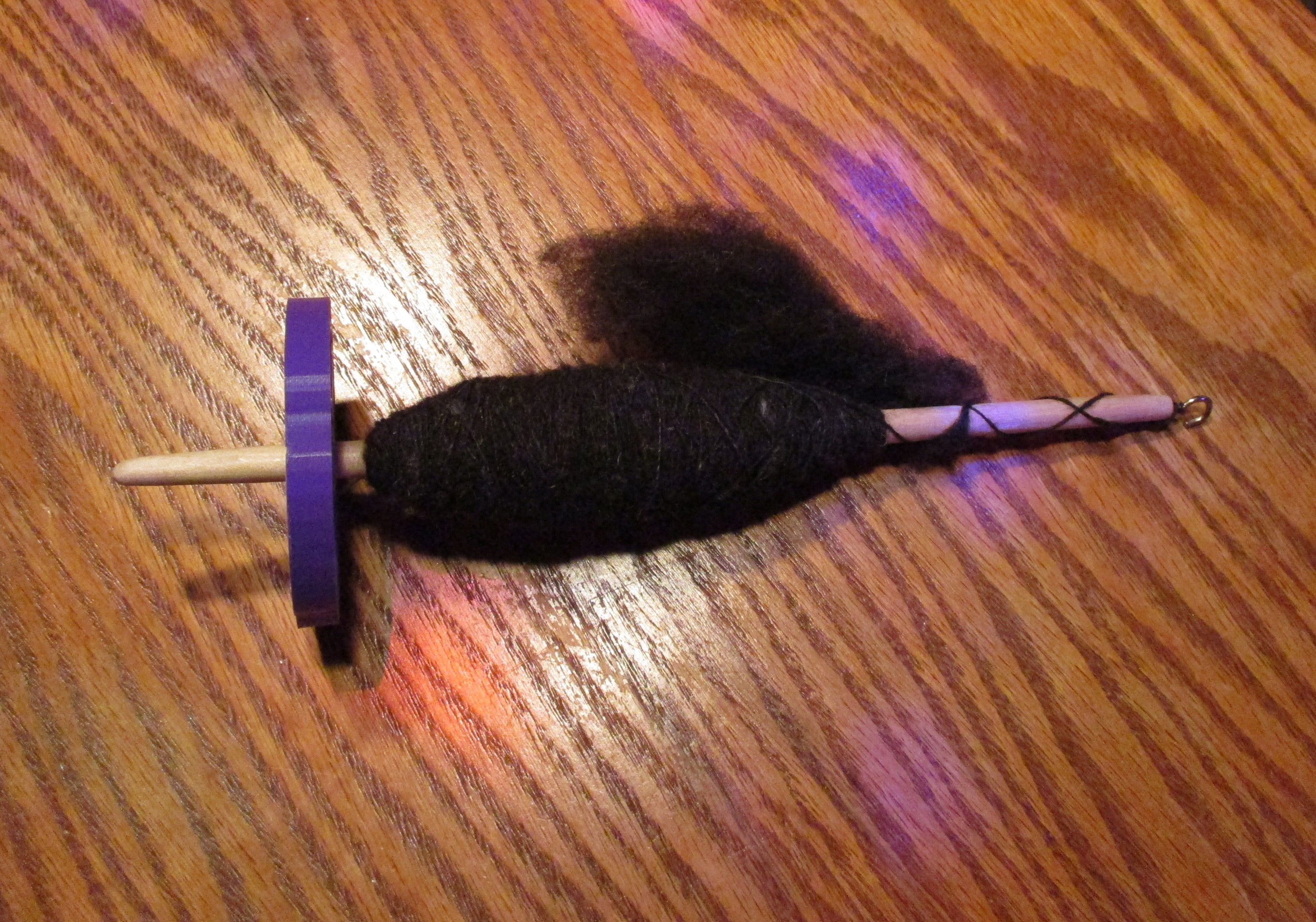
The spindle kit comes with a pine wood dowel, a brass hook, and a neat, geometric, 3-D printed whorl in a huge selection of colors. I substituted an oak dowel that was longer and balanced the better with the whorl. I always like to carve the spindle dowels so they’re tapered at both ends and wax them before I secure the whorl.

This is a beautifully balanced spindle and the whorl is beautifully designed and crafted. I’m spinning black Corriedale fleece on it and it’s spinning up quite nicely.

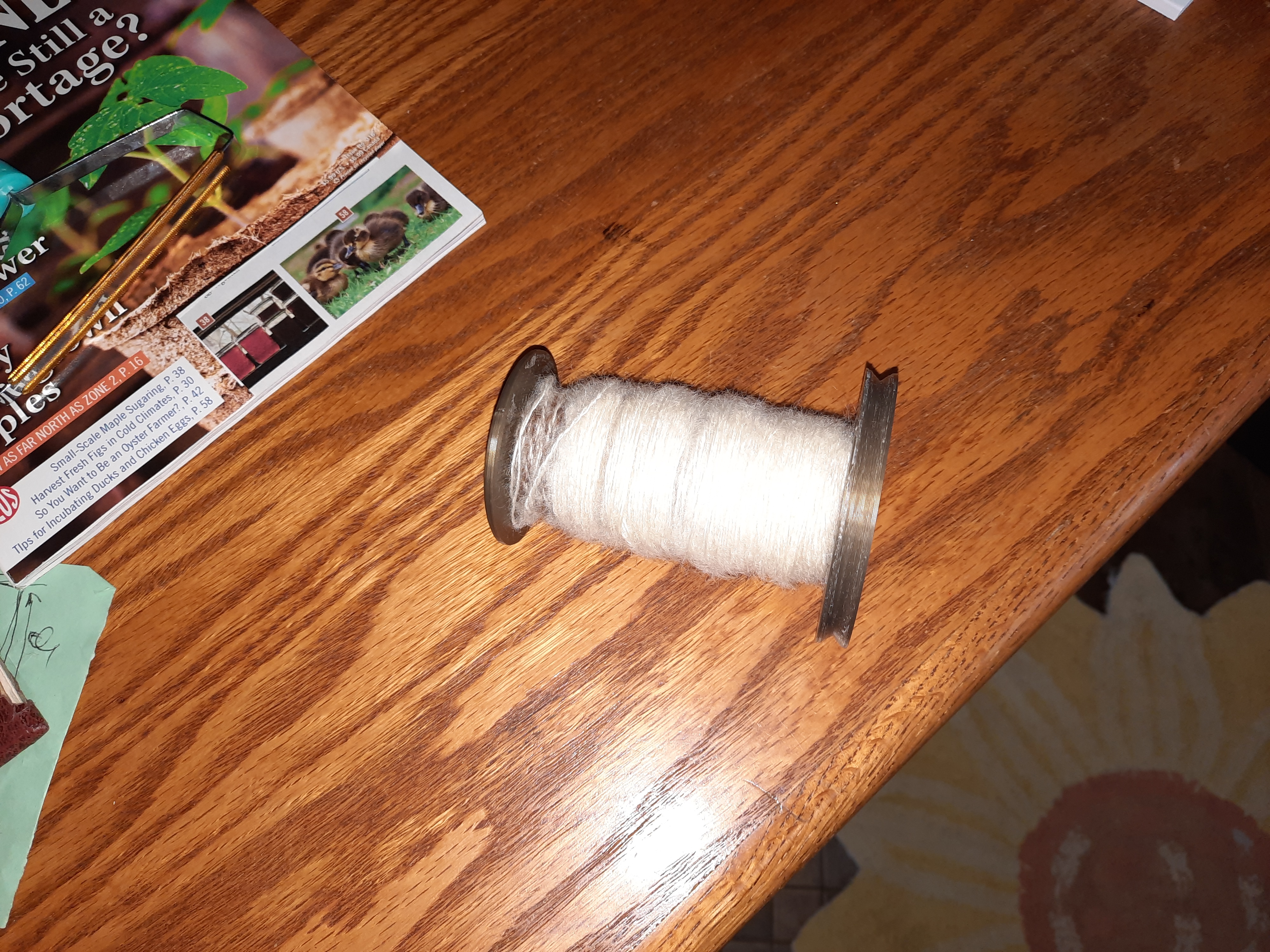
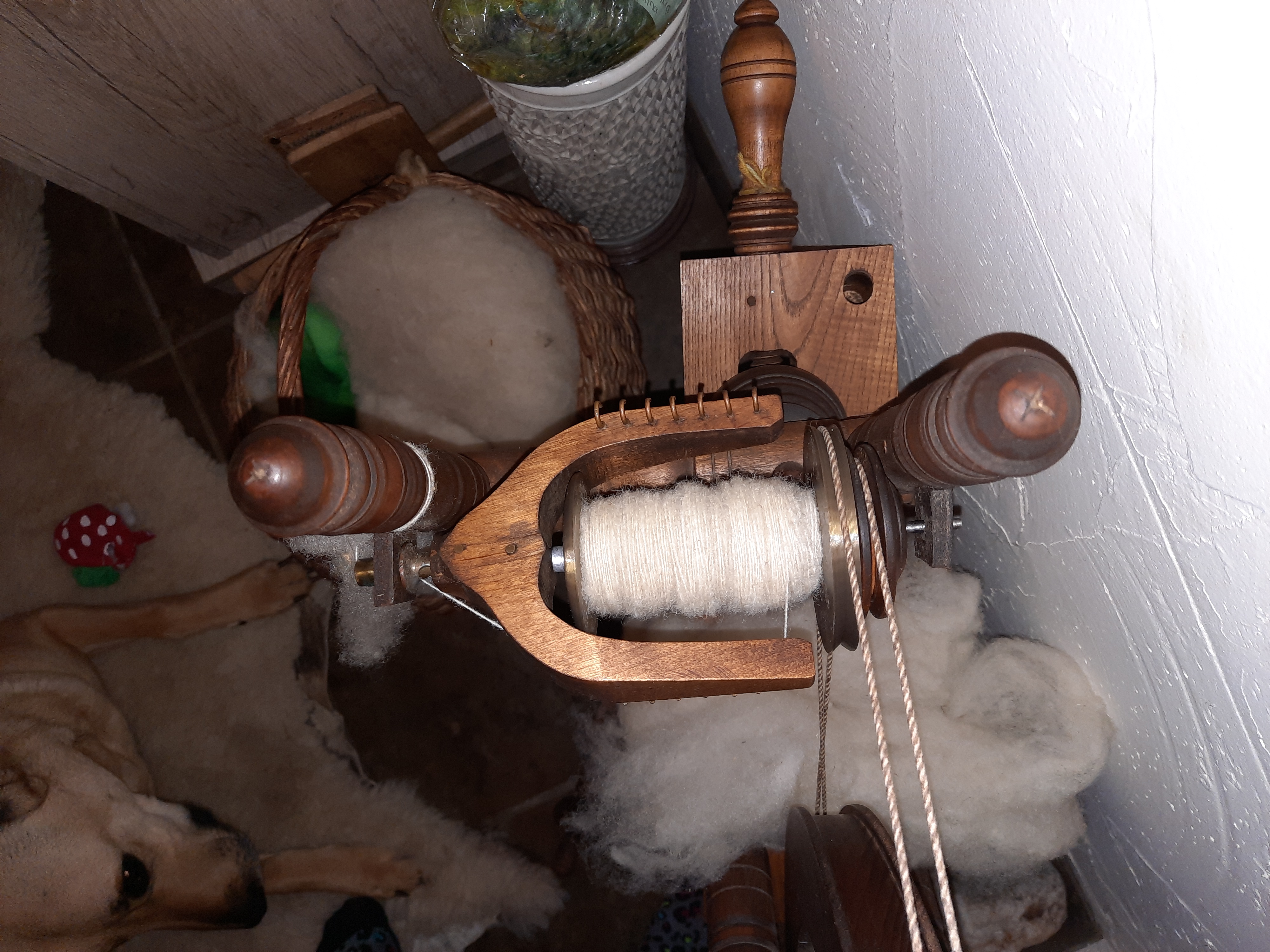
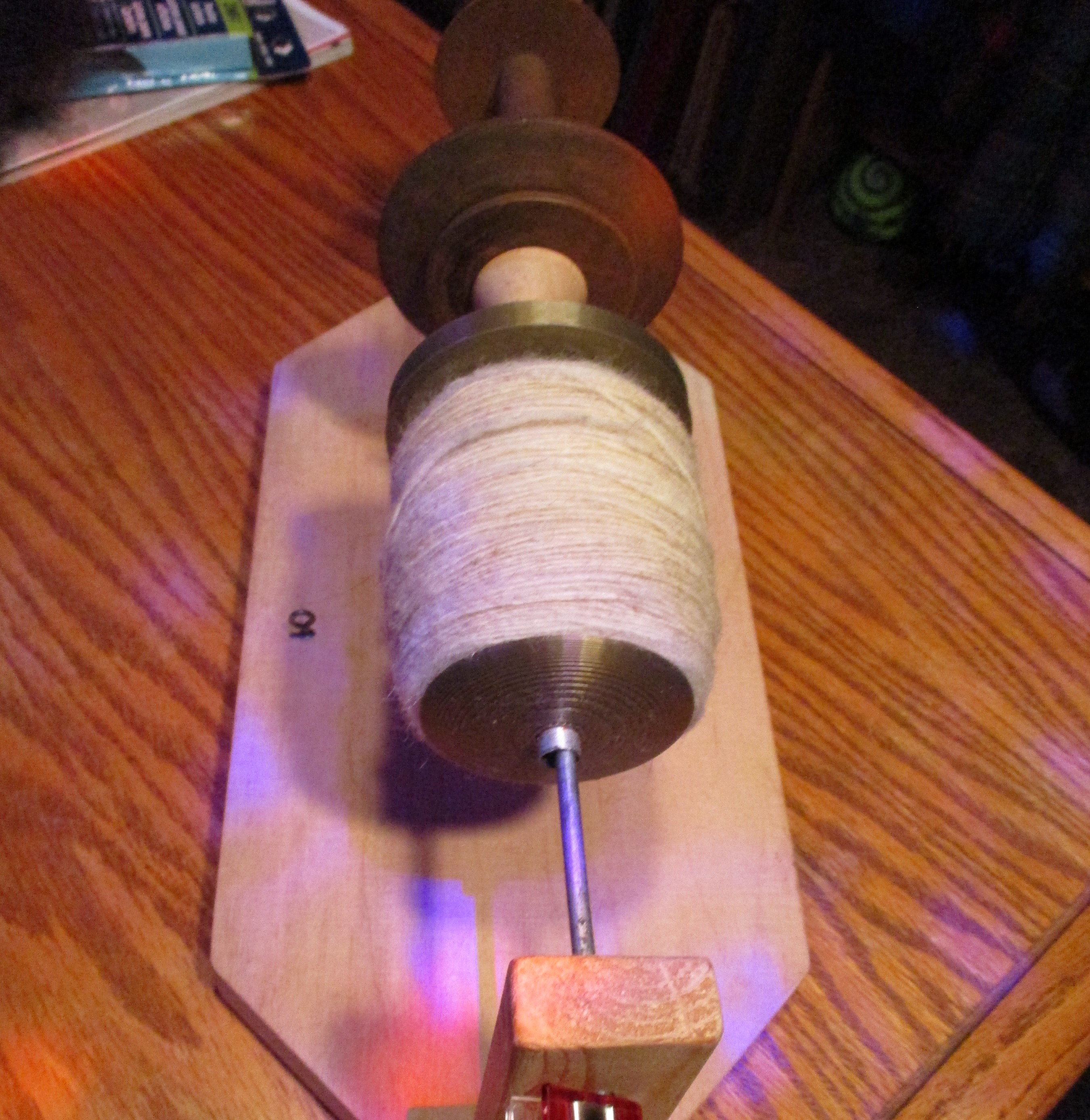
The spare bobbin kit came with 3 large end whorls, 3 small end whorls, and 3 aluminum tubes. I measured the bobbin from my favorite speed demon spinning wheel, cut the tubes to the proper length with the hacksaw, and smoothed out edges with the grinder. I finished deburring the whorls and assembled the new bobbins. I now have 3 extra bobbins to use with my favorite wheel that hold 1.5 times more yarn than the original.

Good and Basic, which is owned by Joseph Bjork, also makes 3-D printed wool combs, flax hackles, full size spinning wheels, and has recently added a 3-D printed weaving loom in different sizes.

Now that you’re finished reading this (well, mostly), get busy and make something!!

**Disclaimer: I’m not affiliated with Mother Earth News, the Good and Basic shop, or Joseph Bjork. I’m just a happy customer.

I Love Carding and Creating Art Batts to Spin Into Luscious Yarn!!

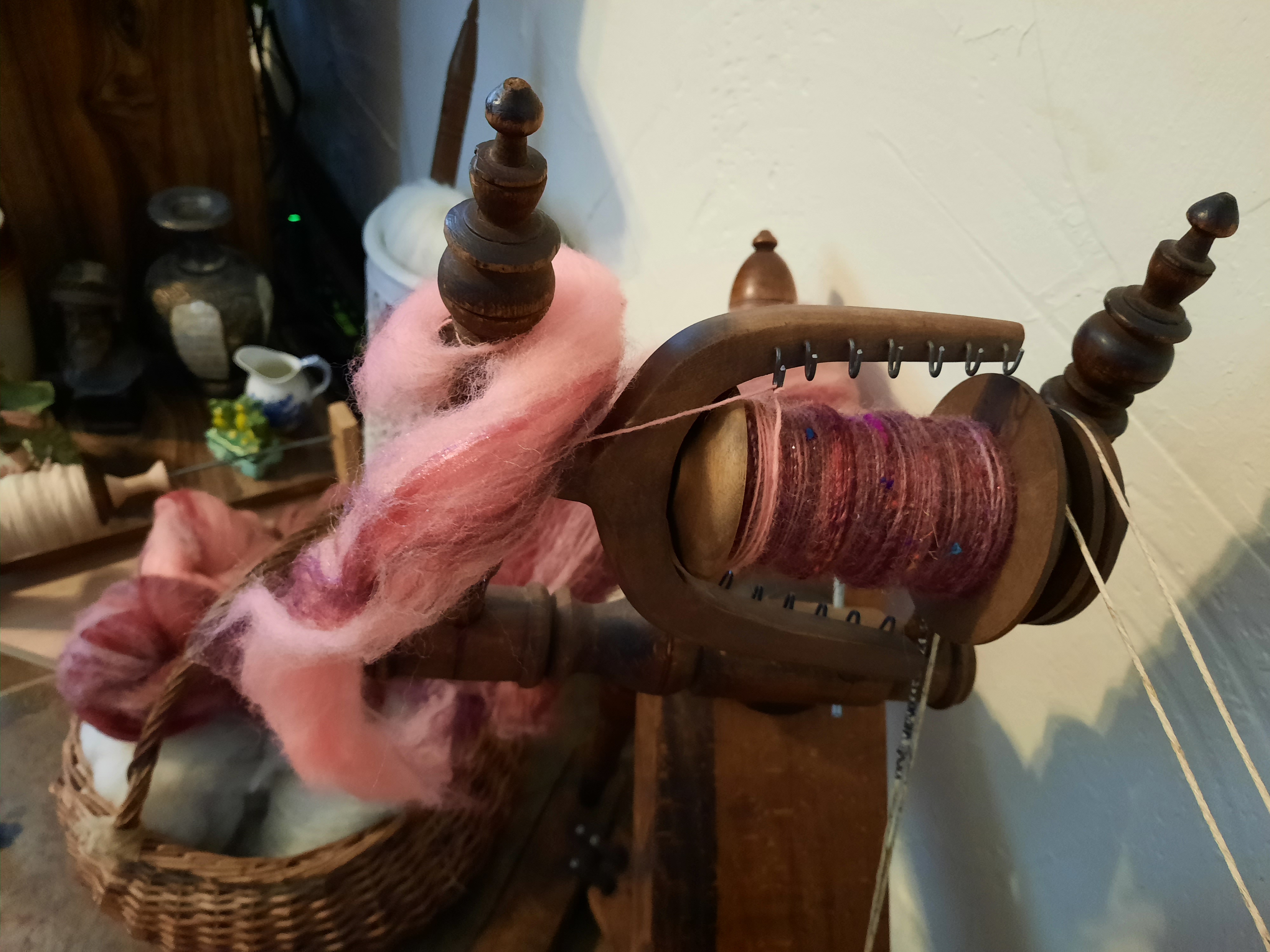
Today was one of those damp dreary days without color. It’s on these days that I create my own colors and blends. I wanted to dye fiber,but I also wanted to be working in my studio. I love how these turned out and can’t wait to spin them into yarn!!

Red, Pink, and Burgundy batts waiting for their turn to be spun.
The Art Batts Being Spun
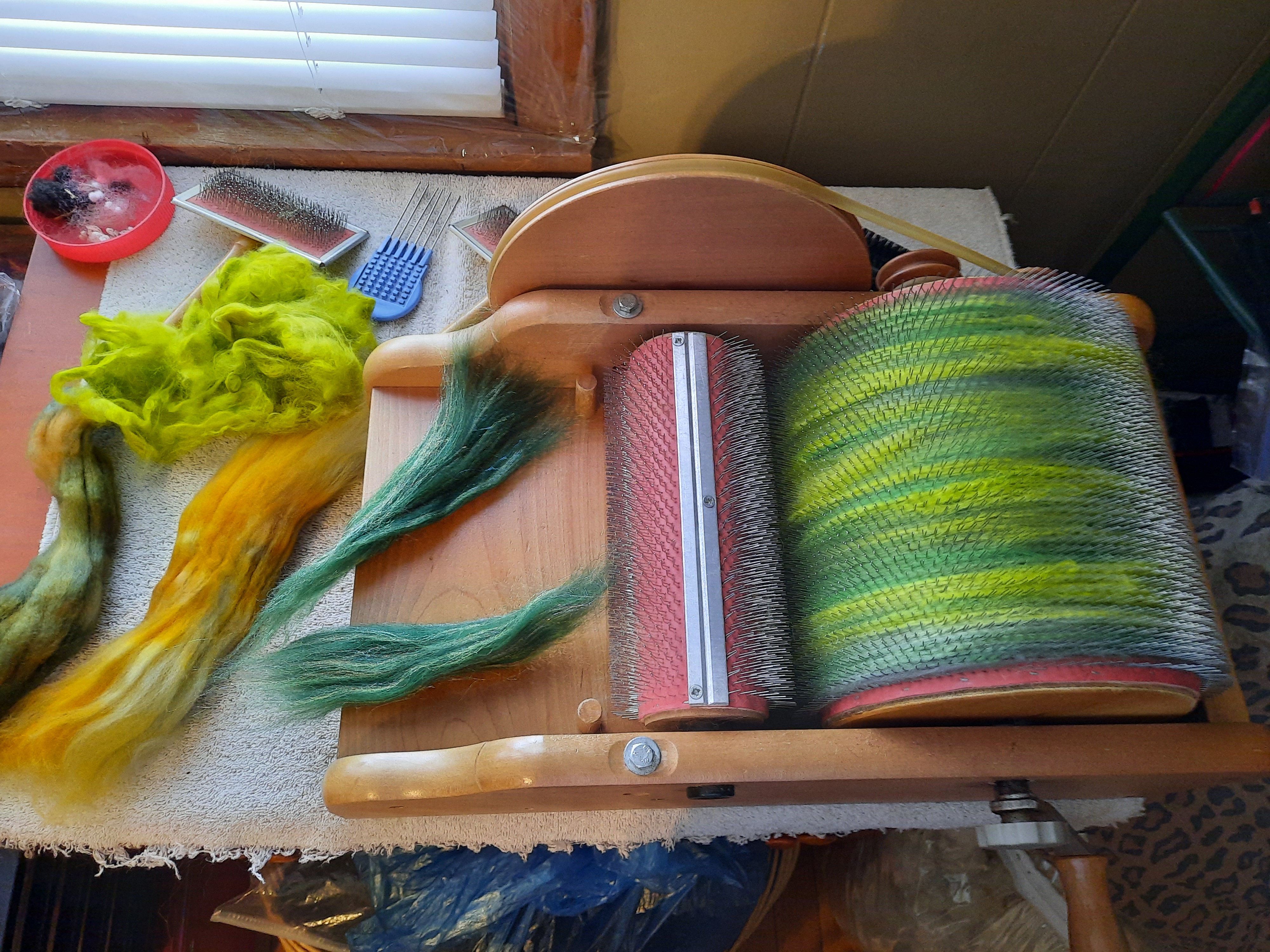
Green, Gold, and Other Sparkling Fibers Ready for Carding
The Carding Process 1
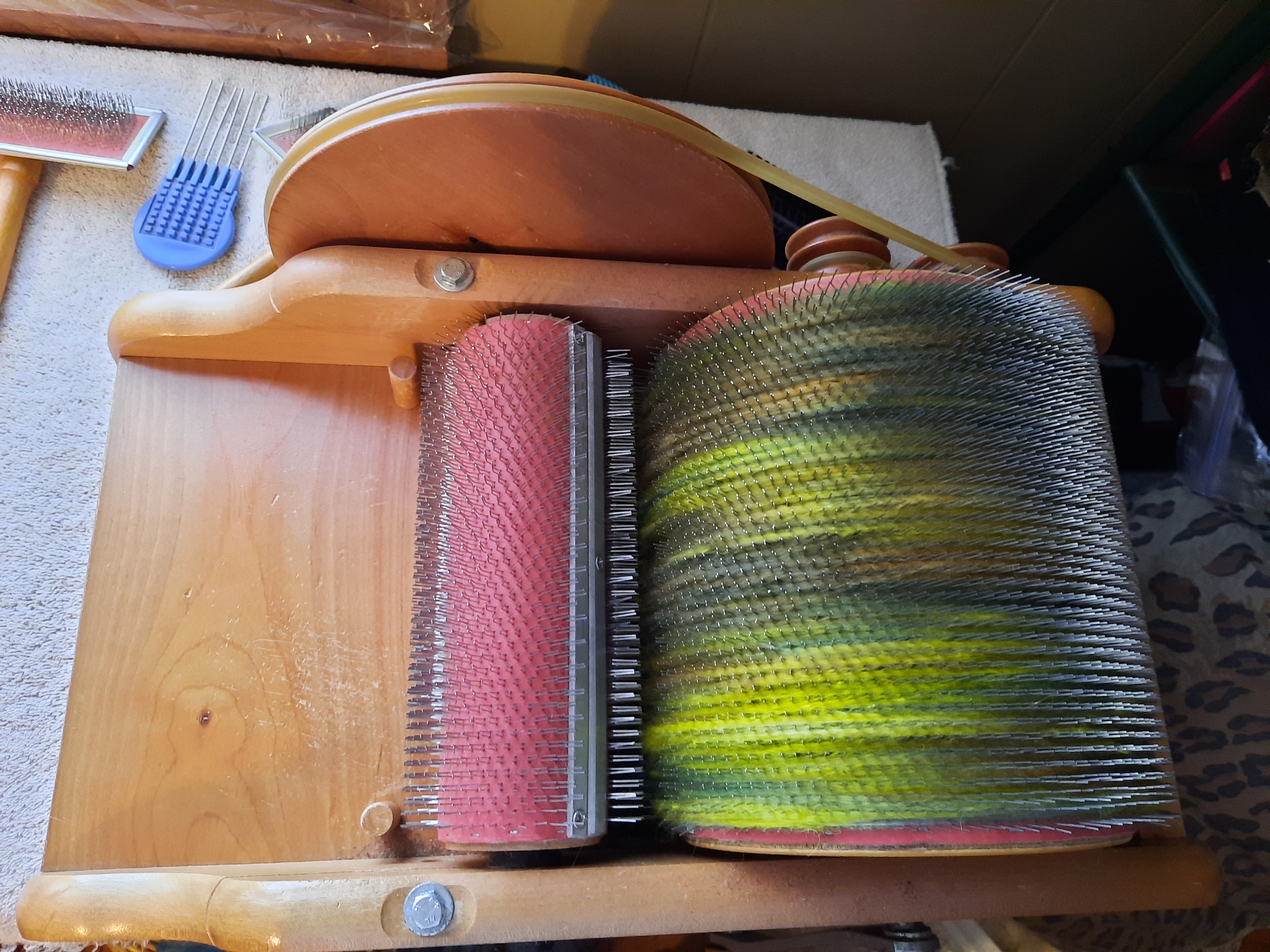
The Carding Process 2
Ready to Doff and Twist Into Loose Knots
Doffing in Progress
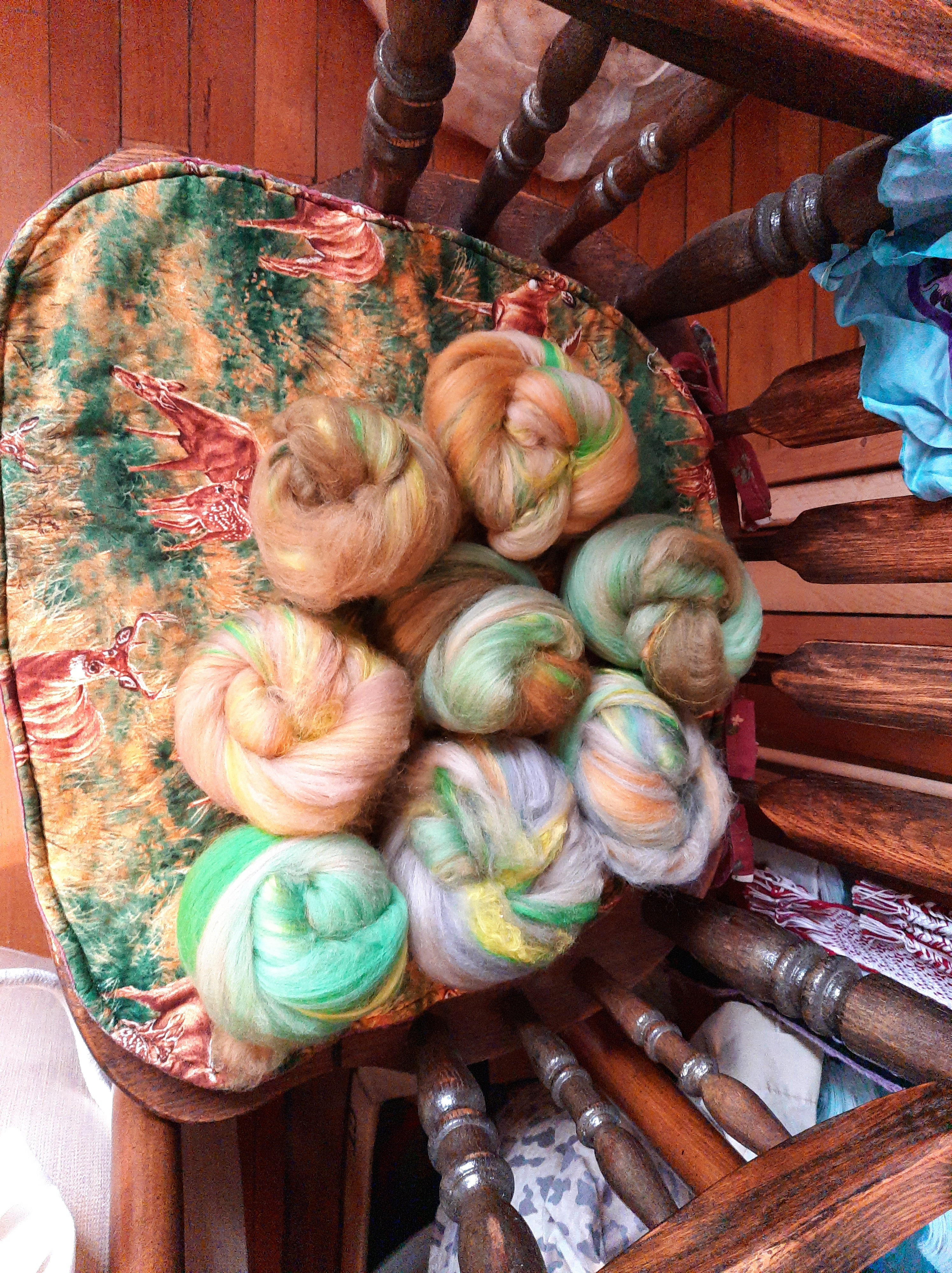
Eight Batt Knots Ready to Spin!!

What are you making/ creating??

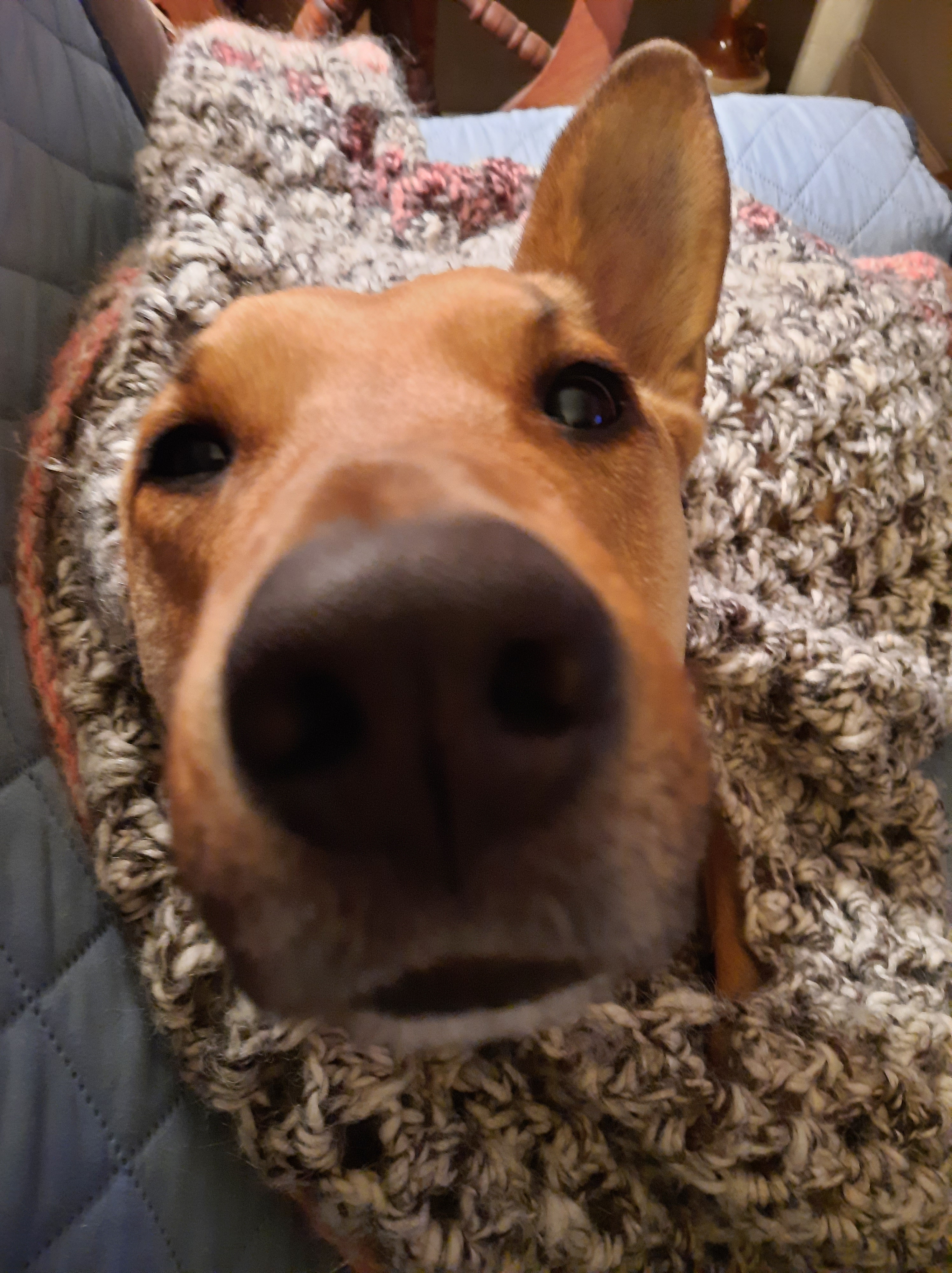
For those who don’t follow me on Instagram or Twitter, here’s a photo of my beautiful dog.

Beautiful Dog Nose!

Happy Soctober – Part II

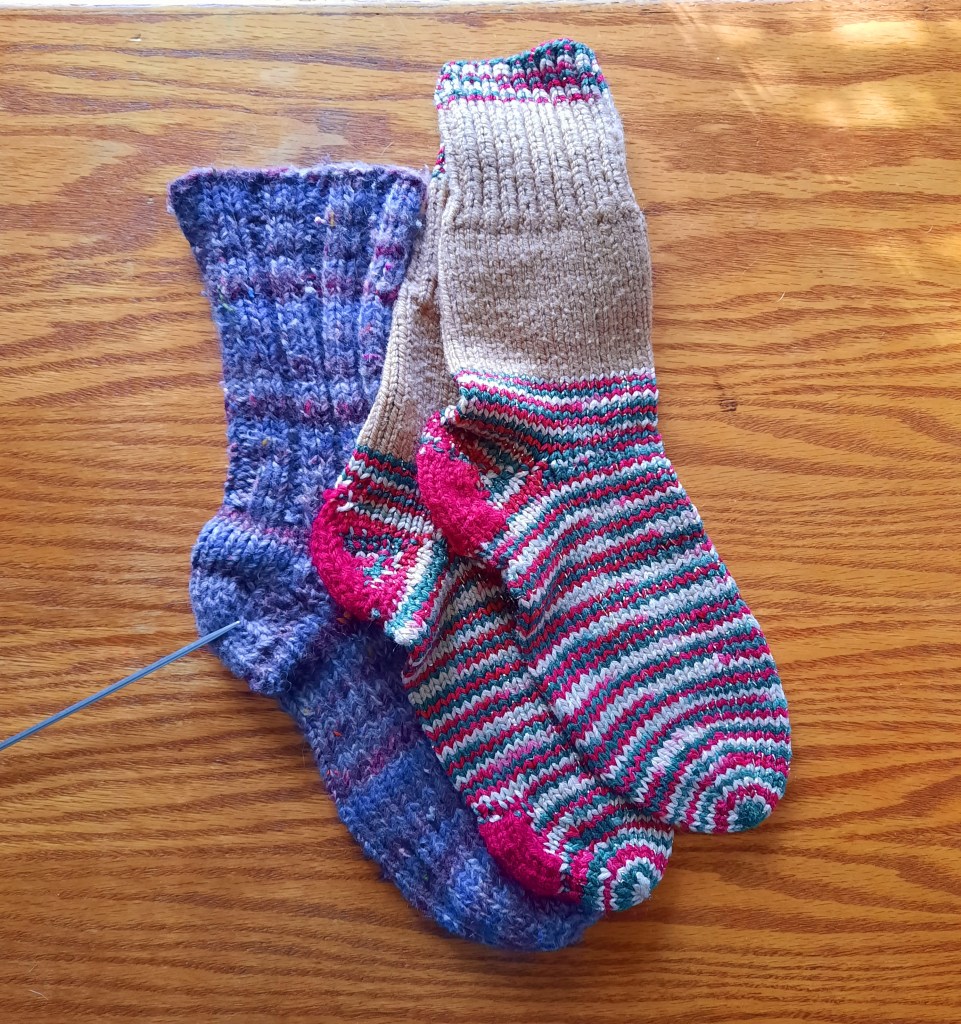
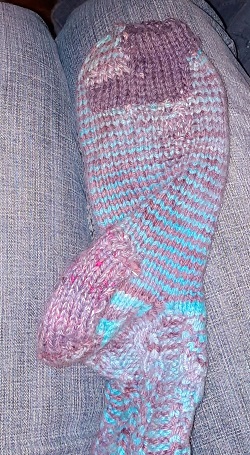
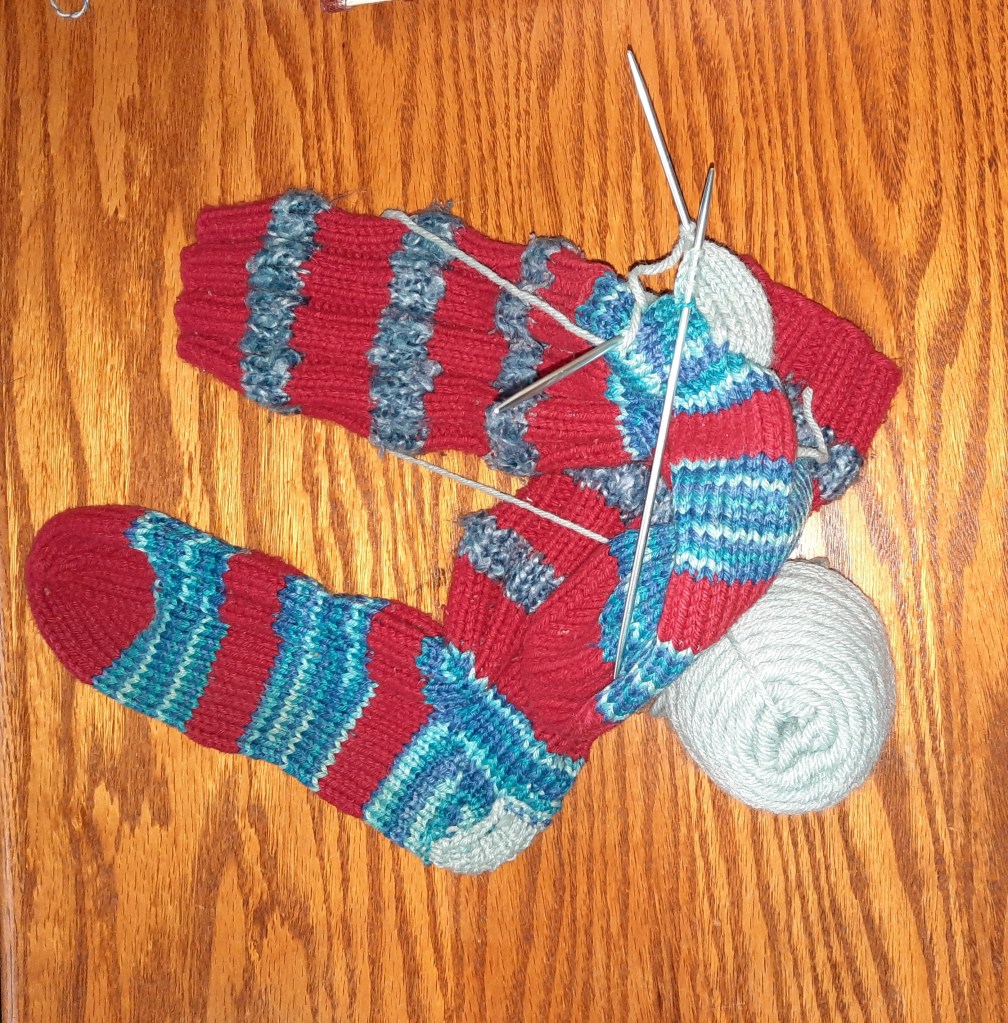
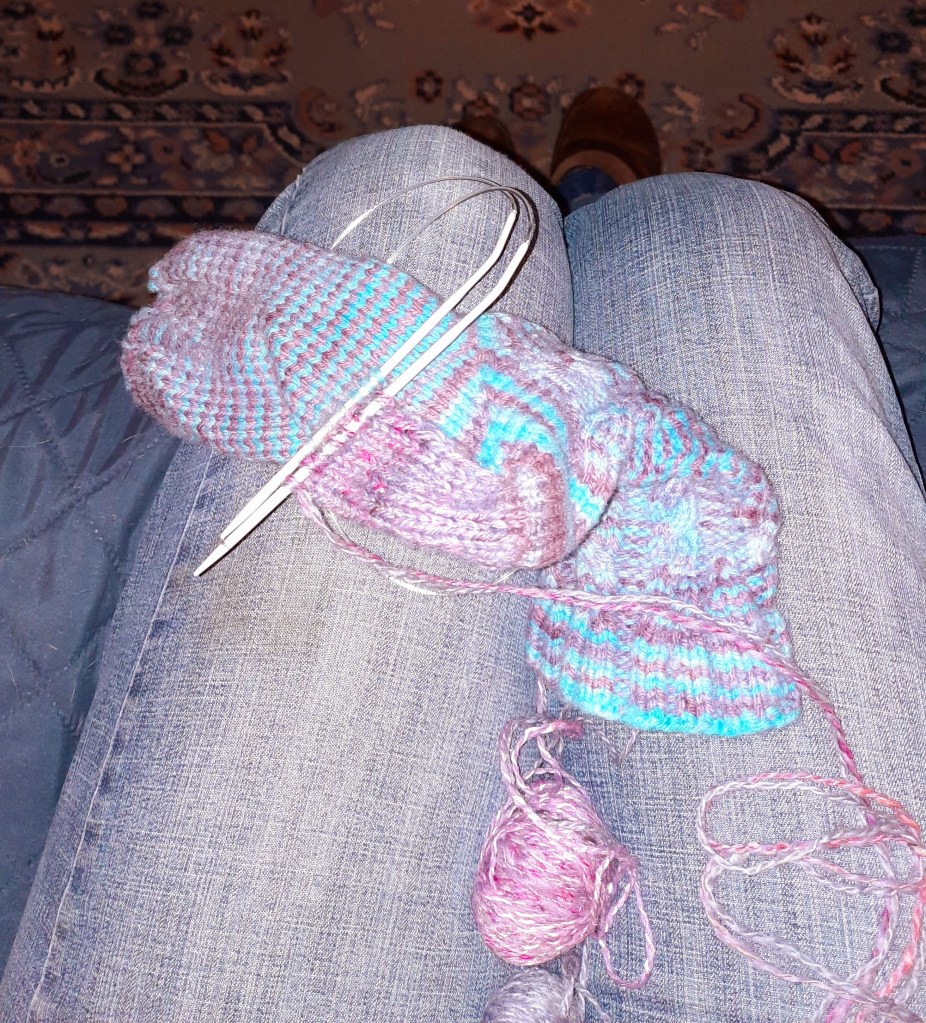
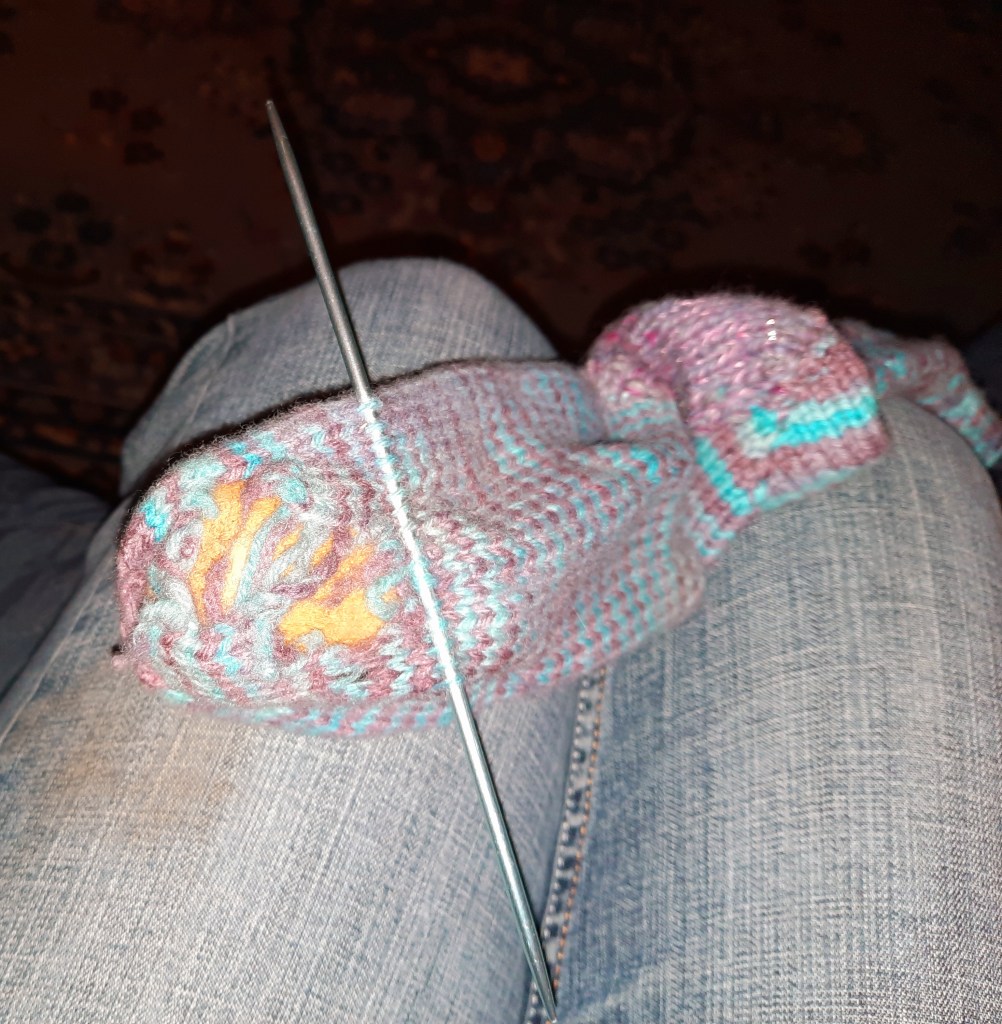
I like educating people about how many pairs of socks they should own. Sometimes we have one pair we love so much that we wear them out in a very short amount of time. The fact is you should have at least 10 pairs of socks, for every season, regardless of your preferred fiber. Natural fiber socks are best but there are a lot of people who are allergic to them and need to wear synthetic fibers such as acrylic.
Some people don’t know the difference between wool and acrylic or cotton and acrylic. Some believe the socks they’re wearing are acrylic when they’re actually WOOL. Some think they’re allergic to wool and have never worn wool in their lives. Some are allergic to cotton and linen but can wear every synthetic fiber made. Regardless of fiber allergies or preferences, handknit socks are best.
Whichever type of socks you prefer, the ones you wear the most will eventually wear out! The most common place for handknit socks to wear out is the heel, followed by the ball of the foot. The most common place for mass manufactured socks to wear out is at the toe, followed by the heel. Either way, if you’re trying to save money or just love that pair of socks so much that you can’t bear to part with them, you can always repair them and should repair them.

The two main methods of repairing holey, worn out socks are: Darning, duplicate stitching, and reknitting. I will partially cover darning and reknitting. Darning involves stitching an anchor box around the hole and then weaving from the anchor stitches, over and under, and back and forth, until the hole is filled in and sturdy. I prefer to herringbone weave 2 over and 2 under; and then cross back over to make it all sturdy.

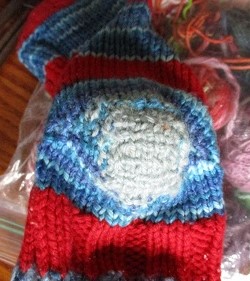
A reknitted heel involves picking up the stitches at the top of the hole and the bottom of the hole, and knitting a heel patch (toe patch, or patch for the ball of the foot) while picking up the old stitches at the sides of the hole, and then using the Kitchener Stitch to graft it all together so it looks nice and neat.

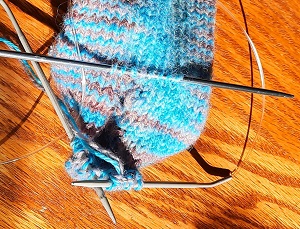
Sometimes, you need to pick up stitches in the middle so you can graft (kitchener stitch) them to the reknit portion during the repair. See the photo below.

Other times, you get very lucky to be able to just grab a few inches of yarn and just sew or weave the hole closed. This works best on holes smaller than a half inch.

There are many different ways to repair your favorite socks. It’s your choice. Do some research. I’ve shared the ones I’m currently working on because I was asked to do so.

*** NOTE: I rarely ever have any of the yarn left over from anything I’ve knit because I tend to use the leftovers in other things after about two years. ***

My latest card weavings.

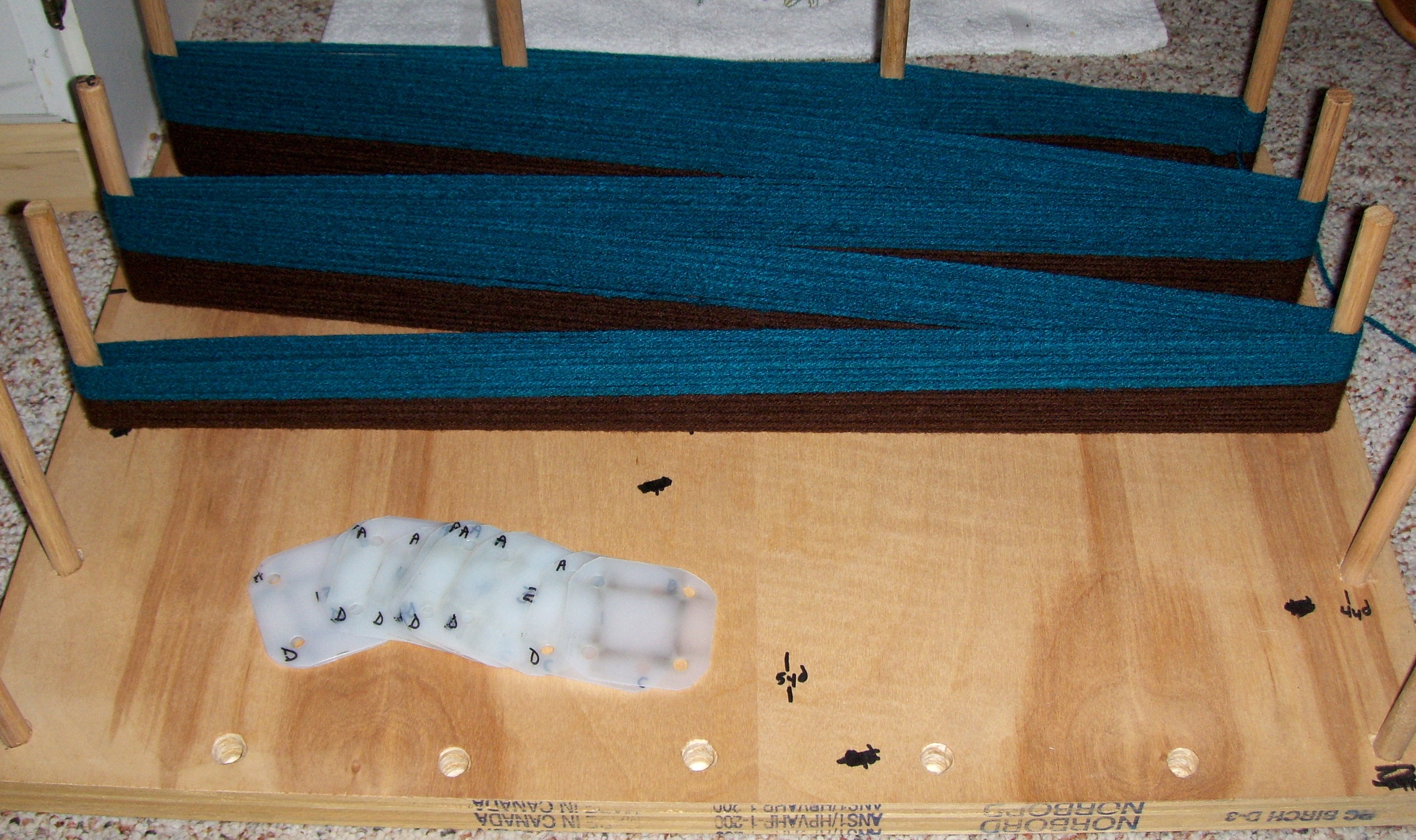
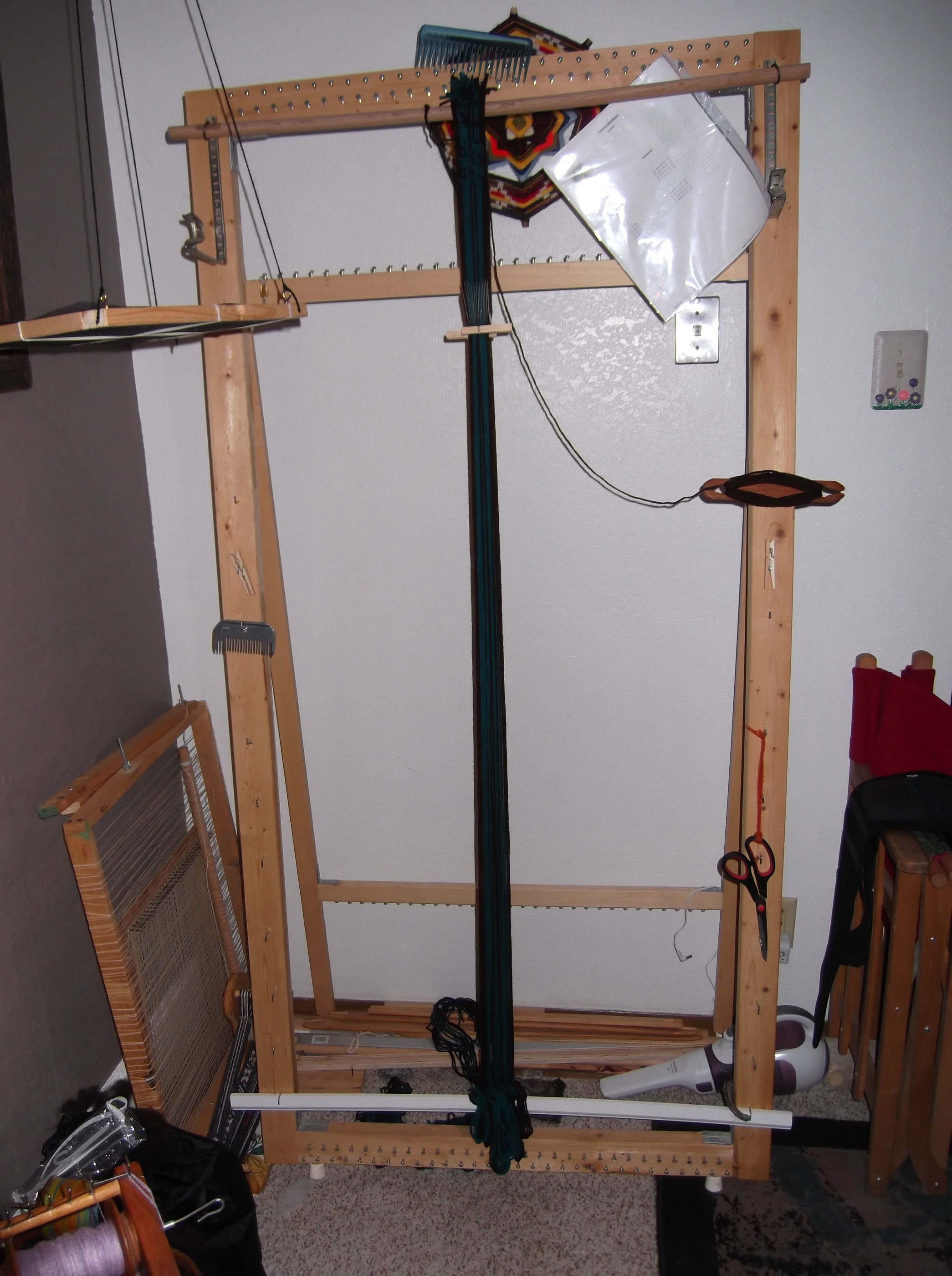
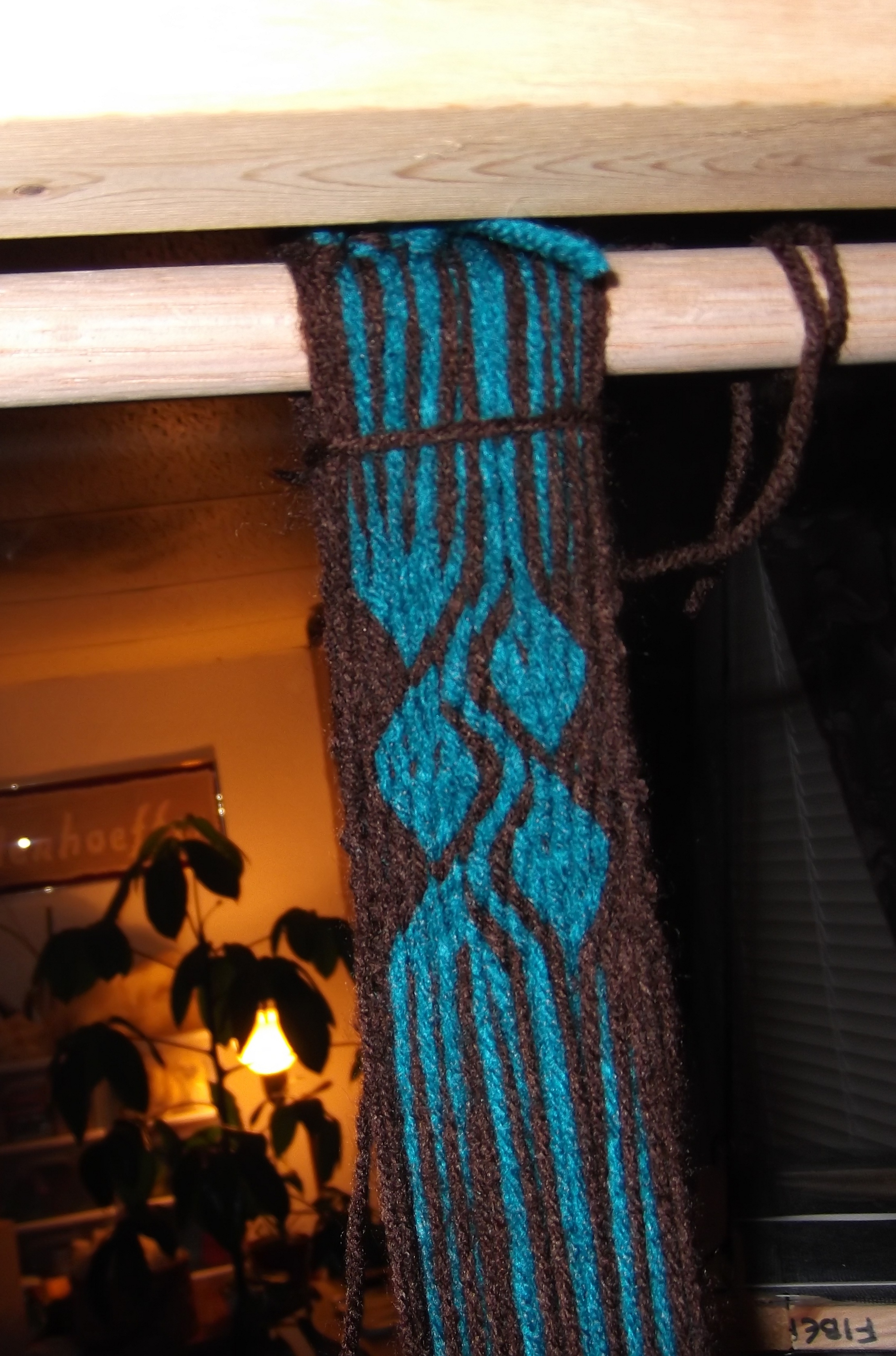
A couple of weeks ago, I started warped my loom for another running leaves card woven band/strap/belt. It turned out to be too wide to be a dog leash, so I’ve decided that it will make a great guitar strap or belt.

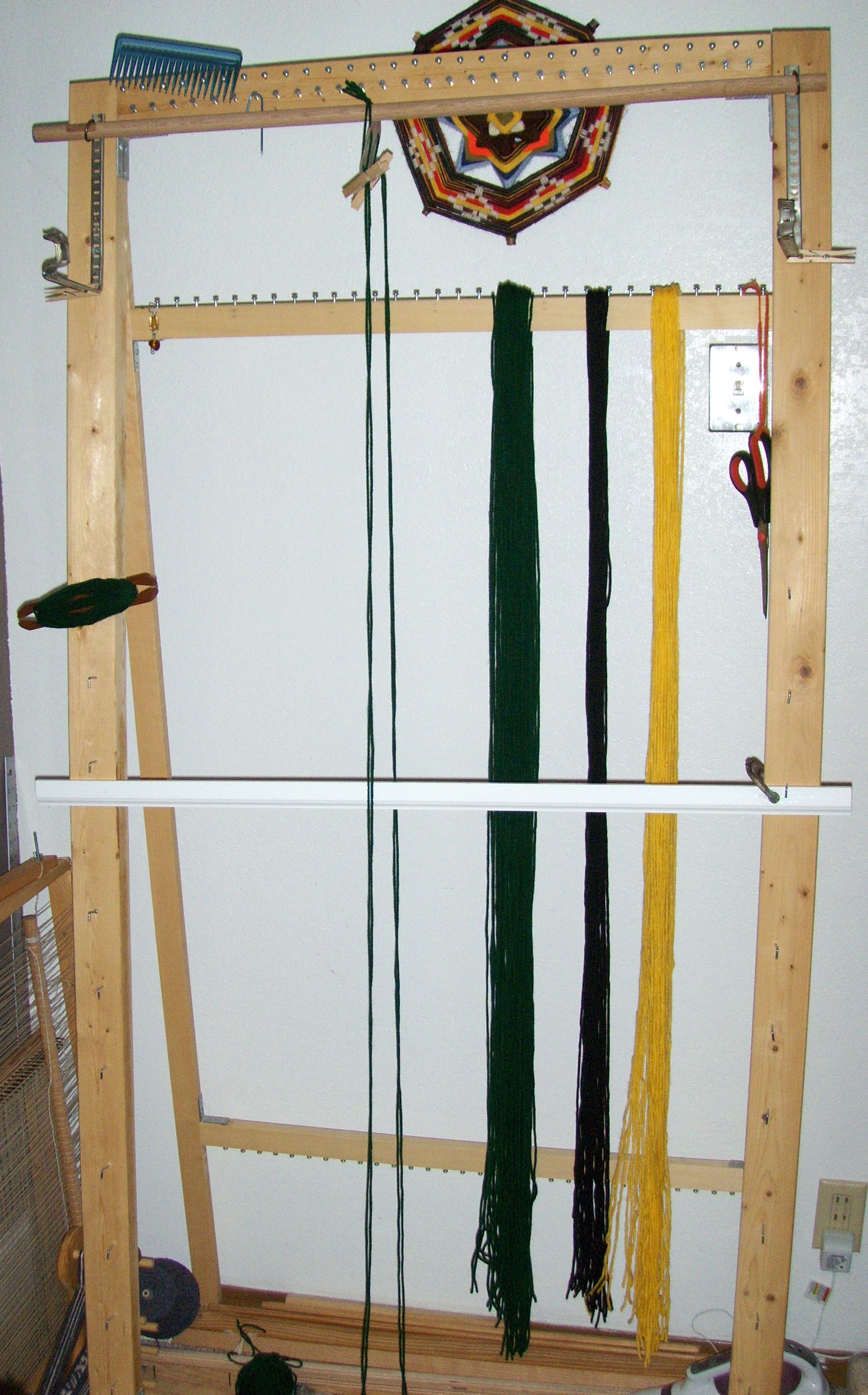
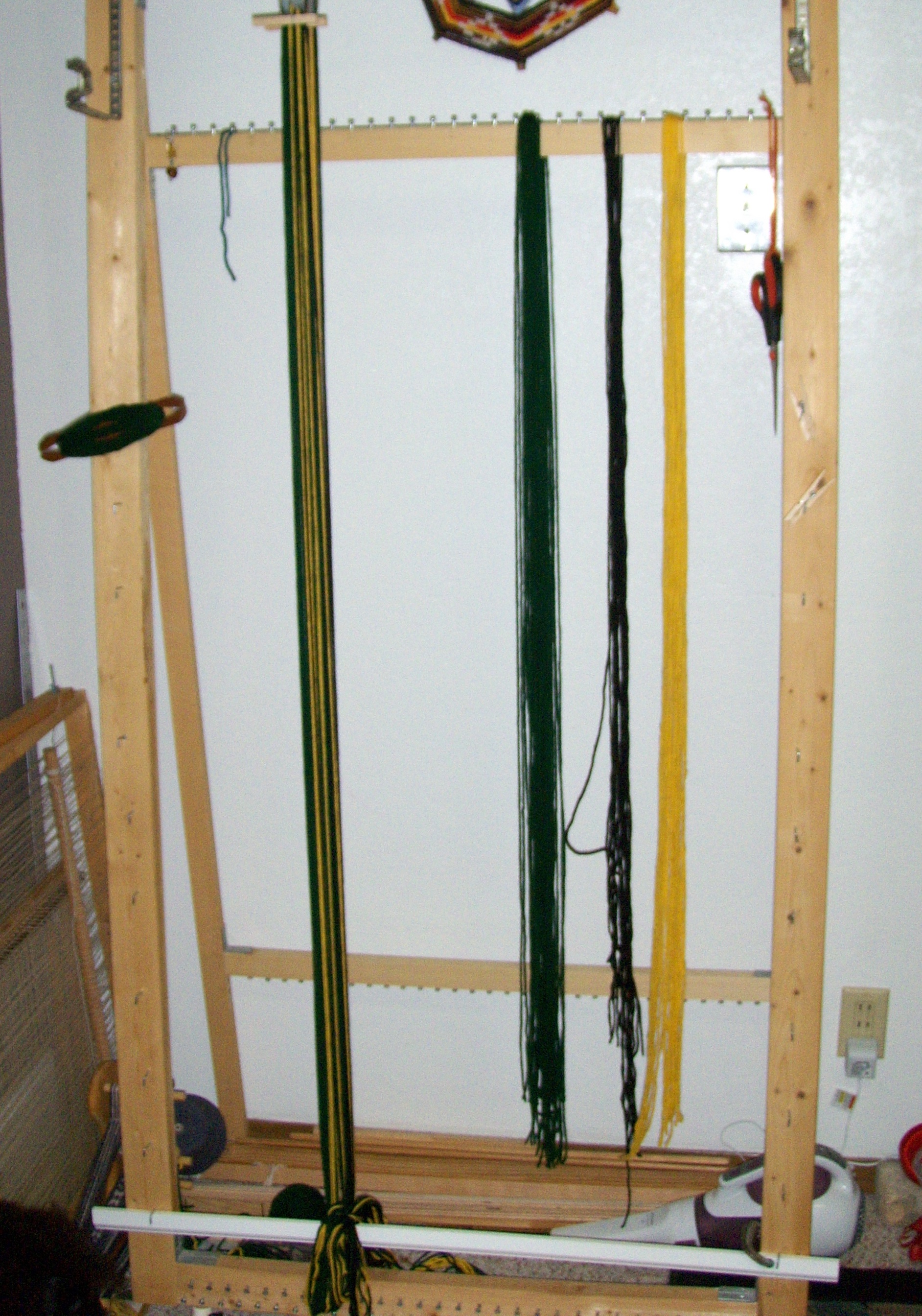
These pictures are of the 3 yard warp; on the loom (a standing rug/navajo weaving loom); and the first few inches woven.

3 yard warp for 16 card weaving  On the loom beginning of running leaves

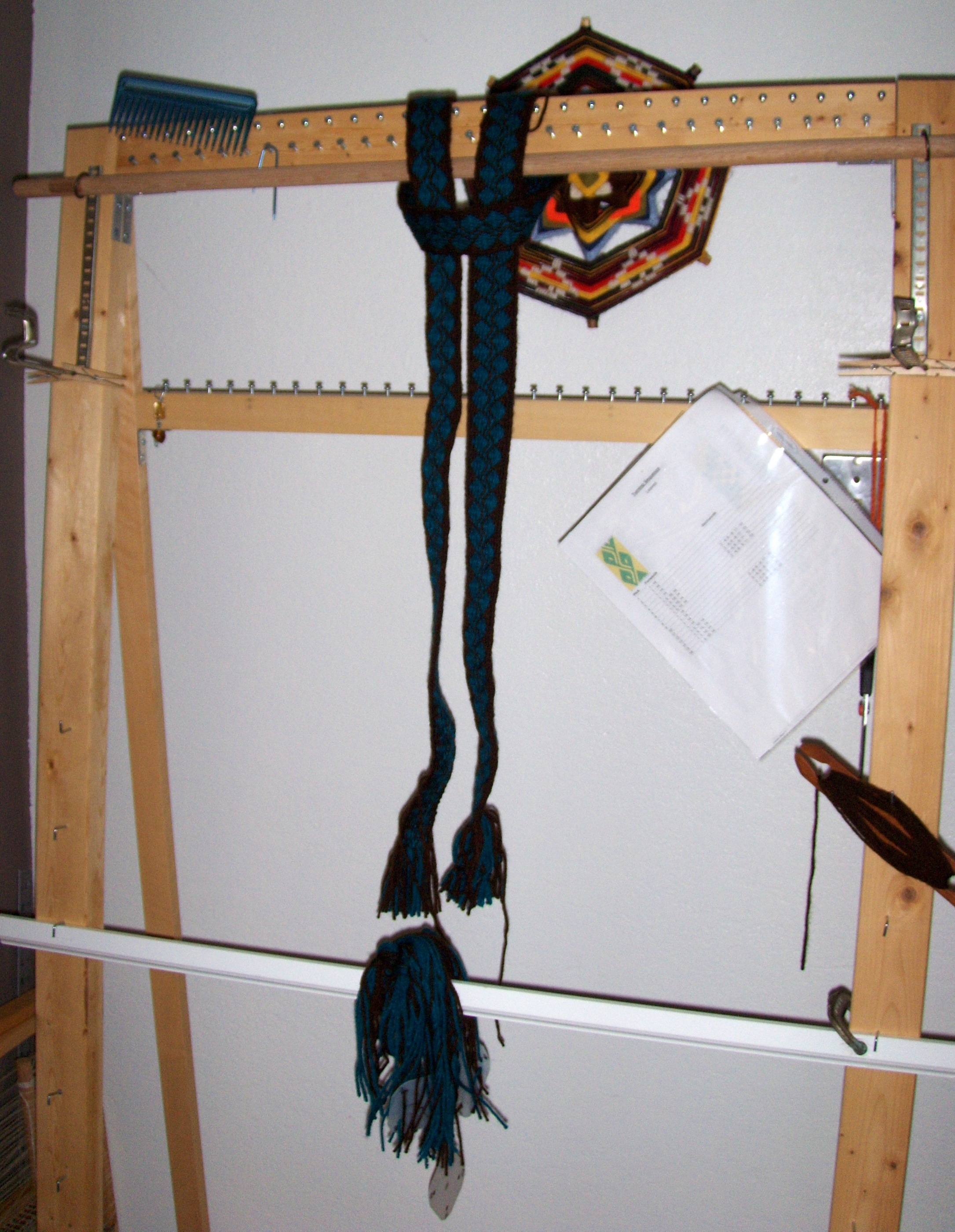
Cut off the loom and almost finished.

Cut off the loom Ready to finish showing off the running leaf pattern

This is 2 inches wide and 6 feet long.

Ready to weave in ends and wet finish.

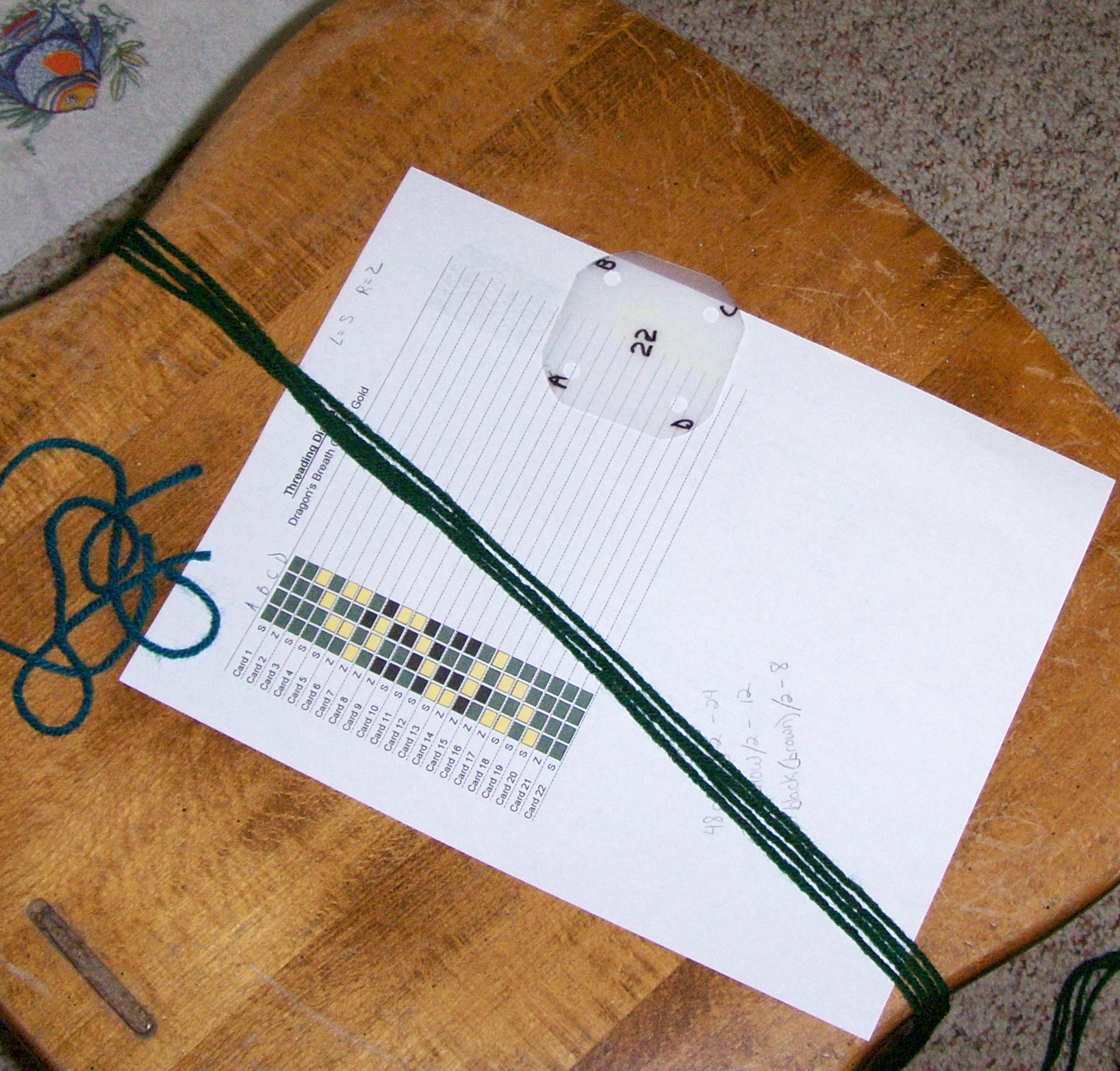
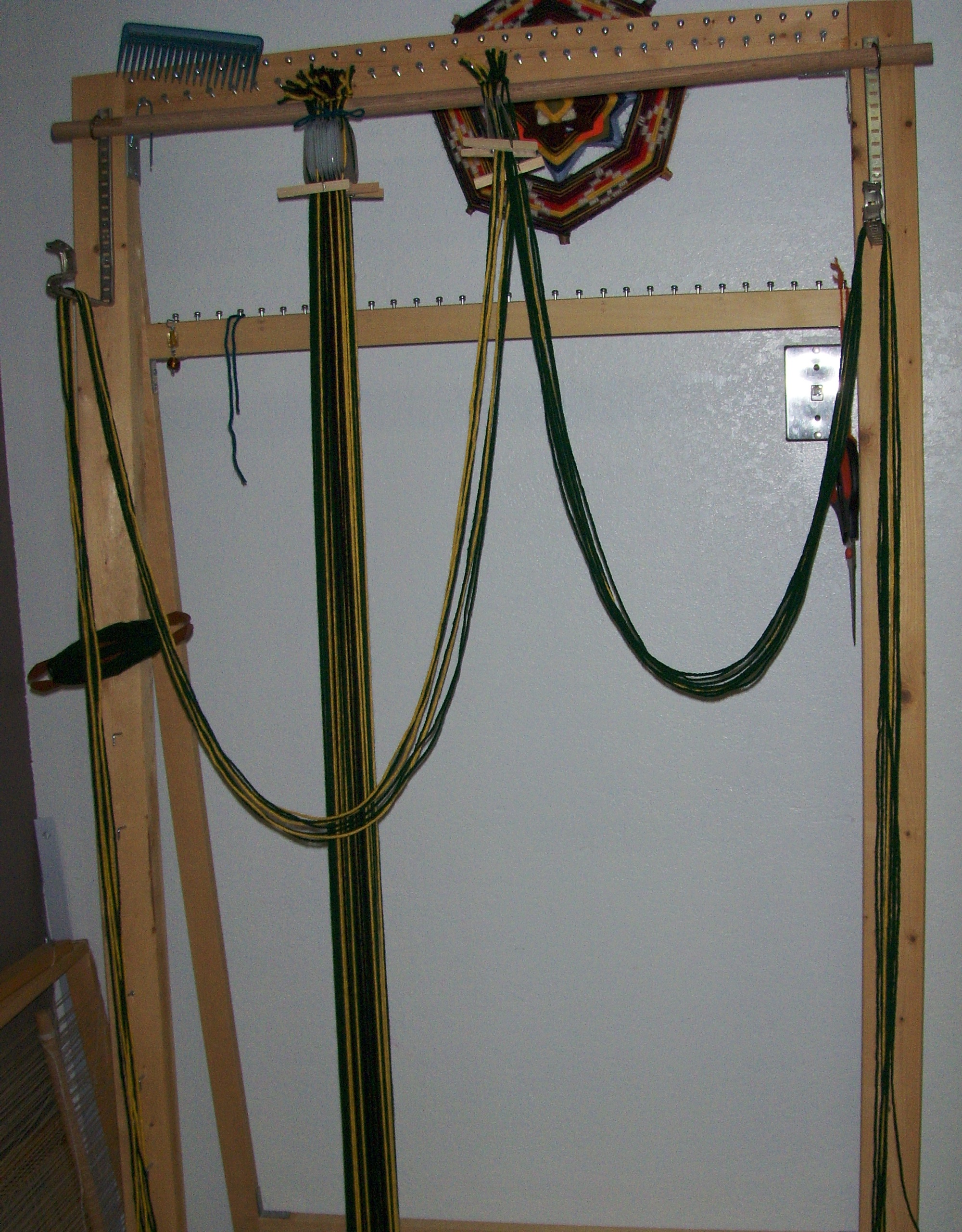
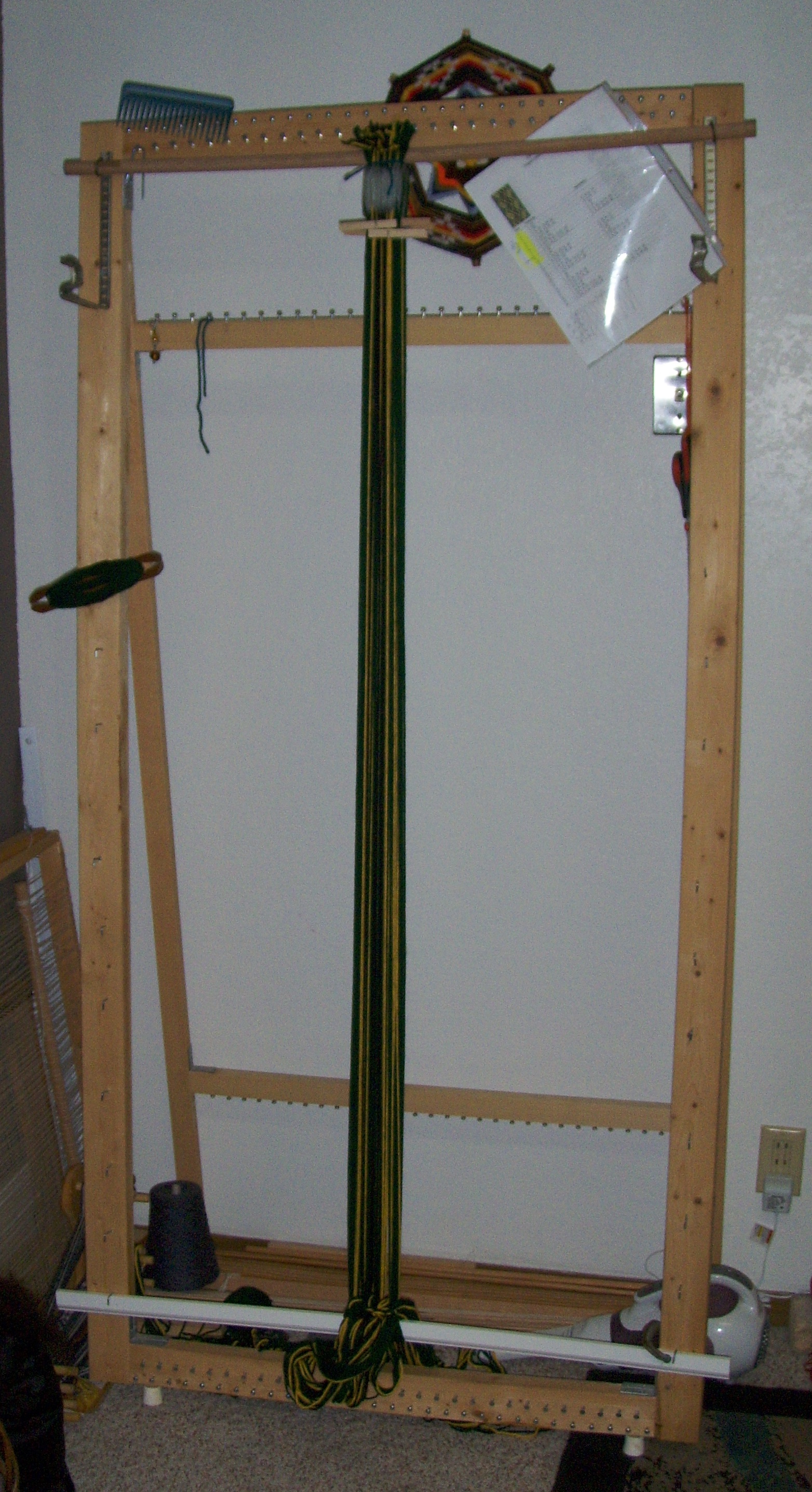
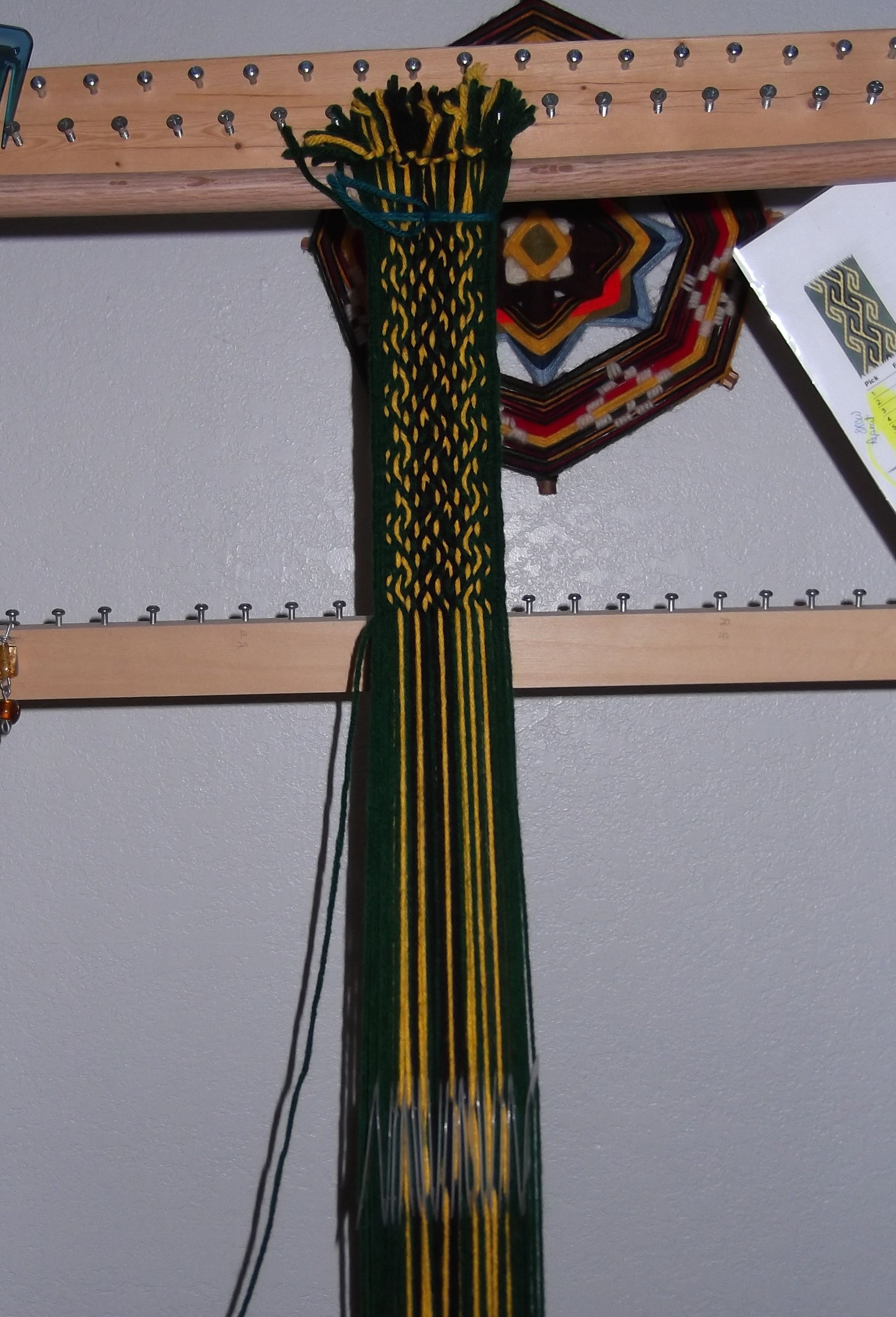
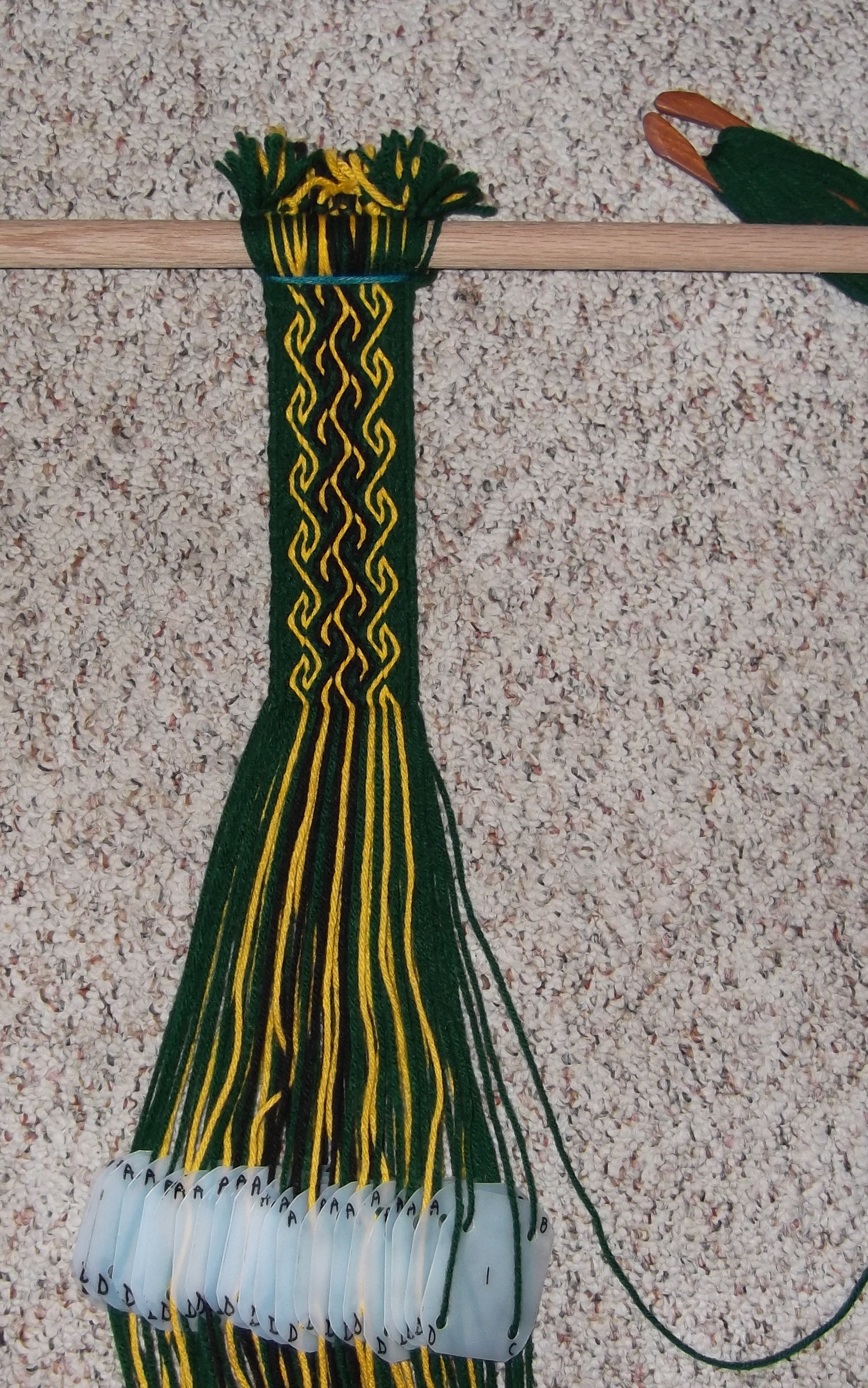
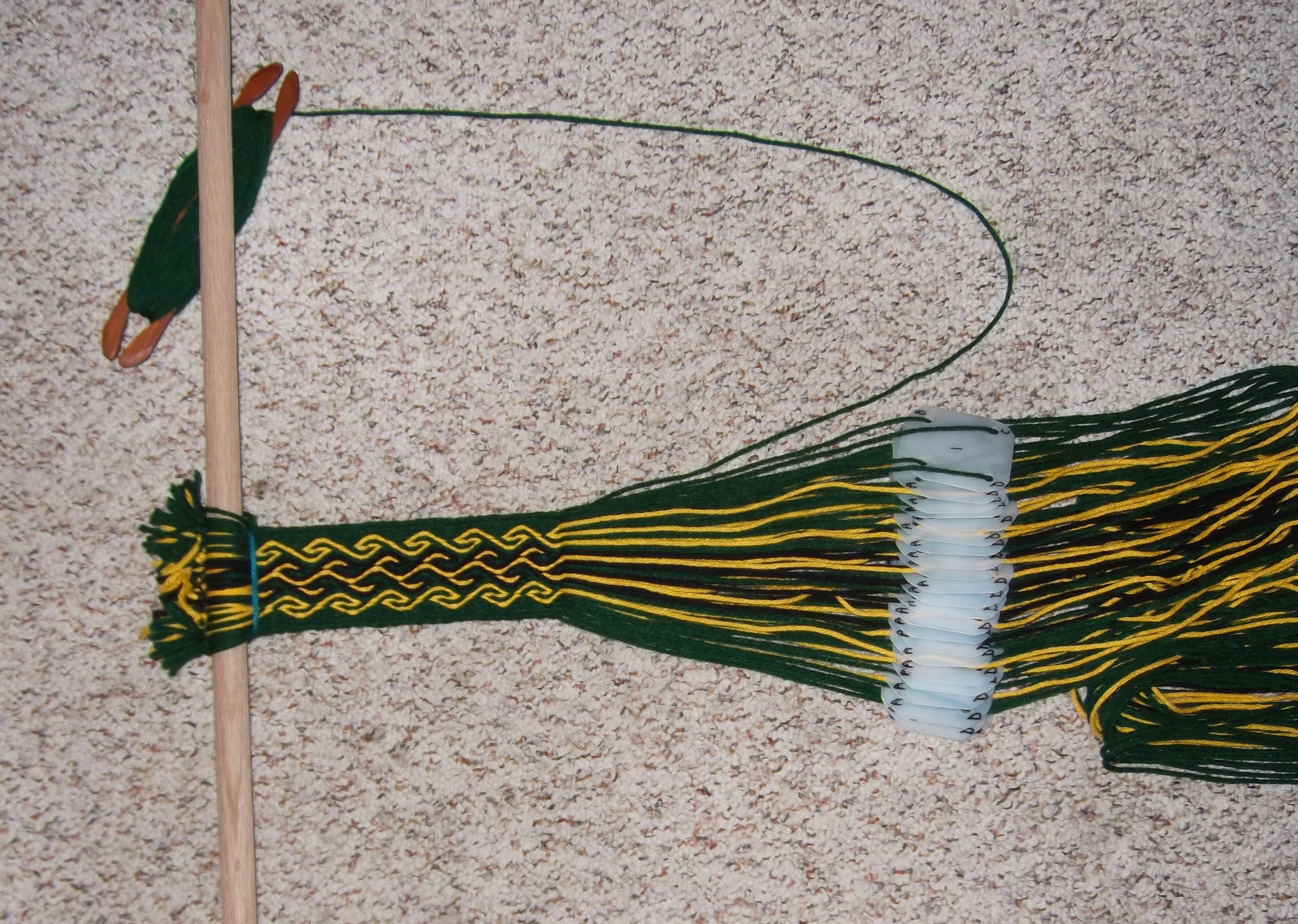
The next card weaving project. This is a green, gold and black, dragon breath weaving on 22 cards. The finished strap will be 3 inches wide and about 6 feet long.

pattern and cards ready first cards up half of the warp up

last card to put up finishing attaching the warp to the bottom beam Ready to start

Here’s what was accomplished Monday & Tuesday.

The backside of the dragon's breath weaving DSCF1016 DSCF1015

I think I’m going to experiment with the dragon’s breath pattern for awhile because I really like the way you can customize it!!

Thanks going out to Guntram and his fantastic card weaving Thingy that he invented to make all of this creating possible!!